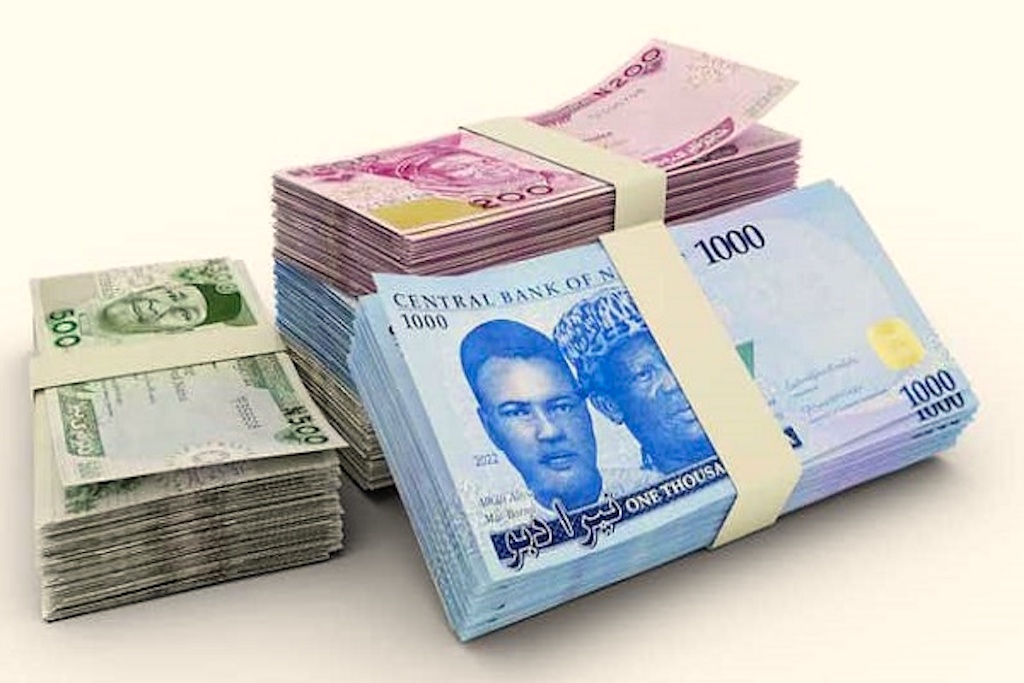
The currency exchange policy should be issued immediately and only continue when the equivalent of money withdrawn from circulation has been printed and is available to replace the old currency notes. Let’s all remember that the general election will be held in two weeks and we need peace and a functional economy to ensure its success. Our authorities who say we must continue to suffer in order not to lose face must consider the very high cost of destroying the entire system.
The National Council of State met today to address a series of crises affecting the country. Trade is dead and the economy is going into recession due to the government’s decided cash crunch. By ensuring that people with money in their bank accounts cannot access the money, the purpose of the policy is to raise the level of anger and frustration in society. The timing of the government’s policy coincides with fuel shortages that are also troubling residents. Third, all of this was created at a time of unprecedented cost of living crisis. My reading of the multiplication of policy interventions is exciting at the same time it is considered an experiment to see how far Nigerians can be pushed before they explode.
The government should be beaming with a smile as it sees evidence that the experiment is working. Mass demonstrations have begun in many cities as people protest against banks and filling stations. Sad and humiliating videos have gone viral as people on the fringes suffering from mental disorders flip over and strip themselves in the halls of banks and filling stations. Banks were closed as angry customers beat up workers over problems caused by the government. Non-government Councilors should have a question only for the government – why are you causing this mess? They should recommend one way forward – stop the madness! Nigerians should not be forced to spend countless hours struggling and fighting in the queue never ending, trying to get the money that belongs to them that they did not get.
The crisis was initially marketed as a sane currency exchange policy by the Central Bank of Nigeria (CBN) to replace the N200, N500, and N1000 notes that will be phased out with new versions. The reason given for the change is from fighting forgery, kidnapping, corruption, money laundering and other forms of illegal financial flows. To seal the deal, Nigerians were further told that the policy would put an end to disturbing vote-buying practices that influence elections. They all nodded.
Lawal also noted that from the Multiple Indicator Cluster Survey published by NBS last year, only 35.4% of women and 47.2% of men, aged between 15 and 49 in 2021, have a bank account or something similar in a financial institution. . The implication is that the unaccounted population uses/needs money for daily living. In fact, in states such as Bauchi, Jigawa, and Kebbi, less than 8% of women have bank accounts.
As Lawal argued recently in an article in AGORA, however, the real policy implemented is not only a change of currency but a process of “demonetization”. The expectation of the CBN is that the deposited cash will not be withdrawn one by one, but customers will use other non-cash payment systems. The decision is to force Nigerians into a direct transition to a cashless economy, without proper preparation and fully aware that Nigeria’s huge informal economy cannot survive without cash. As Lawal pointed out: Nigeria is a dual economy with a significant informal sector, and informality and the use of cash tend to go hand-in-hand. He cited a report by the National Bureau of Statistics (NBS) which estimated that informal activities accounted for 41.43% of all activities, or GDP, in 2015. The World Bank also made a case for 80.4% of employment in Nigeria. in 2021 is in the informal sector. The Central Bank that knows this and spends the economy 80% of cash in three weeks is not making an honest mistake; it is the enemy’s action.
Lawal also noted that from the Multiple Indicator Cluster Survey published by NBS last year, only 35.4% of women and 47.2% of men, aged between 15 and 49 in 2021, have a bank account or something similar in a financial institution. . The implication is that the unaccounted population uses/needs money for daily living. In fact, in states such as Bauchi, Jigawa, and Kebbi, less than 8% of women have bank accounts. The implication is clear, the Central Bank, when it decides to force everyone to bank transactions, excludes an important part of society from economic transactions.
The crux of the matter is that on the real policy front, the Central Bank has been successful in its cashless policy drive, as shown in the AGORA article. The percentage of cash to all money in Nigeria has dropped from 11% in 2007 to an estimated 5.6% in June 2022. The percentage of cash to GDP has also dropped from over 2% of GDP in 2007 to 1.67% at the end of the year . 2021. For context, a study by the IMF suggests that countries such as the UK, the US, China, and Japan have around 3.5%, 7.5%, 9%, and 20% of currency in circulation, relative to GDP. In other words, the “drive for a cashless society” has reached its limit and Nigeria has no cash problem and is moving in the digital direction, even before the currency change. There is no problem to solve but there is a decision to make Nigerians suffer. That is why even though he knows that the Nigerian Security Printing and Minting Company Limited – a government-owned company responsible for printing currency locally – only has the capacity to print about N200 billion by the end of January 2023 and he has withdrawn N2.73 trillion. from circulation in September 2022, while insisting on maintaining the cash crunch policy.
Now that we are all suffering and there is a real risk of a breakdown in law and order, the National Council of States must step up and save the situation. The government should immediately put an end to the narrative that the problems we are experiencing are due to corrupt bankers who are hiding the new naira. If there are enough new naira notes in circulation, nobody will hide them. They need to stop these ridiculous stories…
Now that we are all suffering and there is a real risk of a breakdown in law and order, the National Council of States must step up and save the situation. The government should immediately put an end to the narrative that the problems we are experiencing are due to corrupt bankers who are hiding the new naira. If there are enough new naira notes in circulation, nobody will hide them. They must stop this ridiculous story that the security agencies have “found” N8 million naira hidden in the bank vault or that N200 million the bank tried to send to the branch as evidence of economic sabotage. Do they have any idea about the billions of naira that are usually exchanged in major markets every day? Do they realize that the function of money is in the hands of the people and traders, and not kept in the bank to please the CBN governor who wants all the money in the bank?
The currency exchange policy should be issued immediately and only continue when the equivalent of money withdrawn from circulation has been printed and is available to replace the old currency notes. Let’s all remember that the general election will be held in two weeks and we need peace and a functional economy to ensure its success. Our authorities who say we must continue to suffer in order not to lose face must consider the very high cost of destroying the entire system. They should also remember Economics 101 that people should have confidence that they can collect money from their bank accounts when they want, if they don’t want a total run in the banks in the coming days and weeks. Now, most Nigerians say that from now on, they will ensure that their money goes back to the bank. The dream of most Nigerians today is to ensure that they block all the ways of taking money to the bank. We must not forget that beds were invented so that people could hide paper money under them. It’s called protecting your interest, and I admit, it might be the thief’s interest.
Professor of Political Science and consultant/development expert, Jibrin Ibrahim is a Senior Fellow of the Center for Democracy and Development, and Chairman of the Editorial Board of PREMIUM TIMES.
Support the integrity and credibility of PREMIUM TIMES journalism
Good journalism costs a lot of money. But only good journalism can guarantee the possibility of a good society, responsible democracy, and transparent government.
For continued free access to the best investigative journalism in the country, we ask that you consider making a modest contribution to this noble effort.
By contributing to PREMIUM TIMES, you help keep journalism relevant and ensure it remains free and available to all.
contribute
AD TEXT: Call Willie – +2348098788999