
Paper wallets were an early method used to protect bitcoins offline. Better methods have replaced it, but people still use paper wallets to store bitcoins safely and cheaply.
What is a Paper Wallet?
A paper wallet is a physical document or object that contains a new public address and a printed private key. This allows users to store bitcoins sent from other wallets for greater security. Paper wallets are considered non-custodial cold storage because the user controls the private keys that can and should be printed offline, thus eliminating the risk of exposing internet connection hacks.
There is only one way for a malicious actor to get hold of your private key and steal your funds: physically control the piece of paper on which the private key is printed.
While paper wallets have declined in use over the years as digital secure devices like hardware wallets have replaced them, they still gain traction among Bitcoiners due to their security and affordability. Currently, it is mostly used as a Bitcoin ATM receipt.
How they can
Special generator applications are used to create paper wallets; they print a public address to receive bitcoins and a private key that you need to prove ownership and thus spend your bitcoins. A wallet or paper document may have a QR code embedded in it for easy scanning and signing to make a transaction.
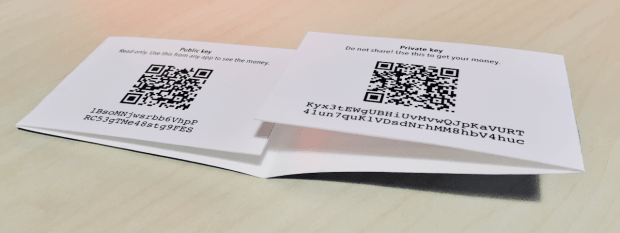
(Source: Github)
It is highly recommended that the paper wallet generator app be used offline to prevent hackers from detecting your private key. Another good practice is to scan your computer or smartphone with security software to determine if it has been compromised by malware or other cyber attacks.
Some paper wallet generators will give you the option to store your private and public keys on your computer in PDF format. This is highly recommended as PDFs are constantly exposed to online threats. Also, digital images or scans of your wallet should be avoided to prevent hackers from detecting it.
Also, make sure your device’s wireless and Bluetooth are turned off because hackers can exploit these signals to gain access to your device.
You should take extra steps to protect the funds stored in your paper wallet. In addition to working offline when creating a paper wallet, printing documents from a device connected to the printer via a wired connection and not wireless would be a good idea. After printing, be sure to discard anything that can digitally store the key during or after the generation process.
Also, you can generate and use different paper wallets, that is, generate different wallets for the fees you pay using bitcoins, and use a different one for long-term bitcoin storage.
Advantages and disadvantages
Excess:
Paper wallets have several advantages, including:
- Maximum protection from cyber attacks, hardware failures, operating system errors and malfunctions, to name a few.
- Useful for long term storage of funds.
- It can easily be made as a gift, although Opendime and Satscard are better solutions for gifts these days.
- It is easy to generate and print them.
Disadvantages:
They also have the following disadvantages:
- In case of loss, theft or paper damage, the user will not be able to access the address where the funds are. If you choose this method, make sure you have a safe deposit box or other safe storage method for your paper wallet.
- Damage can also occur in the event of flooding and fire, the two main points of failure.
- Private keys must be imported into the software at some point to transfer bitcoins, unlike hardware wallets.
- When you withdraw part of your funds, you will lose your balance due to the way Bitcoin considers changes in transactions.
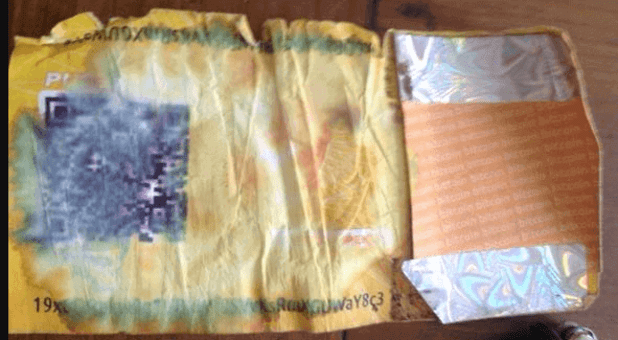
(source: reddit)
Considerations:
Paper wallets are easy to pick up, and you can get and store your private keys in minutes if you need quick and instant protection for your bitcoin assets.
However, they have been replaced by more practical and secure methods like hardware wallets that can still be used offline. Like paper wallets, they are very secure but do not carry the same risk as the potential damage of paper documents.
Shed:
The storage of paper wallets should be the main concern of users, as paper is fragile, easily damaged and easily lost. Therefore, it should be kept very carefully in a safe, fireproof and waterproof box or a third-party custodial deposit box.
You should also protect your paper wallet from loss or theft, and we recommend that you make at least two copies and store them securely – certainly not online. You should also consider laminating your paper wallet. When doing so, make sure it is done securely and that your private key is not exposed to bad actors.
Printing:
Before printing a private key, you should find out what could go wrong with the machine and anticipate the problem. For example, paper jams, ink spots or misaligned printer heads can all cause problems when making paper wallets.
It is best to secure the creation of paper wallets with a well-functioning printer and on strong paper, as paper damage is the main reason people do not use this type of storage. Also, don’t print on a public or office computer and delete your print queue. You can print another one afterwards to make sure the print queue is cleared.
Summary
While paper wallets used to be a viable solution for early bitcoin users who wanted to securely store their assets, there are now more secure and practical ways like hardware wallets that remove the inefficiencies of paper wallets.
People are still used to try these methods and store bitcoins temporarily until they find a more suitable solution. Other precautions are required when using online tools to transfer or store data online. If you must use a paper wallet, we recommend that you follow the instructions in this article to be more secure.