
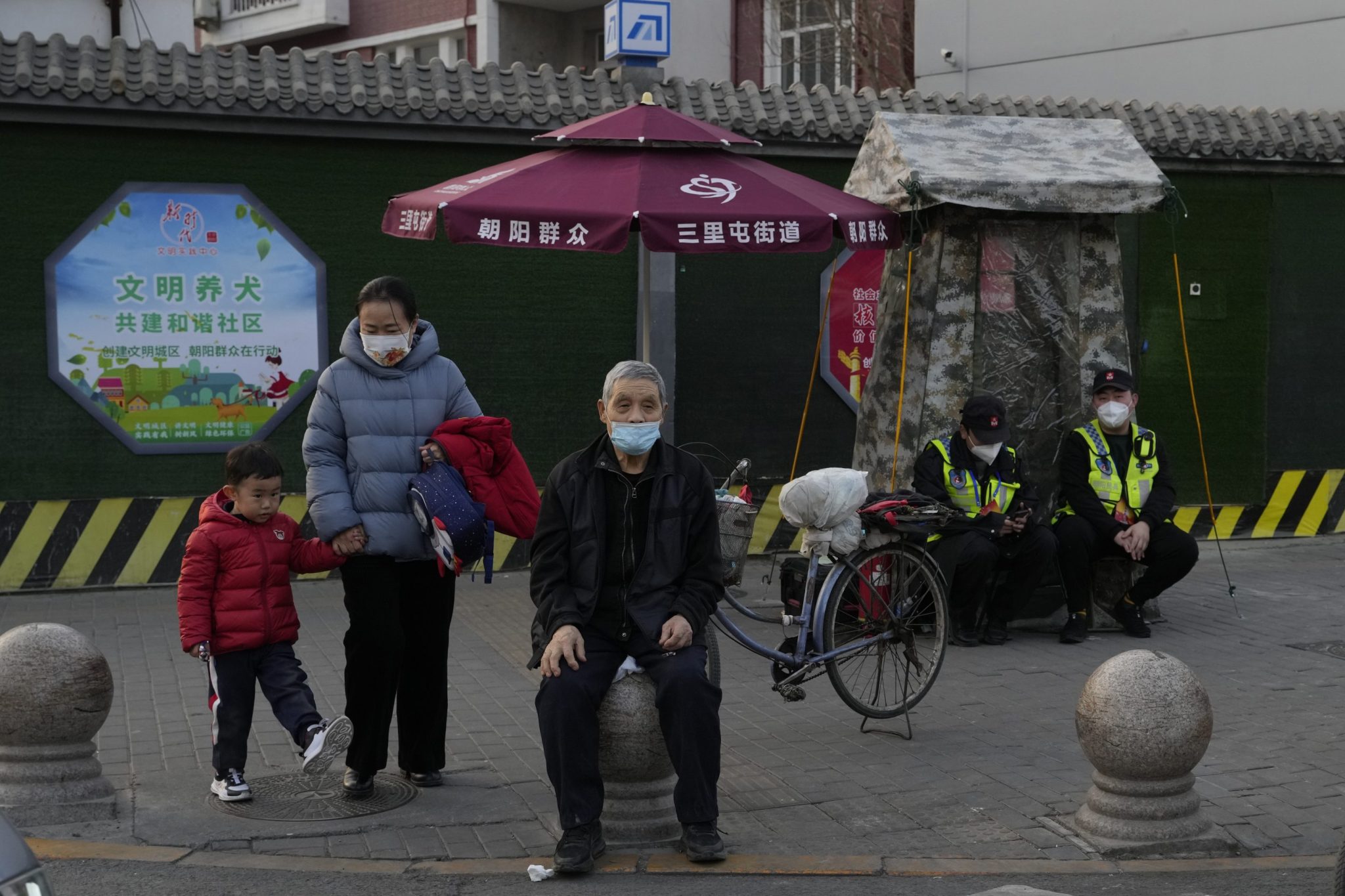
The people, who were not authorized to comment publicly and spoke on condition of anonymity, said the administration had decided to roll back testing requirements as cases, hospitalizations and deaths fell in China and the US had gathered better information about the surge.
The restrictions were put in place on December 28 and take effect on January 5 amid a surge in infections in China after the country eased pandemic restrictions and as US health officials expressed concern that China’s partners were being dishonest with the world. true number of infections and deaths. At Washington Post first reported on Tuesday about the administration’s expected move.
At the time, U.S. officials also said the restrictions were needed to protect U.S. citizens and communities because of a lack of transparency from the Chinese government about the size of the surge or its spread in China.
As part of that response, the Centers for Disease Control and Prevention earlier this year expanded genomic surveillance at several U.S. airports, collected voluntary samples from passengers on hundreds of weekly flights from China, and tested in-flight wastewater. The Traveler-based Genomic Surveillance Program will continue to monitor travelers from China and more than 30 other countries.
Rules implemented in January require people traveling to the U.S. from China, Hong Kong and Macau to take a COVID-19 test no later than two days before traveling and to test negative before boarding the plane. The test applies to anyone 2 years of age or older, including US citizens.
This also applies to people traveling from China via third countries and to people connecting via the US when moving to other destinations. Anyone who tests positive more than 10 days before a flight can provide documentation showing they have recovered from COVID-19 instead of a negative test result.
It is left up to the airline to confirm the negative test and document the recovery before boarding the passenger.
China has seen infections and deaths rise after withdrawing from a “zero COVD” strategy in early December following a rare public outcry against a policy that has confined millions of people to their homes and sparked protests and calls for President Xi Jinping to step down.
But as China eases its strict rules, infections and deaths have risen, and some countries have for weeks seen hospitals overwhelmed by infected patients seeking help. Still, the Chinese government has been slow to release data on the number of deaths and infections.
The US decision to lift the ban comes at a time when US-China relations have been strained. Biden ordered a Chinese spy balloon shot down last month after passing over the continental United States. The Biden administration also disclosed US intelligence findings that raised concerns Beijing is considering supplying Russia with weapons for its war in Ukraine.
Earlier on Tuesday, Chinese Foreign Minister Qin Gang warned that Beijing and Washington would face “conflict and confrontation” if the US did not change course.
Qin’s comments came a day after Xi said in a rare public speech that “Western countries led by the United States have imposed everything, encircling and suppressing China.”
White House officials are trying to tone down heated rhetoric from Beijing.
“There has been no change in the posture of the United States when it comes to this bilateral relationship,” White House National Security Council spokesman John Kirby said. “The president believes that these tensions must be acknowledged, but they can be worked through.”
fortuneThe CFO Daily newsletter is a must-read analysis for every finance professional who needs to get ahead. Sign up today.