
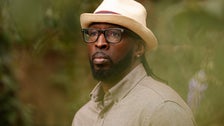
Nyhiem Way is tired of people who lump African Americans and Blacks together. Shalini Parekh wanted a way for South Asians to identify themselves differently from East Asians with roots in places like China or Japan. And Byron Haskins wants the US to throw away racial and ethnic labels altogether.
“When you set up categories that you use to put people in boxes, sometimes you miss that truth,” said Haskins, who describes himself as African American.
Way, Parekh and Haskins’ votes were among more than 4,600 pending comments before the Biden administration considered updating the racial and ethnic categories for the first time since 1997.
There is a lot to think about.
Some Black Americans want the slavery of their ancestors to be recognized in the way they are identified. Some Jews believe that their identity should be considered an ethnic category in itself and not just a religion. The idea of changing the categories for ethnic and racial identity, in the census and collecting demographic information between head counts, has been supported by editorials and think-tank essays as well as thousands of comments written by individuals in what is almost a Rorschach test for how Americans identify themselves.
The White House Office of Management and Budget is set to decide on new classifications next year and is hosting three virtual town halls on the subject this week.
Some conservatives question the process itself, saying the overarching premise that America needs more ethnic categories will only accelerate Balkanization.
“By creating and deepening sub-national identity, the government further contributes to the reduction of one American national identity,” wrote Mike Gonzalez, senior fellow at The Heritage Foundation, in a personal comment posted on the OMB web page seeking public input.
This view is in stark contrast to those who say the previous category ignores nuance.
“This is definitely a moment and an opportunity to improve and improve the accuracy and completeness of the data,” said Mario Beovides, director of policy and legislative affairs for the NALEO Education Fund, during a recent forum.
The proposed changes would create a new category for people of Middle Eastern and North African descent, also known by the acronym MENA, who are currently classified as white but say they have been routinely downgraded.
The process would also combine race and ethnic origin questions into one question, as some advocates say the current way of asking about race and separately about ethnic origin often confuses Hispanic respondents. With the revision, the government will try to get more detailed answers about race and ethnicity by asking about country of origin.
Another proposal suggested yanking from the federal government the words “Negro” and “Far Eastern,” now considered pejorative. The terms “majority” and “minority” will also be dropped because some officials say they fail to reflect complex racial and ethnic diversity.
Some Black Americans, like Way, whose ancestors were enslaved, said in public comments to the OMB that they wanted to be identified in categories such as American Freedmen, American Black Americans or American Descendants of Slavery to distinguish themselves from black immigrants, or even white people who born in Africa, also reflects the history of his ancestors in the US
Way, who is president of the United Sons & Daughters of Freedmen, which describes itself as dedicated to restoring the broken promise of Reconstruction, also suggested substituting the word “population group” for “race.”
Conflating “African American” with “Black” has “blurred what it means to be African American in this country,” Way, who works for a pharmaceutical company in Athens, Georgia, said in a telephone interview.
Haskins, a retired government employee from Lansing, Michigan, suggested eliminating race categories like “white” and “Black” because they encompass “unjust socio-political constructions.”
However, he said that people should be able to identify themselves as they wish. When the sociologist’s daughter points out the difficulty of turning that data into something useful for addressing housing or voting inequality, or aligning health or education programs to community needs, she tells him, “Go crazy. That’s what you pay for.”
“You have to look for the truth and not just stick with old categories because someone decided, ‘This is what we decided,'” Haskins said.
Parekh asked the government to differentiate between South Asians and East Asians.
“When these groups are assessed together, one loses a lot of important granularity that can help distinguish problems that are specific to one group and not another,” Parekh said.
The MENA community appears to have a related problem, based on some comments to the OMB. Without a category of its own, the group’s political power is diluted. People can benefit from cohesive representation, especially if identity is considered when drawing political districts, advocates say.
It was a more personal incident for Houda Meroueh, who described herself to the Biden administration as a 73-year-old Arab American woman.
“When I go to the doctor’s office, I don’t feel like I have the information I need to understand my medical history or my culture,” she said. “For all these reasons, I want to be treated as me. Not white.”
Jordan Steiner said that the ethnic category should be expanded not only MENA, but other groups like Jews who often consider themselves not only members of religious groups but also ethnic groups.
Jessica Aksoy praised the proposals to expand the category, saying she often felt limited about which box to check as a person of Turkish, European and Jewish heritage.
“Recognizing our differences honors and celebrates America’s rich melting pot,” Aksoy said. “The face of America is changing, and this initiative is for progress to recognize it.” ___
Follow Mike Schneider on Twitter at @MikeSchneiderAP