
Software update notifications that block the screen that keep coming back may annoy phone users, but ignoring them for too long is a mistake.
Many consumers choose not to have their phones set to auto-update. Once the day starts, these notifications can appear at inconvenient and chaotic times – when you’re in a hurry to call or send an email or text – but smartphone software updates are mainly designed to benefit you.
Companies included Apple and Samsung, too Alphabet‘s Google, which makes Android OS, is constantly working on security features and user experience in annual updates and more periodic updates to fix newly discovered bugs.
Apple’s current operating system iOS 16 was released this past September, and boasts many new features: the ability to modify and unsend messages; set multiple lock screens and set Focus filters to limit who you receive notifications from; privacy and security updates like Safety Check so victims of domestic or intimate partner violence can reset the access they’ve granted to others; and Lockdown Mode, an extreme protection method against cyberattacks.
Samsung Android 13 One UI 5.0 allows users to customize the lock screen, create stickers from photos and open applications in a split screen, along with security updates such as warnings when sharing personal information, and a security dashboard in the settings to check and fix security issues.
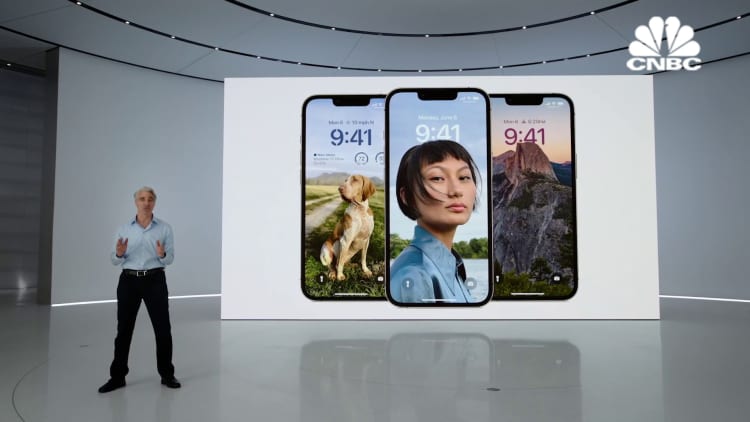
Not all software updates offer tons of new features, but when they do, you can feel like you’re getting a new phone at no extra cost. However, many users still do whatever they can to eliminate the 30 minutes that software updates can take.
Where human procrastination meets technology
It is a phenomenon that has been studied by researchers and is called “adoption procrastination.”
Researchers at the University of Tennessee and the University of Munich identified this “intentional delay” as a coping strategy that users of digital products use to combat the negative emotions that arise when software updates are released. The discomfort often stems from the perception that software updates require users to relearn how to use certain features on their devices and threaten their current habits. Disruption is also a factor, and the assumption is that the phone’s current functionality is optimal, so updating the software will only interfere with the use of the device.
But there is also a more basic human psychology.
“I think some of it is just natural, ‘I’ll get around to it, when I get around to it,'” said Dr. Richard Forno, University of Maryland Baltimore County director of the Cybersecurity Graduate Program and assistant director of the school’s Cyber Security Center.
He recommends setting up your phone to automatically download and install updates overnight while you sleep (as long as Airplane mode isn’t set). “This is a feature that can be implemented and should be enabled by many people, so there is no need to worry,” Forno said.
Apple, Google update options
Apple allows users to decide whether they want their phone to automatically download and install the latest iOS updates, or if they prefer to update manually. Android users can choose between three local system update policies, including automatic, windowed and delayed updates – all of which ultimately cause the device to update automatically. System policies are automatically installed as soon as new updates are available; the windowed system policy installs updates during the daily maintenance window that the user gets to choose; the delay option delays installing the update for 30 days. When 30 days have passed, the system then asks the user to install the system update.
When offered, cybersecurity experts do not recommend waiting 30 days. “For a normal user, within a few days to a week is possible,” said Justin Cappos, a professor of Computer Science and Engineering at New York University’s Tandon School of Engineering and a member of New York University’s Cyber Security Center. There are certain users who are at greater risk if they choose to turn off or ignore these notifications. “If you are a dissident who may be a target of nation-state actors, you should update immediately,” he said.
When a major security update comes out, everyone needs to act quickly.
Hackers will target flaws that are not updated
Big annual OS updates may be faster and more informed about new features, but security protection is the main reason why users should download all new software updates available for their phones. Smaller incremental updates, released mainly to fix bugs and ensure users more protection. It is as simple as knowing that Apple or Samsung, or another phone maker, indicates that the current operating system is no longer the most secure, and sends that message out to the world. This is not only good for you, but for hackers who want to exploit users who don’t get the message.
“You leave yourself vulnerable to attacks. Once the vulnerability has been announced and the patch has been released, attackers quickly take the information and create exploits for certain vulnerabilities,” said Kathleen Moriarty, chief technology officer at the Internet Security Center. .
Without the latest security patches, every piece of information on your phone is open to attack, from social media accounts to banking information to text messages.
“If you’re reusing passwords in different places, and they can get the passwords stored on your phone, they can gain access to other apps,” Moriarty said.

Reusing passwords across all accounts is a bad cybersecurity practice and can get worse when your personal phone security is used to gain access to your employer’s network.
“I hope you don’t use it across borders because this is one of the areas of attack that have been used where, for example, administrators for organizations are specifically targeted through personal accounts and personal account access is used to gain company access.” said Moriarty.
If malware penetrates an outdated OS, tricks you into clicking a link or downloading something, it can gain access to your personal information, drain your battery and reduce overall performance.
Fear of overstated performance, patch better and faster
Last year, software updates were larger and less frequent, which made them more vulnerable to hacking issues and bugs. For example, Apple discovered a major operating flaw after the 2017 release of MacOS High Sierra that allowed anyone to enter the computer without requiring a password.
However, since Apple and Samsung have moved to release smaller software updates and patches more frequently, it minimizes the impact on devices and increases testing.
“I have a higher level of trust because of the newer process. There are fewer problems happening with software updates now than five or 10 years ago,” Moriarty said.
The company has also developed software updates that can happen behind the scenes on the phone without the user having to download them. In the release of Apple iOS 16.2, the operating system can now push out security updates between additional updates with a new feature called “Rapid Security Response.”
Back in 2019, Google’s Project Mainline was introduced in Android 10 and implemented this mobile update process without requiring user involvement or rebooting the system. While this system cannot perform software updates entirely in the background via Google Play, it can install critical operating system patches without having to wait on the user or the phone maker.
“They can push security updates as needed without requiring the phone to reboot and disrupt people’s lives, which is good, because it’s transparent to the end user, but they get the updates they need. So it’s a win for security,” said Forno.
Now, there is no reason to worry about software updates, but the internet is also a great tool to quickly see how new updates work for other users. From social media platforms like Instagram and Twitter to tech news sites like The Verge, users can receive instant feedback on the latest software improvements.
“Because of the availability of social media, you will know that there is a big problem caused by something unexpected or not predicted by a certain update. So, you can wait a little or decide not to be so early, especially [for] great update. But I don’t think the timeline is very long. Because things like Reddit forums and Twitter and other places where you have easy access to immediate feedback,” Moriarty said.
Smartphone battery problem
Some users avoid software updates for fear of reducing battery life or slowing down the phone itself, and while this can happen after downloading a major software update, the problem is only temporary.
“Your phone will burn through the battery when you install the update, run all the verifications and checks, and then do a lot of indexing again. So I wouldn’t be surprised if a day or two, after you Download the update, your phone’s battery life may be low because it works, ” said Forno.
However, there are times when Apple’s iOS updates cause poor battery life for longer periods of time beyond the duration of the initial installment. For example, the release of iOS and iPadOS 15.4 caused many customers to report battery problems for several weeks after the release of the update, which led to the rapid release of Apple iOS and iPadOS 15.4.1 to combat this bug.
Phone storage is also affected when you install security updates. Depending on the size of the software update, the age of your phone and what operating system it’s currently running, storage can be an issue.
“I think the average user should make sure their device is updated regularly. … I don’t think they should worry about checking for updates every day,” Forno said.
Age of iPhone, Android model is important
Software updates do not guarantee that your phone will always be secure. As newer generations of iPhones and Androids are released, Apple and Samsung gradually remove older devices, and OS support. For example, iOS 16 is supported on every iPhone released since the iPhone 8. Samsung now guarantees customers at least four years of major Android updates and up to five years of security updates.
Hardware updates, including new chips and security features, also come out regularly.
“Upgrading to a new phone model every year to every few years can help you stay ahead of the security curve,” says Cappos.
Apple’s release of the iPhone 14 series includes the A16 Bionic chip in the Pro model, emergency satellite calling technology, and better hardware security through the switch to an eSIM-only card. The next big release is the Samsung Galaxy S23 this month, which includes Samsung’s latest tweak for Android 13, One UI 5.1. Users should check out the phone’s hardware, software and UI features, and owners of existing Samsung phone models will want to wait for the announcement of One UI 5.1 becoming more widely available.