
Kagiso Trust is hosting a very important Twitter Space Chat entitled: A different approach: Technical-Vocational Education and Training. The online event will include speakers and fellow participants who will join through the link created. This place will take place for hours Monday 13 February from 18h00 – 19h00. Click here to participate.
Speakers include:
- Dr. Cynthia Malinga: Technical Education Development Advisor at Sasol Foundation
Dr Malinga is an accomplished and experienced Educationist with a passion for improving the quality of life through education at all levels. His background is in science education, program management, educator development, educational research and instructional leadership. He also has a strong record of ensuring long-term sustainable growth in community development programs.
He is responsible for the Sasol Foundation’s Network of Technical Schools of Excellence that creates a pipeline for students to become artisans, technicians and technologists. Their main goal is to create a world-class space for practicing engineering skills. He was previously Education Center Manager at the Sci-Bono Discovery Center and Deputy Chief Education Specialist at the Gauteng Department of Education. Dr Malinga holds a PhD in Curriculum Studies from the Free State University, a Masters in Education from Wits University and a postgraduate qualification in Monitoring and Evaluation from Stellenbosch University.
- Lethewe Nkosi: Network Mobiliser at Youth Capital
Lethiwe Sinodumo Nkosi is the Actuator of the Youth Capital Network. He is a storyteller, whose mission is to amplify the voice of Africa. He holds a BA and MPhil in African Studies from the University of Cape Town. Youth Capital is a youth-led advocacy campaign to reduce youth unemployment.
- Sizakele Mphatsoe is Head of Education at the Peace Trust
Mphatsoe is an experienced Head of Education with a history of working in the non-profit management industry. She is skilled in Event Management, Media Relations, Fundraising, Non-Governmental Organizations (NGOs), and Marketing. A strong education professional with a Bachelor of Education (B.Ed.) focused on training and educational development from the University of Johannesburg.
- Zamokuhle Zungu – Deputy Director General in the Department of Higher Education and Training
context
South Africa faces the challenge of having an unskilled or semi-skilled workforce. While great strides have been made over the past few years, South Africa still needs more engineers and craftsmen. The goal is to produce a minimum of 30 000 artisans per year by 2030; now the country produces between 19 000 and 20 000 craftsmen every year.
TVET Colleges boast over 364 campuses across the country, serving around 800 000 students each year, and were introduced as colleges of Education and Training (FET) to address the skills shortage in South Africa. The college focuses on providing vocational and occupational education and training that prepares students to become functional workers in skilled trades.
A recent SABC News twitter poll viewed by 5 674 people and with 377 votes shows that many are wary of TVET institutions, with 24.1% saying they would choose a TVET college, while 43.8% would enroll in a university, 27, 6% said both and 4.5% said neither. Reluctance to enroll in TVET is also caused by the way society views degrees versus diplomas and certificate qualifications. People who are in university are given a higher status by society, family members, friends and other young people than people who study in TVET. It appears that students and communities do not have much knowledge about the benefits of TVET qualifications, and prefer to stay at home if they do not meet university requirements.
OBJECTIVES OF THE OPERATION:
We want to show Technical-Vocational Education and Training as a vehicle for employment and socio-economic improvement of our community. TVET offers a wide range of vocational skills, which can reduce the number of unemployed in the country, while equipping students with skills for direct employment or entrepreneurship. There seems to be a lack of information available to students about the TVET sector. These misconceptions also play a role in preventing students from following the TVET career path.
These are some of the questions we hope to answer through the conversation in the Twitter space. Here are some thought provoking questions:
- How to use Technical Vocational Education and Training as a means to reduce unemployment?
- Are there dropout reduction strategies outlined by the organization that can be adopted in the education system?
- How do we support the entire school system to ensure that TVET is successfully implemented?
- How many schools/institutions have been transformed or affected by your organization’s intervention?
- How can we implement a student-centered approach that aligns pedagogic methods and materials, curriculum, assessment methods and objectives, etc., with individual needs, focusing on student abilities?
Where are the gaps and how can we bridge them?
We can bridge the gap through:
- clearly define the articulation from school to TVET, not a parallel system
- driving TVET career education advocacy
- strengthen school-industry collaboration
- develop school-based and competency-based curriculum and teaching materials
- train school managers and teachers
- developing a student and teaching assessment system
- upgrade key instructional facilities and equipment, and
- strengthen provincial capacity in coordination, policy development, and monitoring and evaluation.
Teacher:
According to Teacher Education Trends (2016), South Africa graduates approximately 2% of its 15 000 teachers annually in Technical-Vocational Specializations. Our education system is still heavily focused on academic rather than vocational streams. South Africa’s economy continues to raise the challenge of skills and qualification requirements, particularly among youth. Our teachers, if equipped with the right skills, are an important part of the solution to this challenge.
Curriculum:
The educational curriculum is not diverse enough and sometimes limits the potential of students. Although some young people may consider technical and vocational education as a possible path, the curriculum is often theoretical, teacher-focused and exam-oriented. We need to encourage skills- and competency-based curriculum for future projects and long-term development. The curriculum should emphasize student involvement and seek to make students active participants and constructors of their own learning.
Partnerships and Collaborations:
Involving organizations, government and industry in the management of vocational schools can provide school leaders with important support in developing programs to produce the skills needed in the labor market. With industry participation, students can gain relevant workplace skills before graduation. This helps overcome the challenge of new graduates not being able to get a job, while companies are unable to find workers with the right skills. Business and education specialists bring new ideas, knowledge and expertise and work with schools to train skilled workers to match business needs. School-industry collaboration has taken many forms. One of the examples we want to add through this space is the Kagiso-Sasol Foundation partnership in technical schools across the country.
Students and parents (raising public awareness):
Students do not get enough information at the school level to make career decisions. Most schools encourage traditional post-matric education and apply for placements on time. One of the most effective vehicles for raising public awareness is the Career Day, which provides an opportunity for all stakeholders, including government, colleges and TVET practitioners, to share their experiences with the wider community.
Another aspect of the work to increase public awareness of the value of Vocational Education and Training is to present examples of internships in well-known companies to help people create associations with top brands. One of the main activities could include profiling young people who are successful in their careers in high-level apprenticeships and TVET.
RESPONSIBILITY FOR MISCONCEPTION:
About the Trust
Kagiso Trust is one of the leading development agencies in South Africa, working towards a prosperous, peaceful, fair and just society. We work to overcome poverty by developing and implementing replicable, replicable, sustainable development program models in the areas of educational development, institutional capacity building, socioeconomic development and financial sustainability. Over the past 35 years, we have invested over R2 billion in the development and implementation of over 1 831 programmes.
A different approach: Technical-Vocational Education and Training.
Kagiso Trust is hosting a very important Twitter Space Chat entitled: A different approach: Technical-Vocational Education and Training. The online event will include speakers and fellow participants who will join through the link created. This place will take place for hours Monday 13 February from 18h00 – 19h00. Click here to participate.
KASA project
Kagiso’s strategic partnership with the Sasol Foundation has enabled us to carry out technical vocational education interventions, including the transformation of seven ordinary schools into superior technical schools, and the production of 104 vocational textbooks for years 1-4 and grades 8-9. The collaboration, called Kagiso-Sasol-Project (KASA), aims to transform Technical Schools in Limpopo Sekhukhune District East, Makgakala and Bohlabela clusters, and technical secondary schools in KwaZulu-Natal and Mpumalanga.
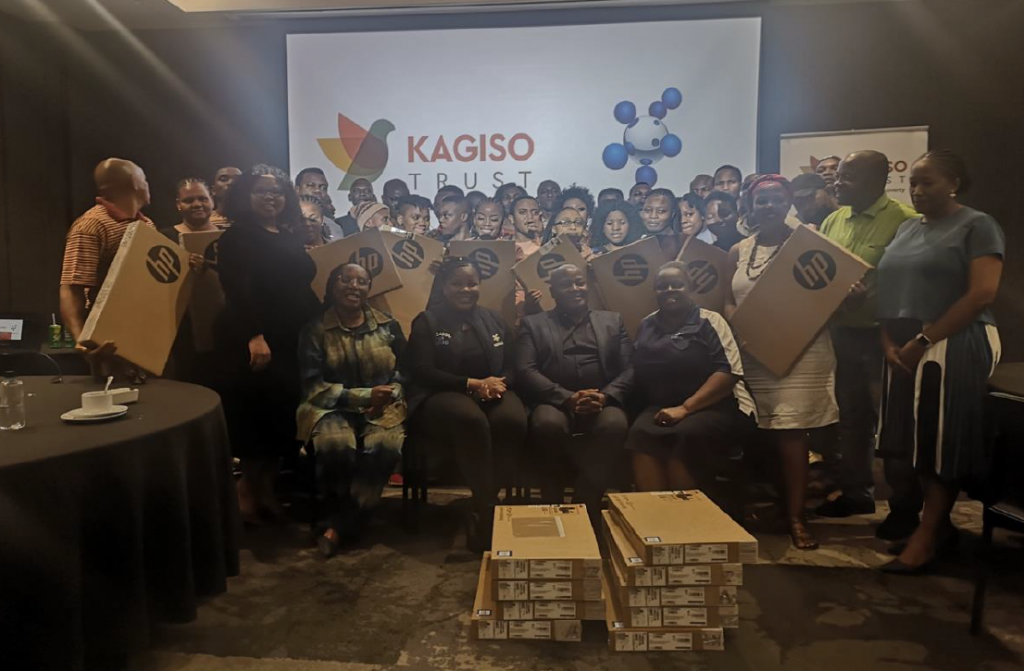
Partnerships with leading companies like the Sasol Foundation play an important role in the success of the intervention. The KASA project provides a unique opportunity for educators to use and improve their skills, as well as take the latest insights and solutions into the classroom, where they can continue to develop the skills of their students.
We know that the educational curriculum is not diverse enough and sometimes limits the potential of students. Although some young people may consider technical and vocational education as a possible path, some parents still prefer to see their children complete a university education and get an “office” job – which is considered more respectable in society than manual labor. The KASA project is responsible for changing the perception of technical and vocational training.
We have seen great progress with the KASA project, where we have created a platform for educators, researchers, and policy makers to participate in robust debates on the status of vocational training and create actionable solutions, through the Annual Technical Teacher Conference (ATTC). ). It ensures quality education by providing expertise to empower teachers and students, while developing leadership capacity in the vocational education landscape.
It is the nation’s pride to develop a vocational education system that will enable maximum technological progress. The purpose of vocational education should meet the needs of industry and society, as well as help the nation to adapt to the changing needs of the country. Our belief is that vocational education is the right pedal to drive economic growth and end poverty.