
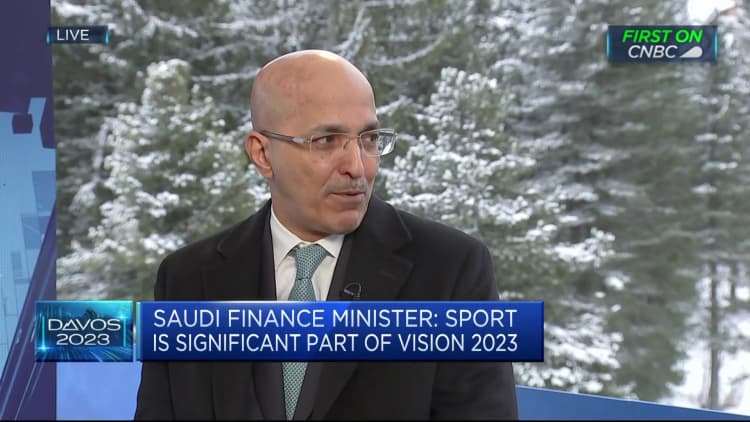
Saudi Arabia can help act as a conduit between the US and China at a time of heightened geopolitical tensions, Saudi Finance Minister Mohammed al-Jadaan said at the World Economic Forum in Davos, Switzerland.
His comments came amid questions about what the minister is most worried about in 2023. He called for calm and cooperation, noting his country’s ability to maintain an open dialogue with all major political powers amid Russia’s war in Ukraine, the competition between Washington and Beijing , and volatile energy markets.
“I really think we should focus on collaboration, cooperation, avoiding more geopolitical tensions, and calling for a calm and political solution to geopolitical tensions,” al-Jadaan told CNBC’s Hadley Gamble.
“We make our position clear on these issues – whether it’s at a general meeting at the UN or another forum.”
Mohammed Al-Jadaan, Saudi Arabia’s finance minister, at the World Economic Forum in Davos, Switzerland
Jason Alden Bloomberg Getty Images
Asked about Saudi Arabia’s ability to facilitate dialogue between adversarial powers like the US and China, al-Jadaan said: “I would say yes, we have a very strategic relationship with the US, and we have a close relationship with China, and I think we can overcome the gap .”
The Kingdom of Saudi Arabia and the United States have a relationship that dates back to the 1930s, and has been widely concluded to be one of oil in exchange for security. The US has a military presence in Saudi Arabia, selling advanced weapons and providing training and joint operations with the Saudi military.
The Biden administration’s critical stance toward the kingdom has poured cold water on the nearly century-old relationship, with Saudi Arabia then refusing to pump more oil for the global market to compensate for the loss of Russian supplies, despite requests from the White House. . The loss of Russian oil and gas to Western markets is due to sanctions imposed by the US and the European Union over Moscow’s full-scale invasion of Ukraine.
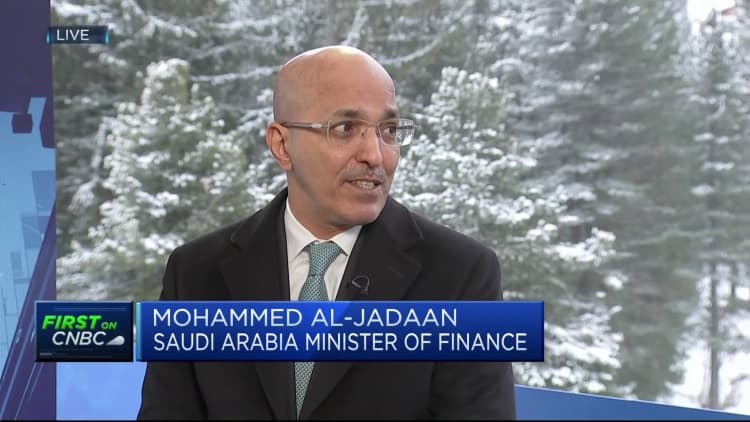
China, meanwhile, has for years been making inroads – especially economically – as Saudi Arabia’s main trading partner and largest buyer of oil. Riyadh’s relationship with Beijing is more functional and economic than strategic, meaning it is unlikely to change the role of the US in the kingdom anytime soon.
However, Saudi Arabia in recent years has bought more Chinese weapons, especially those that Washington is less willing to sell to its Gulf ally, such as deadly drones. Chinese technology transfers and infrastructure projects are also growing in the kingdom, as Saudi Crown Prince Mohammed bin Salman seeks to diversify his country’s alliances and make the country more independent.
Chinese President Xi Jinping visited Saudi Arabia in December, and the two countries signed a strategic partnership agreement that China’s foreign ministry at the time called “an epoch-making milestone in China-Arab relations.”