
India is making headlines for crypto regulation yet again. Governor of the Reserve Bank of India (RBI), Shaktikanta Das, stated that some members of the G20 summit may consider banning all cryptocurrencies.
The International Monetary Fund (IMF) and the Financial Stability Board (FSB) will work on technical papers and formulate policies that will create a regulatory framework for crypto assets. The regulation will be proposed by the Indian Presidency at the G20 Summit.
The paper will be considered at a meeting of G20 Finance Ministers and Central Bank Governors. The G20 summit is scheduled to take place in October. Discussions on private digital asset regulation will be finalized before September.
In a recent press conference that took place at the end of the first G20 Summit, the Finance Minister of India, Nirmala Sitharaman, clearly stated that anything that is not under the control of the Central Bank will not be considered a currency.
India has been ambiguous about the regulation of private digital assets for a long time, but the G20 summit is expected to consider formulating crypto regulations. India is also working on launching its own Central Bank Digital Currency (CBDC) as the country sees this as a step to compete with crypto.
Regarding questions and queries about crypto regulations, Nirmala Sitharaman stated that understanding the risks associated with crypto is the first step to regulate the industry. After fully analyzing the risks, the G20 countries will present a comprehensive approach to handling private digital currencies at the G20 summit. The G20 countries will formulate policies after taking into account the macroeconomic situation and other regulatory points of view.
Other Options to Consider When Creating Crypto Regulations
The Reserve Bank of India has been pushing for an all-out ban on the use of private digital assets for some time now. However, Sitharaman has made the case that there could be a synchronized regulatory mechanism where these assets would be governed by a single regulatory policy.
This means that other countries do not need to implement different regulations because this regulatory framework will be an umbrella for many countries. The idea is supported by US Treasury Secretary Janet Yellen, who supports strict regulation of private digital assets. This step will also help reduce the cost of cross-border payments.
The RBI governor said that there are other options for managing these assets, but it is not yet time to talk about them. Das stated that although the RBI is keen on banning the ban, there are opposing views that crypto should be regulated in order to check the risks associated with these assets.
According to Shaktikanta Das, cryptocurrency is still working. Skepticism about these regulations is shaped and supported by the idea that private digital assets continue to pose a serious threat to the financial stability of the economy, along with other security concerns.
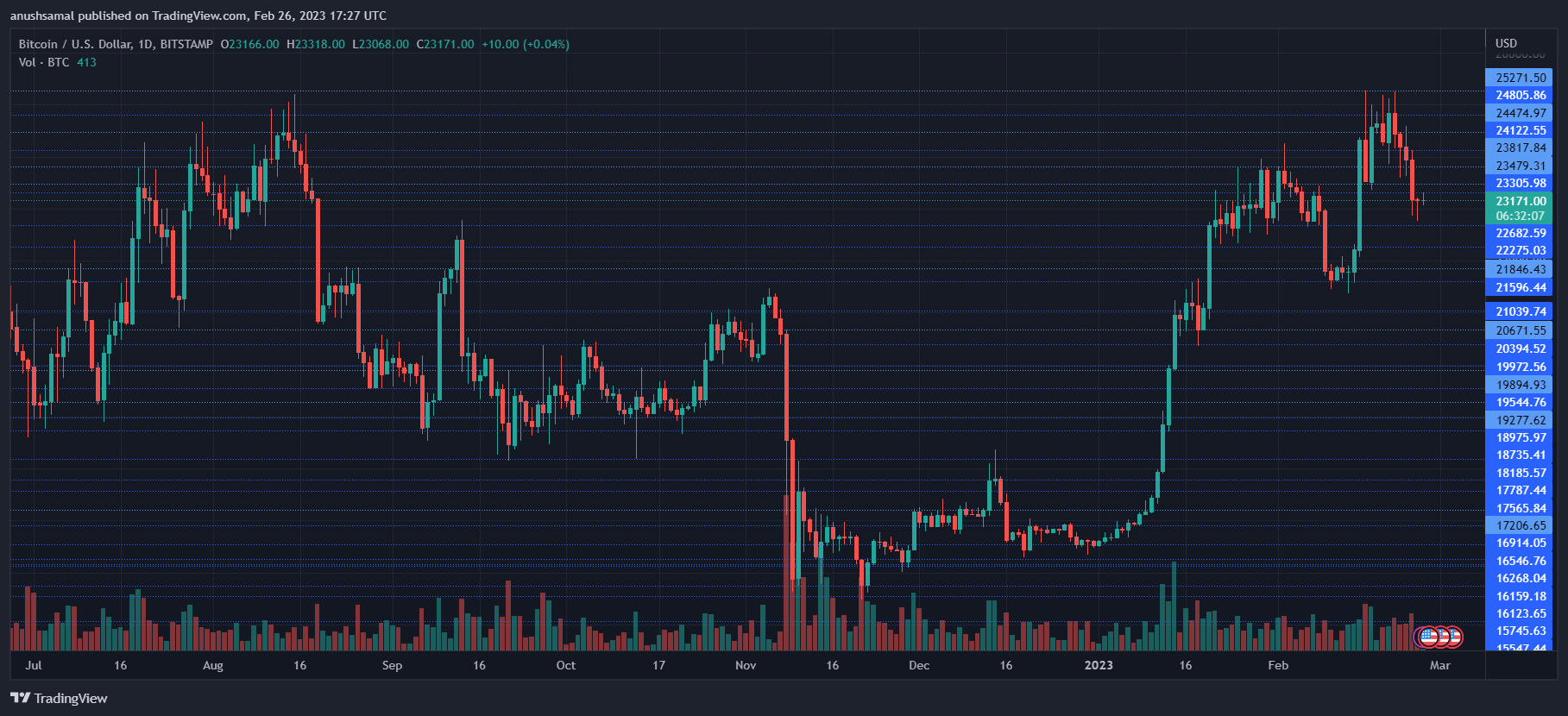
Featured Images From UnSplash, Charts From TradingView