
With effective management software, bitcoin miners can take advantage of the industry’s unique efficiency and profit potential.

This is an editorial opinion by Mitch Klee, an analyst at mining management platform Foreman.
After China banned bitcoin mining in May 2021, almost 75% of the global hash rate was dispersed and moved to other countries such as Kazakhstan, Russia, the United States and Canada. Since a seemingly dangerous mining ban was imposed on the mining hotbed of China nearly two years ago, the Bitcoin mining landscape has changed dramatically. Interestingly, the hash rate continues to grow and is currently around 320 exahashes per second (EH/s), with US alone accounting for almost 37% of all hash rates.
This hypercompetitive growth has caused miners to look for more efficient ways to manage their operations at scale, with miner management software being an important part of that strategy.
Using Bitcoin Mining Management Software
Management software is changing the Bitcoin mining landscape by allowing mining facilities to effectively manage their sites while saving costs and responding to energy grid demands.
Miner management software is a way to manage and coordinate miners at scale. Initializing, configuring, and programming each ASIC is very difficult, involving multiple steps such as pooling connections, completing firmware updates, configuring power controls, and diagnosing problematic hash boards. This setup process can be very difficult if you don’t use the right software. However, with effective miner management software, users can easily manage their mines, ensuring optimal performance and productivity.
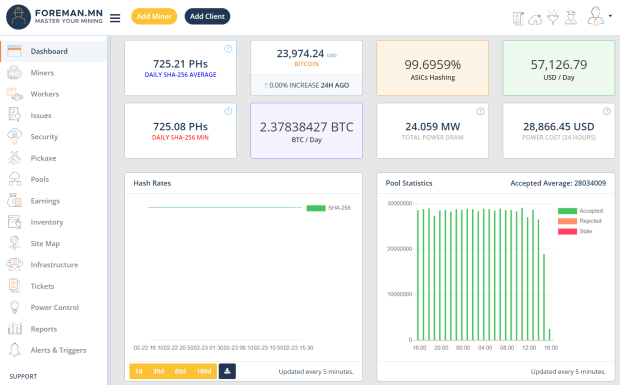
The programmable nature of this software enables the user to control various processes through conditional statements. For example, if the temperature of the ASIC reaches a certain threshold, it can activate sleep mode, or if the price of electricity exceeds a certain threshold, it can reduce mining operations. The dynamic nature of the software allows the user to control exactly how they want to set up the mine. In addition, the dynamic nature of the mining software unlocks powerful capabilities such as managing the power grid and starting in response to demand, providing users with a complete solution to optimize their mining operations.
The Importance of Demand Response
Demand response is the action of electricity consumers in response to an increase in demand for the amount of electricity in the network. In a previous article, I developed the unique influence of Bitcoin miners through Demand response, which I recommend reading to learn more about the functionality of this relationship. In short, Bitcoin miners can respond faster to grid signals and on a larger scale than other industrial consumers can, without significantly hindering their profit margins.
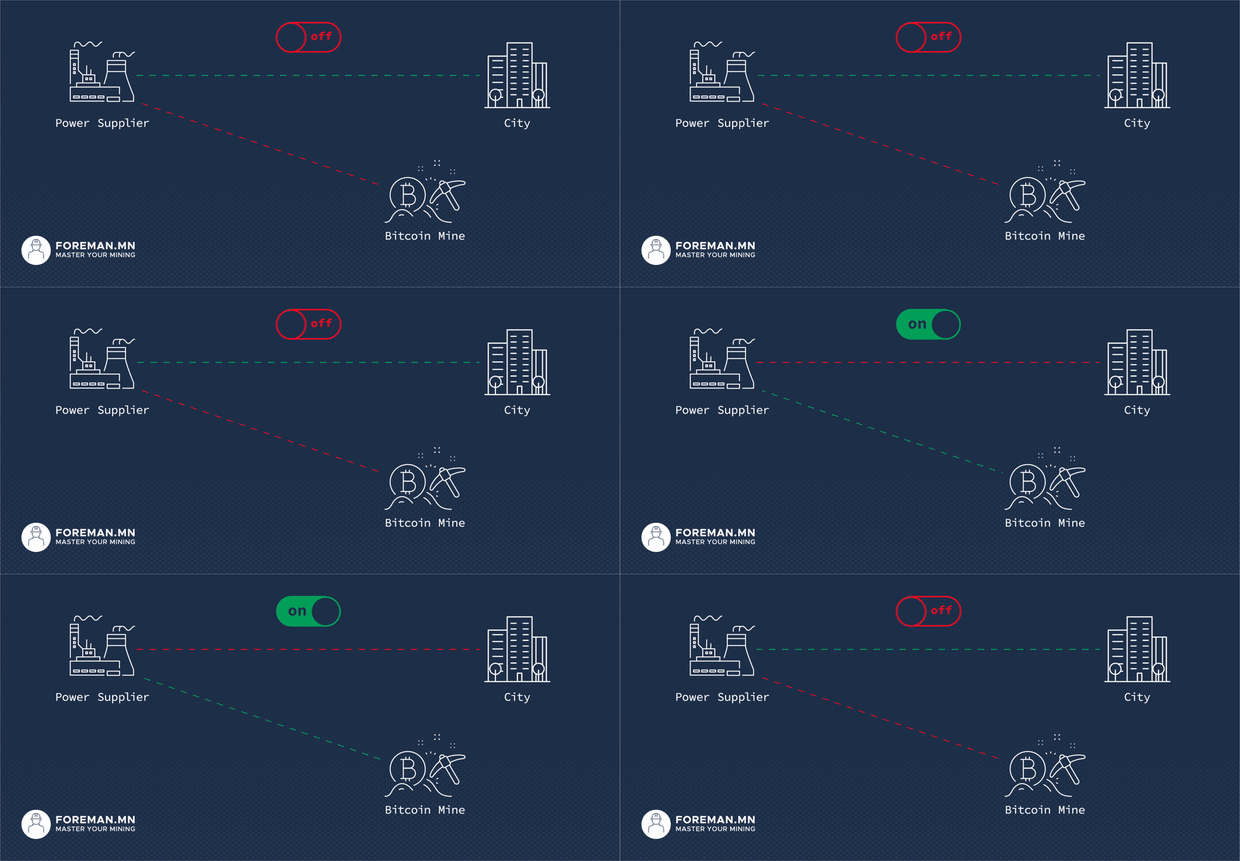
Mining sites spread across the global energy market, on-grid and off-grid, finding all energy arbitrage opportunities. Similar to the nature of water, Bitcoin miners will follow and flow to the lowest energy source, consuming excess energy when needed. The flip side is that miner management software allows miners to respond to increases in demand quickly, reducing operating costs and increasing the bottom line. The flexibility enabled by this software allows miners to continuously optimize their operations, participate in unique grid service programs, and stay ahead of the competition.
One example is the strike price. When production costs exceed revenue, miners must shut down and the management software enables this automatic trigger.
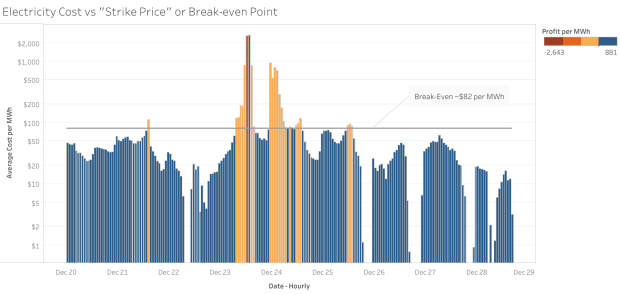
Miner management software allows users to automatically and programmatically respond to high electricity demand through a strike price mechanism. The couple has a demand response program, and miners are now lowering their overall costs and getting paid to turn off the company’s demand response program.
The program’s response to increasing demand is to add an operating system to a century-old box, with a large flexible load that responds at real scale. Distribute this to the worldwide network, and Bitcoin mining has created a balance response mechanism to keep the grid balanced. By financing excess production, it is possible to keep the lamp in size while lowering the overall electricity cost of the grid.
Over the long term, bitcoin mining is a race to zero. The competition is chasing cheaper and cheaper transmissions, looking for stranded and excess electricity, getting closer to electricity producers, and eliminating all excess costs. It is difficult to say what the future holds for Bitcoin mining at scale. However, software management over the site makes it impossible to mine for miners because the competition for hash rate is more and the cost of electricity is lower.
This is a guest post by Mitch Klee. Opinions expressed are entirely their own and do not necessarily reflect those of BTC Inc or Bitcoin Magazine.