
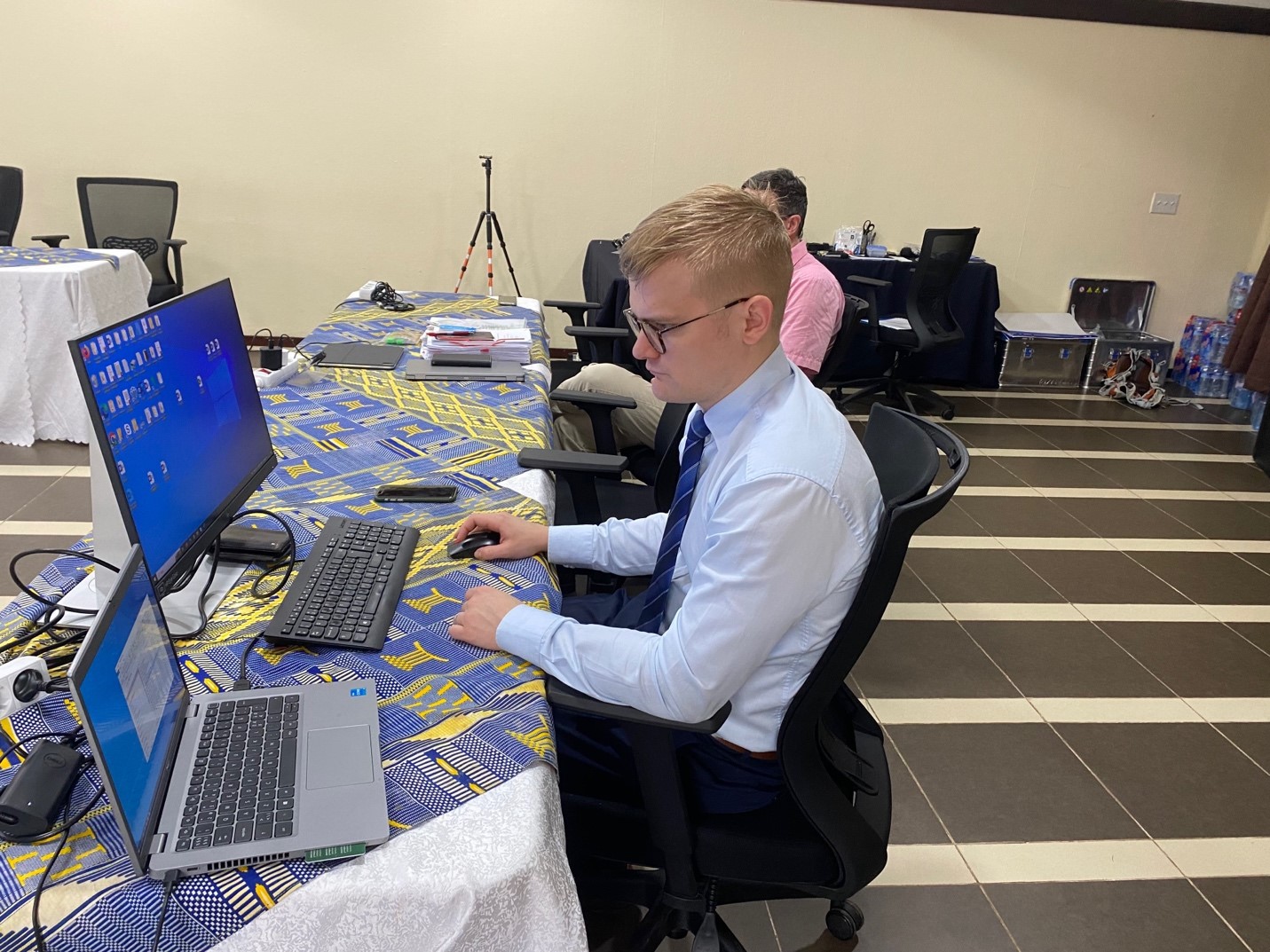
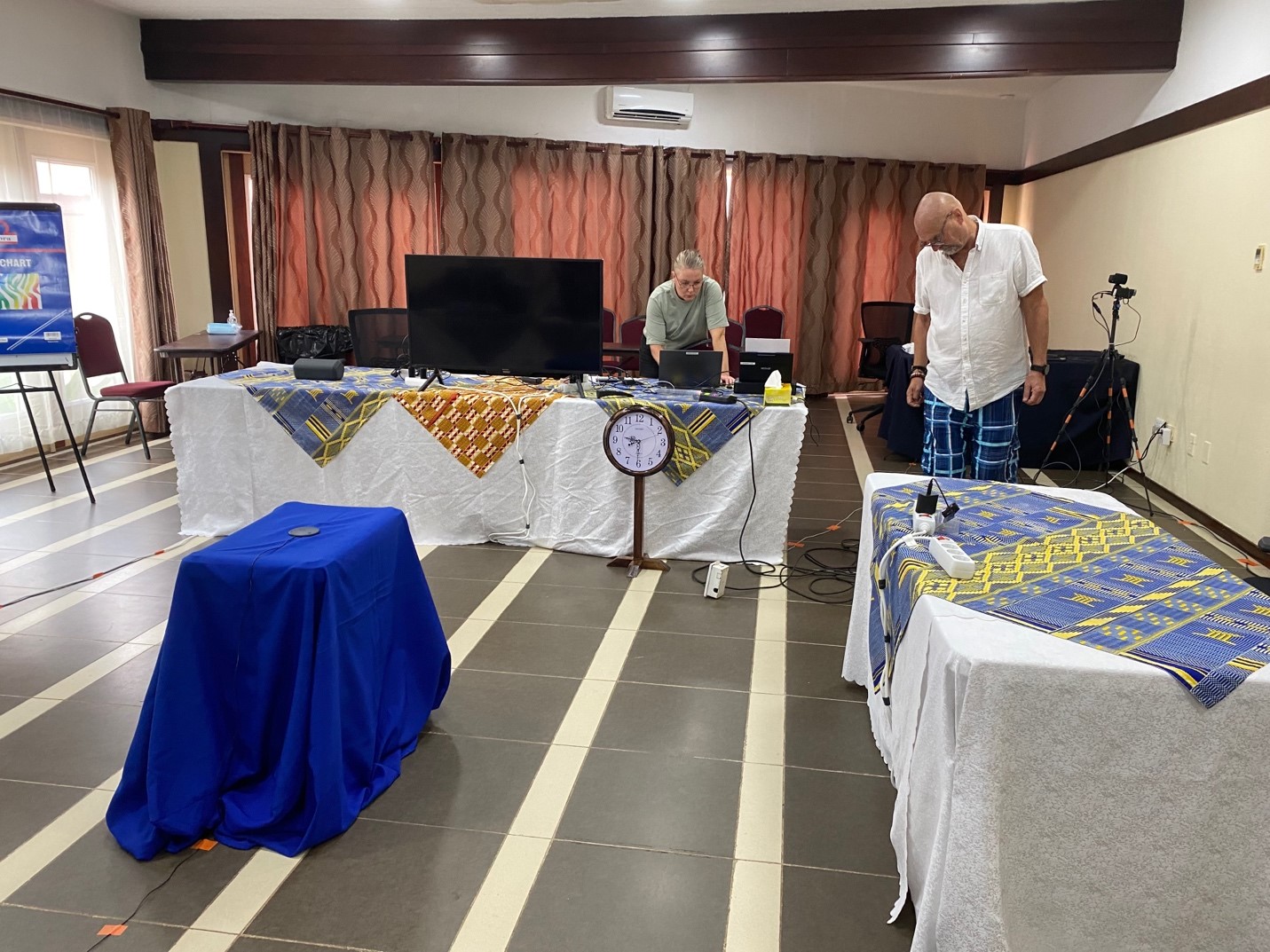
KENDEJA, Monrovia – Liberian trial on former appeal Revolutionary Union Front the acquittal of the commander from war charges in Finland, took place in a Monrovia hotel today.
In an exclusive interview Judge Vanne Kimmo admitted the Court of Appeal of Turku, which has moved to Liberia to hear from 70 witnesses (mostly prosecution), faced several challenges with the death of three proposed witnesses.
Judge Vanne admitted the death of three potential prosecution witnesses could be a source of concern for the witness as many of them expressed their fear of testifying in the five international trials of perpetrators accused of crimes in the Liberian civil war that have taken place so far.
During Alieu Kosiah’s war criminal appeals trial in Switzerland this month, two witnesses claimed they were threatened by their allies for testifying against them.
The unusual decision of the Finnish court to come to Liberia to see the sites of the alleged crimes and the trial for months in 2021 was groundbreaking.
None of the accused perpetrators have ever been tried on Liberian soil for crimes committed during the civil war. The Finnish legal system is unusual in that it requires judges to visit crime scenes whenever possible. No other court has come to Liberia for hearings or site visits.
There are concerns that witnesses will be less willing to testify in Liberia than in trials in the US and Europe. That proved not to be the case. 80 witnesses came forward to testify. The judge said he had no information about the death of the witnesses.
“I don’t know the cause of death or whether he was threatened after his testimony or something like that,” Judge Vanne said. “We assume that he died of natural causes. There is no knowledge that points in the other direction.”

Vanne said the three-judge panel had watched the testimony of the deceased witness to the district court.
In the first session of the trial, the court heard from a man who claimed that Massaquoi ordered the killing of his wife and other civilians on the Waterside bridge, where they went to look for food in a biscuit shop that exploded.
The witness said that Massaquoi had ordered his bodyguards to keep civilians in a long line under the old Vai City Bridge. [now King Zolu Duma Bridge] and ordered to kill them if they left the queue.
He said his wife was running away shot by Massaquoi’s bodyguards when he was killed.


The witness said the soldiers had killed four people in the crowd of civilians before killing the wife. He said when the alleged killings took place, “friendly troops” of Charles Taylor, the President of Liberia at the time came to the scene and asked, “why are you killing Liberians?”
The witness said earlier, Massaquoi had killed two people himself.
“When he killed two people, he said go and tell God that I am the Archangel Gabriel.”

He identified one of them as Tamba. In cross-examination, the defense lawyer asked him about his earlier statement to the Finnish police in which he said he did not know the man’s name.
Defense lawyers read police investigation notes which said he did not accompany his wife to Waterside, but only went looking for her after he heard of shootings in the area.
The witness also told the police that the incident happened in 2003 but told the court that the incident happened in 2001 and 2002.
Asked about inconsistencies in his testimony, the witness said “my brain is not a computer to remember everything that happened.”
Inconsistencies in witness testimony played a major part in Massaquoi’s acquittal.
The death of three prosecution witnesses for the appeal court hearing was not the only setback the court faced.
READ ALSO: Malabu scandal: The release of Shell, Eni ‘stain on Italy’ – Anti-corruption campaign
The Sierra Leone government has also not responded to requests to move the court there to hear witnesses after the Liberian trial ends. The accused, Gibril Massaquoi, has called a defense witness in Sierra Leone to testify on his behalf, as he did in the 15-month trial.
A lower court acquitted Massaquoi of all charges brought against him for war crimes and crimes against humanity by Finnish prosecutors finding that he had not proved the case “beyond reasonable doubt”.
“We have not received an answer to our request for Mutual Legal Assistance from the government of Sierra Leone,” Vanne said. “We’re still hoping and hoping for the best. If we don’t get an agreement, there will be some work to do.
“The related problem is that at least some Sierra Leonean witnesses are unwilling to come to Liberia. And there is no way we can force them to do so. So, it will be a problem if we don’t get permission to continue the trial in Sierra Leone.
Massaquoi’s lawyer has accused Joseph “Zizar Marzah”, a key commander of Liberian President Charles Taylor of one of the mass murders Massaquoi is accused of, according to a transcript translated from the trial conducted by Civitas Maxima, a Swiss-based justice activist. .
He claimed the Liberian police covered it up by choosing to blame the Sierra Leonean Massaquoi instead. Marzah called Massaquoi’s release a mistake. Marzah refused to testify at Massaquoi’s first trial but in an interview with New Narratives last year promised to testify if called back when called.
Tom Laitinen, the Chief prosecutor in the trial said that like the defense, they also have “new witnesses.” But judge Vanne confirmed Marzah is not on the witness list at the moment.
Vanne became the presiding judge of the Turku Court of Appeal at the beginning of 2015 after 25 years of experience. Despite the huge challenges the court faces when trying cases in an unfamiliar language and culture, he says the outcome is fair.
“I’m sure I can guarantee a fair and good trial,” Vanne said. “The court is talking about its decision, and we plan to give the decision in this case at the end of September this year if everything goes well.”
Perhaps as a reflection of the lack of obstacles in the first visit to Liberia, this court has allowed journalists to open the location of the hearing as Kendeja Resort. The information was suppressed at the first hearing in the district court.
The Turku Court of Appeal set aside the district court’s decision that acquitted Massaquoi by allowing the media to publicize the location of the appeal process.
This story is a collaboration with New Narratives as part of the West African Justice Reporting Project.
Support journalism integrity and credibility PREMIUM TIMES
Good journalism costs a lot of money. But only good journalism can guarantee the possibility of a good society, responsible democracy, and transparent government.
For continued free access to the best investigative journalism in the country, we ask that you consider making a modest contribution to this noble effort.
By contributing to PREMIUM TIMES, you help keep journalism relevant and ensure it remains free and available to all.
contribute
AD TEXT: Call Willie – +2348098788999
