
When President Joe Biden takes office in 2021, his first message to the world will be: “America is back.” After becoming general secretary of the Communist Party of China (CPC) for the third time in October, President Xi Jinping appeared to issue a similar proclamation.
Over the past two months, China’s leadership has announced or signaled a series of major policy reversals, abruptly ending nearly three years of severe zero-Covid restrictions; easing the crackdown on technology companies and the real-estate sector; reaffirming his commitment to economic growth and extending an olive branch to the United States in the G20. With the world’s second-largest economy seemingly reopening its doors for business, investors are responding with enthusiasm.
However, while China’s pro-business reset is certainly a good sign for international trade and global peace and stability, putting China’s economy on the right track will require more than just reversing new policies.
What is needed is to bring pragmatism and honest feedback to the political system. As I show in my book How China Escaped the Poverty Trapthese attributes define China’s famously adaptive government during the Deng Xiaoping era.
There is a common misconception that the “China model” means top-down control by a strong and authoritarian government, flanked by muscular state enterprises. In fact, 30 years of poverty and suffering under Mao Zedong proved that the combination of top-down planning, state ownership and political repression was a recipe for failure.
That’s why Deng quietly introduced a hybrid system called “directed improvisation”. The CPC remained firmly in power but the central government delegated authority to many local authorities in China and, at the same time, freed private entrepreneurs from state control.
As a director rather than a dictator, the government in Beijing sets national goals and creates incentives and rules accordingly, while lower-level authorities and private sector players create local solutions to local problems.
In practice, various local “model Chinas” emerged, delivering transformative innovations from below, often in ways that surprised central authorities. The rise of the digital economy is one example.
Because ideas must be followed before action, Deng made sure that he changed the mindset and norms of the CPC itself. In a historic speech in December 1978 launching China’s “reform and opening” era, he made “liberating the mind” a top priority for the party. Under Mao, people did not dare to speak the truth, for fear of severe punishment, creating a terrible political climate that led to dangerous policies like the Great Leap Forward.
But according to Deng, the new order is to “seek truth from reality”. Policies should be chosen because they promote the welfare of the people, not because they are politically correct.
Deng’s hybrid system – top-down direction combined with bottom-up autonomy – has been ignored by Western China hawks and leader Xi himself. When Xi came to power, he favored another China success story, celebrating the “institutional advantages” he attributed to a top-down command system over Western democratic capitalism.
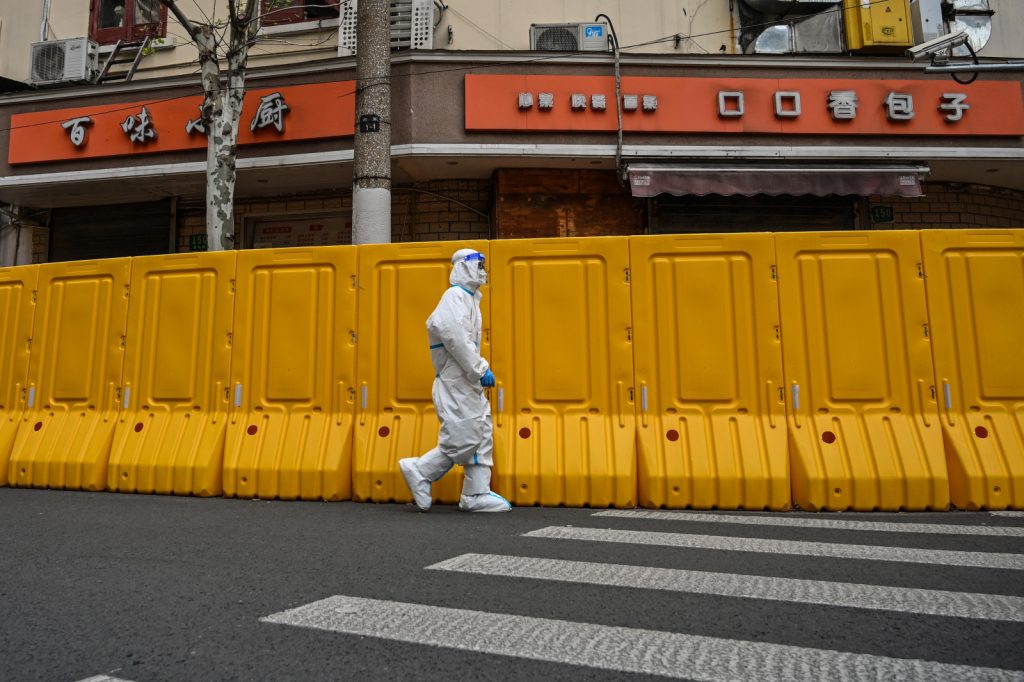
Certainly, the top-down approach produced surprising results during the initial Covid-19 outbreak. Through mass testing, strict containment, and other measures that can only be implemented under a strong and authoritarian government, China has experienced almost zero infections and deaths from 2020 to 2022. “.
But then events took a quick, unexpected turn. Outraged by the endless lockdown, Chinese citizens from all walks of life took to the streets in protest, forcing Xi to change his position. But the sudden reversal of the zero-Covid policy led to a surge in cases and hospitalizations that China will continue to struggle with for some time.
Xi and his team are eager to tackle the pandemic and restore business confidence. The relaxed economic regulation and the end of the pandemic control have really surprised the capital markets.
In addition, after the peak of Covid-19 infections, domestic consumption will return with a vengeance (flight bookings increased several times after the quarantine requirements for travel were lifted) and manufacturing and logistics will return to normal. The central government has also promised additional infrastructure spending to boost growth.
But in order for the new economic area to produce longer, Xi needs to reopen the feedback channels of the political system. That means giving a personal example and explaining to party state officials that they really want to report the facts on the ground. It will not happen if in practice, those who tell the truth are silenced and propagandists are promoted.
The government should also give more space to civil society and the media. It is quick and ultimately self-defeating to think that eliminating freedom of speech will strengthen the power of the CPC. Without an organized policy feedback system, the government will suffer, leading to the kind of mass protests that erupted in November and undermining the CPC’s performance-based legitimacy.

But another problem with Xi’s top-down approach is that it will make investors think that China can turn around again. Over the past decade, Xi has repeatedly declared his dedication to various “reforms”, only to do the opposite. Empowering officials with a note of pragmatism and honesty Changing the political system’s criteria for recruitment and promotion will be louder than slogans.
Finally, China’s leaders must admit that the main goals of solving the problems of the country’s “Gilded Age”, such as preventing speculative investment in real estate and protecting the rights of delivery workers in e-commerce, are not wrong. The previous policy backfired because it was implemented arbitrarily, making businesses nervous that the party could change it at any time.
Xi and his circle should practice transparency and consultation in policy making, instead of simply refusing to pursue inclusive development.
China accumulated considerable experience in adaptive governance between the late 1970s and early 2010s. But when Xi came to power in 2012, Deng’s economic model had reached its limits and began to produce unsustainable levels of corruption, inequality, debt risk and environmental pollution.
However, the solution will not be to return to Maoism. However, China must bring “directed improvisation” into the 21st century. — © Project Syndicate
Yuen Yuen Ang, a professor of political economy at Johns Hopkins University, is the author How China Escaped the Poverty Trap (Cornell University Press, 2016) and Gilded Age China (Cambridge University Press, 2020).