
George grinned widely as he sipped a pint of Guinness in a cozy Dublin pub, basking in the famous warmth of the land Welcome (100,000 welcome). As one of the fast-rising number of Chinese citizens investing in Ireland in exchange for Residency, he has every reason to feel at home.
George, who asked not to give his real name, has invested €1 million in Ireland and says China’s uncertain economic outlook has prompted wealthy people like him to seek additional residency options abroad. “I’m worried about the future in China,” he said.
Ireland’s decade-old immigrant investor program (IIP) is gaining popularity in 2022, with the number of potential investors from China more than tripling to 785 in the nine months to September, up from 243 in all of 2021. Applications from all countries hit a record 812, nearly doubling double the annual record in 2019.
Since the scheme started in 2012, Chinese investors, including from Hong Kong, have contributed more than 90 percent of successful applicants and €1.18 billion have been invested.
At the last national congress of the Communist Party of China, “the key word is ‘economic growth’. But the buzzword of the 20th Congress [in October] is “struggle”. said the head of the Irish-based fund, focused on the hospitality sector, in which George has invested €1m. The fund’s chief executive asked not to be identified.
“The middle and upper classes are worried about what it means for them, for their wealth, career and family,” he said.

Ireland has become an increasingly attractive option due to problems with similar schemes elsewhere. Brexit made Britain a less attractive option even before London in February suspended its own immigrant investor program over security concerns, and the US scheme was also put on hold for months.
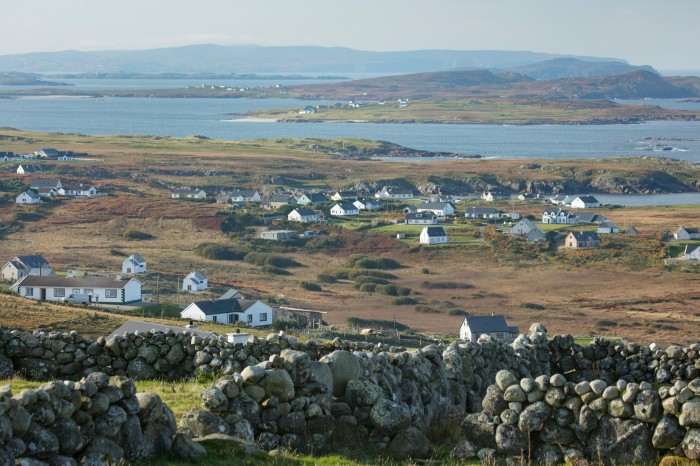
“We have seen a big jump [in IIP investments in Ireland] since 2017, “Sa Niamh Walsh, who runs TDL Horizons, which focuses on hotels and tourism property sales, in County Donegal, and who has worked with IIP clients. “My gut is because this is because of Brexit.”
Other factors such as education and the country’s friendly reputation make English-speaking EU member states a desirable choice for investors such as George.
Nearly three years of tough coronavirus curbs – only eased in December – are another factor in wealthy Chinese seeking residence overseas. “You can definitely draw a correlation there,” said James Hartshorn, chief executive and co-founder of Bartra Wealth Advisors, a leading IIP fund, whose portfolio includes social housing and nursing homes.
Many countries have plans that offer residency or even passports in exchange for investment, but Ireland’s success has made IIP investment “a tool to channel investment into areas of the economy that really need it”, Hartshorn said.
“Because of the cost of capital, the interest rate increases and the price of goods increases[which could slow investment in those sectors]. . . program now is more important than ever,” he said.
Applicants have four routes available: they can invest €1 million in an Irish company, invest €1 million in an approved investment fund or invest €2 million in a real estate investment trust listed on the stock exchange – all for at least three years. Or they can donate €500,000 – or €400,000 if the application is made jointly by five people – to an art, sports, culture or education project.
Peter Fitzpatrick, Irish Dáil MP from County Louth and former Gaelic footballer, has raised nearly €15 million from Chinese investor IIP to build his county’s first Gaelic games stadium in 60 years.
“We got an agent who had contacts in Asia and got 37 applicants who were willing to invest €400,000,” he said. “Maybe we can raise some money [without IIP] but not as fast. It’s a dream come true.”
Both George, who has managed an environmental monitoring business in China, and Helen, a lawyer who also asked not to use her real name and who invested €500,000 in the same fund, said education is a big motivation. George has a son in high school and Helen has one at university in Ireland.
Walsh said the “huge benefit” is that investors only have to spend one day a year in Ireland. He did not lose his residence in his country of origin. However, the IIP program does not give investors the right to a passport.
Investors must maintain their investment for at least three years. After that they can sell their investments and keep their Residency status, but they have no further obligation to invest, said the chief executive of the Hospitality-focus fund.
Although Chinese demand is driving the IIP, applications from the US are also increasing. “It’s taken everyone by surprise,” Hartshorn said. “The main reason I hear is that it has to do with the political situation in the US. [Former president Donald] Trump rattled many people, there is polarization and worry about where it is going. There is a great historical connection between Ireland and the US so it allows America to go back to its roots,” he said.
The number of US applicants, usually around five or less since the IIP launched, has doubled to 11 as of last year. The program has seen 31 successful US applicants since 2012 and 1,511 from China, with a significant number of investors also from Vietnam, Saudi Arabia and South Africa.
Chinese investors, coming from a country where there is no Google, no Facebook and news mostly from official sources, “really appreciate the freedom” Ireland offers, said the chief executive of a hospitality-focused fund. But whether it can continue to attract the same number of wealthy applicants depends on “where China goes from here” economically and politically.
He added: “Ireland used to be “Europe’s hidden secret . . . now we have met.”