
Human rights and environmental activist-turned-author Kumi Naidoo lived a dark life one day when she was just 15 years old.
After the unimaginable tragedy of losing his mother to suicide, Naidoo’s life took a turn that saved his own life. Ironically, to save himself from heartache, he joined the struggle against apartheid, which put him at even greater risk.
The pain and anger he feels after losing his mother may be the kind of recklessness and idealism he needs to fight against a brutal system, so that justice can prevail.
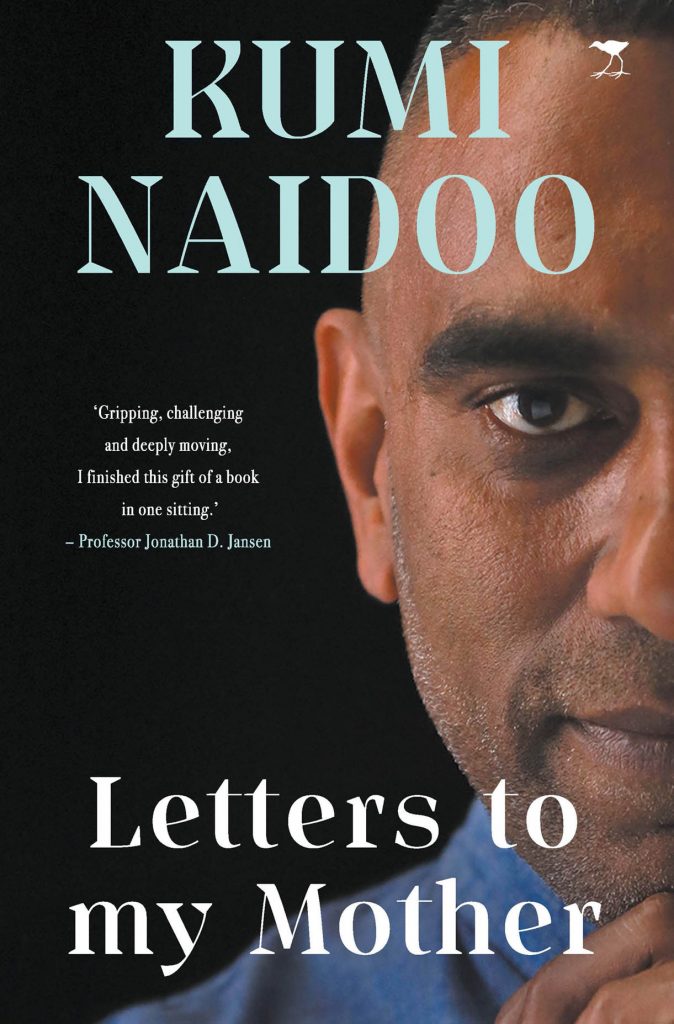
“In the weeks after Ma, I struggled to understand her choice to end her life. I felt sadness, anger and a deep sense of loss,” Naidoo wrote in a chapter titled The Deep Anger of Loss from his memoir, A Letter To My Mother: Making Trouble.
Naidoo writes in detail about the most difficult day of a 15-year-old boy’s life – learning of his mother’s death from his sister. He also writes with incredible honesty about the pain his siblings and other family members are going through.
There is a certain type of reckoning that comes with losing a loved one to death. Beyond the pain and loss, there’s always the thought of what those left behind could have done to save their loved ones. In this book, Naidoo shows with care and kindness to everyone affected by the death of the family matriarch.
In this multi-layered memoir, the author embarks on a political journey by conjuring up images of apartheid-era Chatsworth, Durban, a place he remembers fondly. Although beautiful in many ways, her childhood was quickly interrupted by tragedy when she lost a brother before the death of her mother.
He grew up surrounded by love and stability, with a father who worked hard to provide for the family and a mother who took the role of nurturer for everyone in life and anyone who needs her.
The extended family members are always close by and ready to lend a hand and a needed hug, in proper big Indian family fashion. After her mother’s death, Kumi and her siblings never lacked love, because their grandparents and aunts instinctively embraced them.
Growing up in Chatsworth in the 1980s, with gangs ruling the streets, there was always the danger that Kumi and her brother Kovin could fall in with the wrong people. The gang did not hide in their affairs and even more so with the loot.
In a poor city, every young person always wants to have what they have, but two brothers and their friends are expelled from gang life, only to enter community organizations and finally dedicate their lives to the struggle against apartheid by joining the underground. ANC. Another brand of troublemaking.
Published by Jacana Media, the book addresses the conversation about socio-economic issues facing Indian towns in Durban, such as Phoenix and Chatsworth.
Naidoo spoke frankly about the advantages that Indian cities have over their black counterparts when making comparisons between their Indian, colored and white neighbours.
“Compared to people in African cities, the Indian working class, although not oppressed and discriminated against, enjoys advantages in terms of education and health and other public facilities.
“By 1980, Chatsworth only had one swimming pool, two public libraries and some mediocre sports fields serving a population of over 200 000 people, but this was better than what could be found in neighboring African cities. Many families like mine wanted mobility socially and financially, but the wealth gap makes this very difficult,” Naidoo wrote. This was another motivation for him to join the ANC in the fight against the unjust apartheid government.
With increasing awareness of events outside his own community and the backdrop of the 1976 Soweto uprising, which saw students take to the streets to protest the introduction of Afrikaans as the medium of instruction, Naidoo undertook his own activism work.
As a student at Chatsworth High School, he mobilized his classmates and peers from neighboring schools to protest the apartheid government “for providing inferior education in African, colored and Indian schools”, he writes. This one boycott will lead to attacks, arrests, hiding and name changes because Kumi Naidoo is now an opponent of apartheid South Africa.
The captivating story keeps the reader rooting for the protagonist because of the suffering that seems to follow him. In the main story, you will read about the good relationship between Naidoo and his brother Kovin, who is not only his mother’s son, but his trusted friend with his life.
You will also read about the struggle between father and son as they live with the burden of pain and loss, which often manifests as anger. One has lost his wife and the other, his mother, both have to deal with complex emotions without compromising their roles in the family unit.
The story is told in such a beautiful style of language, it feels like you are sitting across from the author, drinking a cup of tea as he reveals the details of his life. You will be transported to a political rally where you will have to take your fists in solidarity. In the same breath, you will attend a school concert and feel the most tender sentiments when you imagine little children singing perfectly.
You will meet the young Judge Edwin Cameron has done, in the 1980s, what eventually became a big part of his life. You will meet the famous Durban politician Amichand Rajbansi who is dangerously eccentric while flirting with his enemies. You’ll cry when you say goodbye, celebrate when the security police are overpowered by students and you’ll laugh in dismay at the lengths Naidoo went to in disguise.
Reflecting on the current situation in South Africa, Naidoo said he has no regrets for devoting his life to the struggle. But what he criticized was the government’s failure to fulfill important promises made at the dawn of democracy.
“I deeply regret the missed opportunity to take the majority of our people out of poverty.
“I regret that the education system has not progressed. I also regret that we have not lifted the people from rural areas out of severe poverty.
When I asked him what he thought of the future for South Africa, he responded with enthusiasm, referring to Imtiaz Sooliman, the founder of the humanitarian organization Gift of the Givers, saying that South Africans should forget about the government and focus on mobilizing to see. desired change.
“The future is shaped by people with agency. People will say: ‘Enough!’
In the book’s postscript and final letter, Naidoo wrote to his mother on June 18, 2022, just four months after his son-in-law, rapper, producer and fashion icon Rikhado “Riky Rick” Makhado.
In the letter, Naidoo tenderly tells his mother about the last conversation she had with her son and when she received the shocking phone call about his death.
The themes of suicide and mental health persist throughout the book and Riky Rick’s story is a poignant final reminder that South Africa is facing some of the highest suicide figures of our time, with suicide being the leading cause of death among Southerners. Africans aged 15 to 29, according to the South African Depression and Anxiety Group.
Apart from a few misspellings of African names, the book kept me captivated and did not lose my attention for a second.
Stories of young activists will always find a place in South African discourse and Kumi Naidoo makes a good case for youth activism. A letter to my mother:
The Makes a Troublemaker by Kumi Naidoo is published by Jacana and costs R300.