
The Bitcoin mining network has gradually transitioned to green energy. Here’s what percentage of the network is sustainable today.
52.6% of the Bitcoin Mining Network Now Uses Sustainable Energy
One of the most talked about controversies surrounding cryptocurrencies like Bitcoin is the potential negative impact on the environment. BTC uses a “proof-of-work” (PoW) consensus system to validate transactions on the blockchain. This means that chain validators called miners compete with each other using a lot of computing power to be the first to solve the math puzzle and set the transfer in the next block.
Miners need special computing units for this purpose that can be thirsty. As the Bitcoin network has only gotten bigger over the years, the energy consumption of the chain has only increased.
For this reason, learning how the BTC network is progressing in terms of changing to green energy sources is important. Analyst on Twitter, Daniel Battenhas teamed up with analyst Willy Woo to create a chart showing relevant data on Bitcoin sustainability.
Here is the first graph, which shows how the percentage of networks using sustainable energy has changed over the past few years:
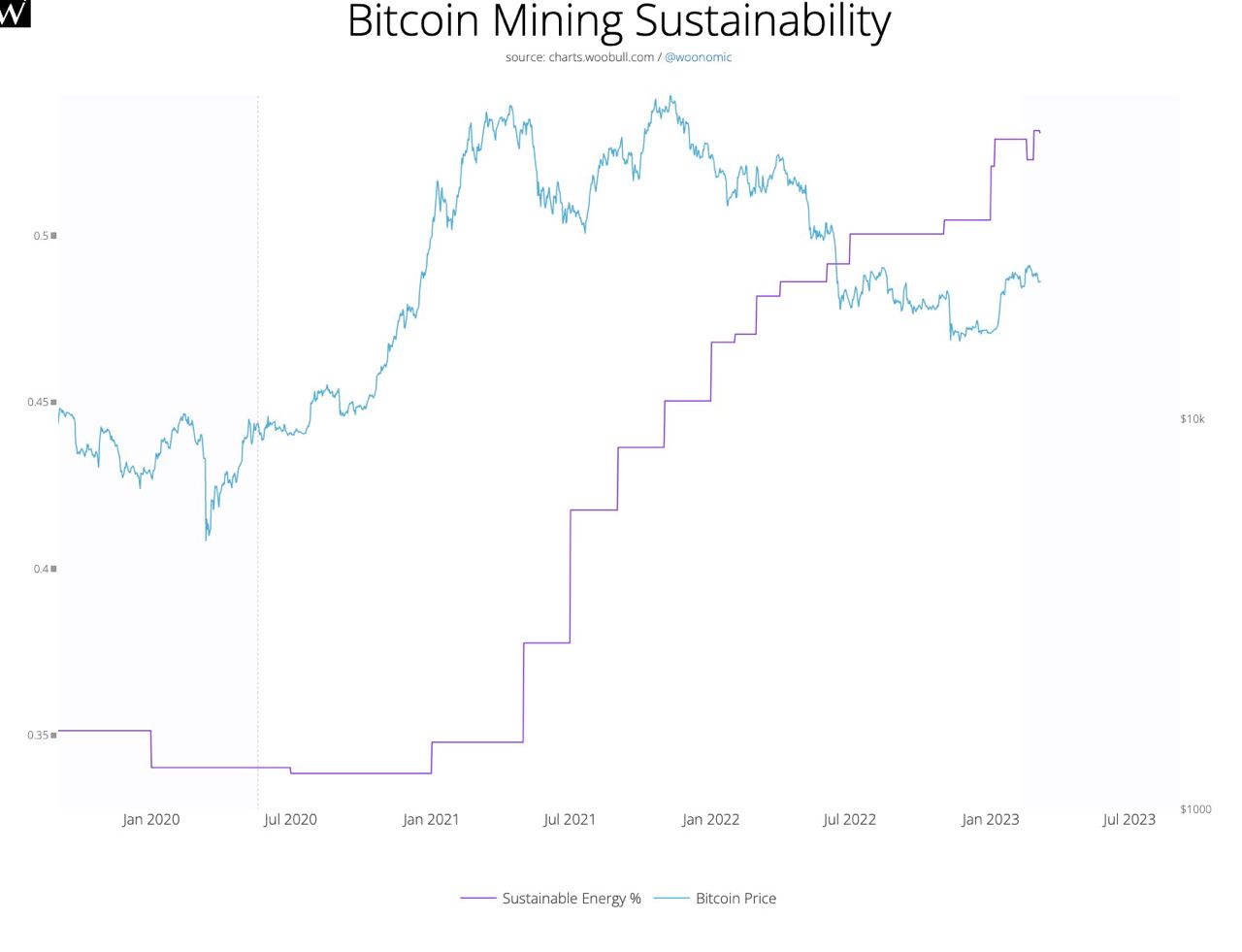
Looks like the metric has sharply grown recently | Source: Daniel Batten on Twitter
As shown in the chart above, the Bitcoin network has made great strides in its transition to green over the past few years. Sustainable energy sources now power more than 50% of the grid.
Interestingly, the total emissions of the network have decreased slightly, although the electricity consumption of miners has only increased.
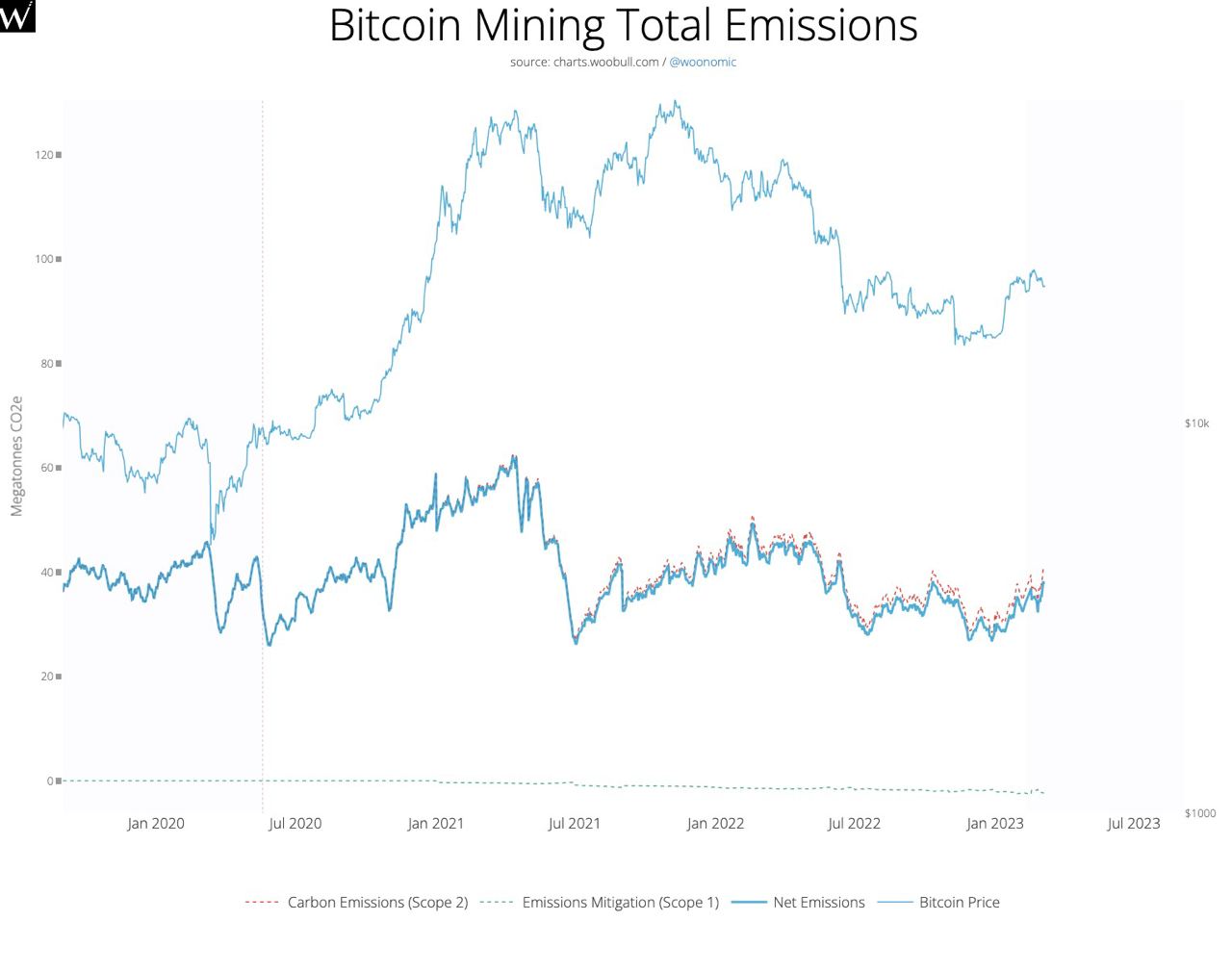
Total emissions of the BTC mining network | Source: Daniel Batten on Twitter
From the graph, it is clear that the emissions increased during the first half of 2021, but after the mining ban in China, the emissions fell sharply. As a result of this ban, a massive migration of miners took place to other countries.
Since then, emissions have steadily declined, although the network is still growing. It appears that these miners are moving towards sustainable energy sources wherever they build new facilities.
Bitcoin mining emissions per dollar have also declined over the past few years, as illustrated in the chart below.
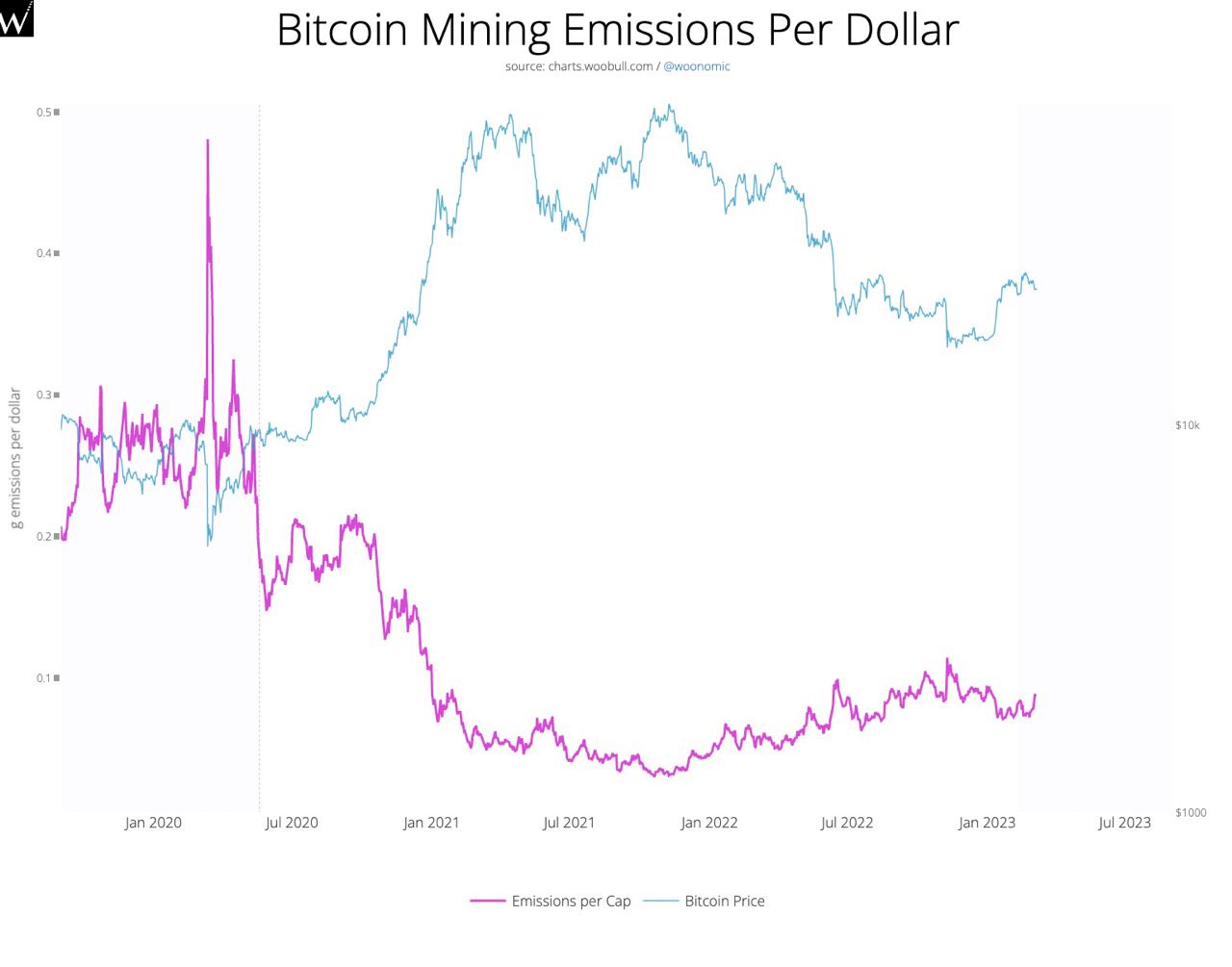
BTC emissions per market cap have been flat for quite a while now | Source: Daniel Batten on Twitter
“This shows that, unlike the current global financial system where GDP growth is linked to rising emissions, Bitcoin’s market cap can grow while emissions are not,” the analyst said.
And finally, the main sign of the progress made by the mining network can be seen in the fact that it is also emission efficient, meaning that it produces fewer emissions than the total energy consumption.
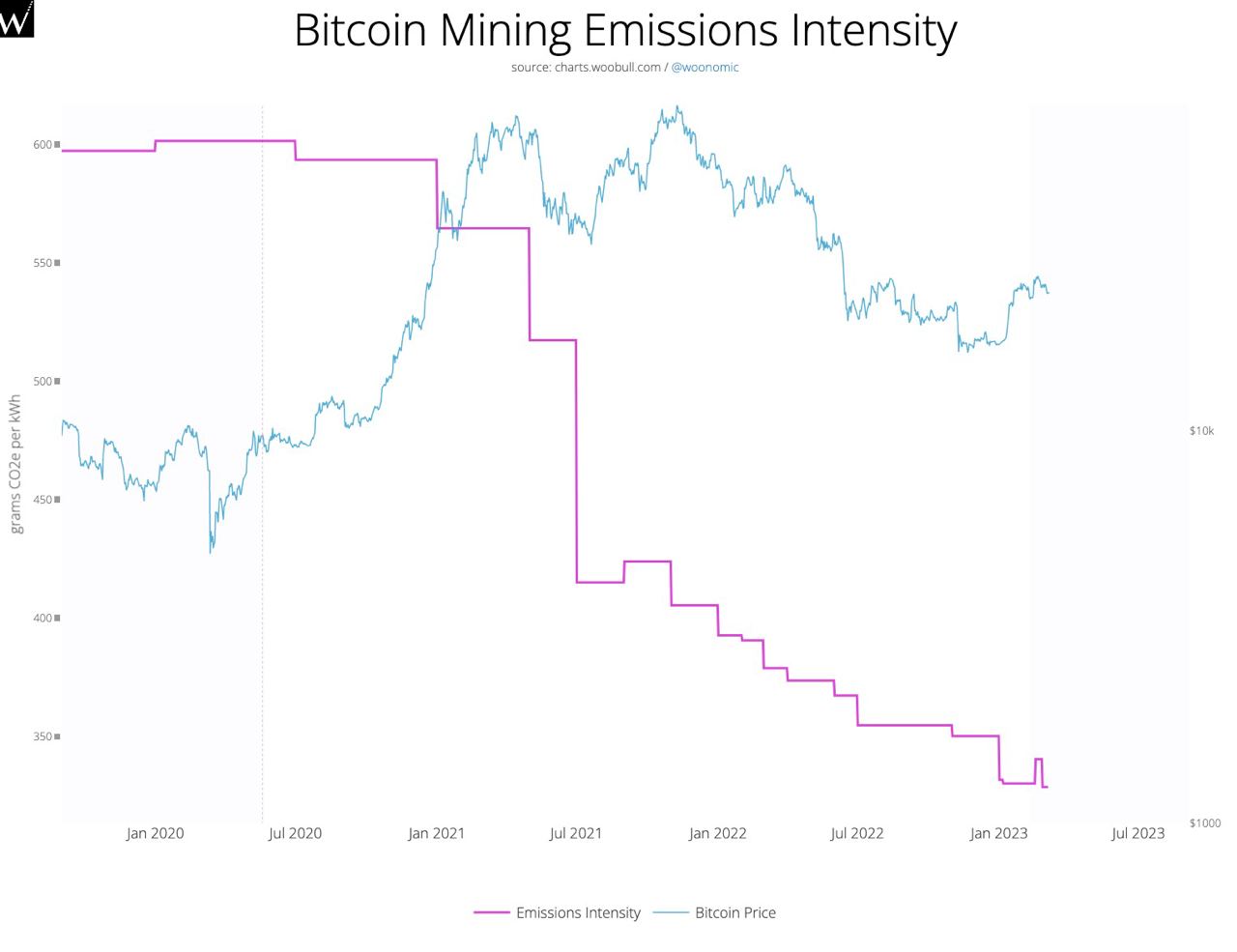
The mining emission intensity of the Bitcoin network | Source: Daniel Batten on Twitter
BTC price
At the time of writing, Bitcoin is trading around $22,300, down 5% over the past week.
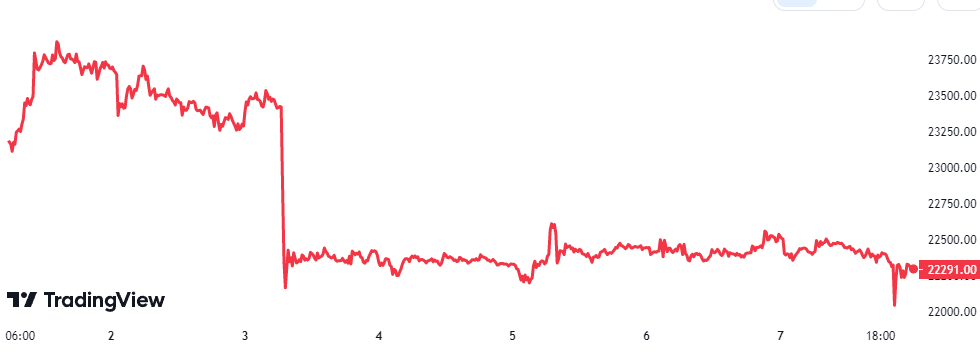
BTC consolidates sideways | Source: BTCUSD on TradingView
Featured images from Brian Wangenheim on Unsplash.com, charts from TradingView.com, charts.woobull.com