
It is hours before the 2023 presidential election which has 18 candidates jostling to take over from outgoing President Muhammadu Buhari in May.
As campaigns closed on Thursday, over 93 million registered voters are now waiting for Saturday to pick from among the candidates whose electoral promises they have found to be most persuasive in the last few months.
Predictably, insecurity and bad statr of the economy have dominated the campaigns in this election cycle. The two issues were part of Mr Buhari’s top three focus areas that he promised to tackle decisively while campaigning for office in 2015. Most of the presidential candidates in this election season have criticised the Buhari administration’s approach to handling the issues, insisting that more Nigerians have become poorer and the country less secure on his watch.
Another of Nigeria’s ageless problems is corruption, the third prong of Mr Buhari’s three-point agenda with which he rode to power in 2015. “Corruption will kill Nigeria if Nigeria does not kill corruption,” he famously remarked during the 2015 campaigns in acknowledgement of the threat corruption poses to the country.
The United Nations Office on Drugs and Crimes (UNODC) has similarly said “corruption affects all aspects of public life, continues to undermine the social, economic and political development of the country and is a major obstacle to the achievement of the Sustainable Development Goals.”
But almost eight years in the saddle, Mr Buhari has brought little improvement in the level of corruption.
In its report released in April last year, the United States Department of States’ 2021 Country Reports on Human Rights Practices in Nigeria’, said there was still massive, widespread and pervasive corruption at all levels of government. It attributed this to a lack of consistent implementation of the relevant laws against corrupt practices in public offices.
Nigeria, especially in the later years of Mr Buhari’s administration, has seen an unimpressive ranking on Transparency International (TI)’s annual Corruption Perception Index (CPI), a tool for assessing the prevalence of corruption in countries.

Nigeria came 150th among 180 countries in the latest 2022 ranking released in January this year. It was an improvement in ranking, even though its score of 24 out of 100 points was the same as it was in the previous year when it was ranked 154th. Prior to the 2021 ranking released in 2022, Nigeria was better placed, occupying the 149th position in the 2020 ranking.
The Civil Society Legislative Advocacy Centre (CISLAC) attributed Nigeria’s poor ranking in 2021 partly to the failure of the government to act on the Pandora Papers revelations, one of the biggest-ever corruption leaks led by the International Consortium of Investigative Journalists (ICIJ) and over 600 journalists from 117 countries, including PREMIUM TIMES in Nigeria.
Commenting on the stagnancy of the points Nigeria recorded this year, CISLAC, which is the Nigerian chapter of TI, said the pardon granted two former governors serving jail time for corruption – Joshua Dariye of Plateau State and Jolly Nyame of Taraba State – in 2022 “is a major setback in the efforts to address corruption in Nigeria.”
“This singular act is damaging as it fails the test of equity and fairness as those pardoned were Politically Exposed Persons (PEPs) and the poor citizens who have been jailed for similar crimes (or even lesser offences) were left out of the pardon.”
But rejecting the TI’s ranking, the Nigerian government said it was not fighting corruption to impress the assessing organisation.
“We are not fighting corruption because we want to impress Transparency International or any organization whatsoever,” the Minister of Information and Culture, Lai Mohammed, said in the wake of the release of TI’s CPI.
The minister also highlighted the administration’s proactive efforts to tackle corruption including allowing the National Sovereign Investment Fund to manage Abacha loot that was returned from the United States, the United Kingdom and other European countries. The initiative, according to the minister, largely prevented the returned loot from being stolen or re-looted.

The administration has also put the Open Government Partnership (OGP), the whistleblower policy, and the Integrated Payroll and Personnel Information System (IPPIS) in place to bring more transparency and accountability into governance.
The lack of political will to push through the effective implementation of some laudable policies of the administration remains a problem. For instance, the latest report by the Independent Corrupt Practices and other related offences Commission (ICPC) states that 204 MDAs don’t have Whistle-blowing policies.
This report reviews the manifestos of the four leading presidential candidates in the 2023 election on how to fight what is regarded as worsening corruption in the country.
The four front-runners whose manifestos this review focuses on are Rabiu Kwankwaso of the New Nigeria Peoples Party (NNPP), Atiku Abubakar of the Peoples Democratic Party (PDP), Bola Tinubu of the All Progressives Congress (APC), and Peter Obi of the Labour Party.
Bola Tinubu: Wealth sharing and reducing the cost of governance
Mr Tinubu, a former two-term governor of Lagos State, has always insisted that he would ride on the achievements of President Buhari.
At one of his discussions with the Arewa Joint Committee in Kaduna last October, Mr Tinubu promised to fight corruption by focusing more on preventive measures if elected president.
Part of his strategy, he said, would be putting a system for effective wealth redistribution to reduce the temptation to commit corruption.
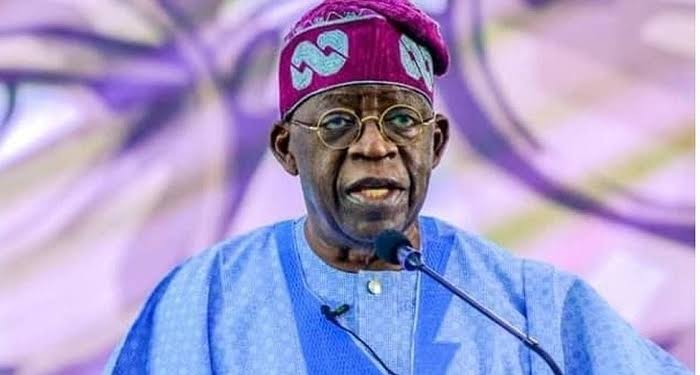
The presidential hopeful also vowed that his administration would support the “existing anti-corruption institutions” and also address the underlying issues of corruption in the oil industry.
In his manifesto, Mr Tinubu also said he would ”streamline the civil service to fight corruption, reduce bureaucracy in government agencies and decrease inefficiency and waste.”
“Such expenditures will have a low priority in our administration. Bona fide hard-working members of the civil service are to be commended for their public service and shall be protected. However, we will continue the process of weeding out ghost workers, as well as ghost projects and expenditures from the system,” the campaign document read in part.
But his wealth distribution plan as a strategy to fight corruption has been criticised.
“Wealth distribution is not a strategy,” says Festus Ogun, a rights activist. “Tinubu should explain his strategies to achieve that. Anything short of a well-thought-out strategy is a fluke,” he added.
According to political analyst Jide Ojo, such a “wealth distribution” plan would likely be misunderstood as an attempt to mindlessly share the country’s resources.
”The assumption by Mr Tinubu is that he would want to improve living standards in such a way that people would not need to be corrupt. But corruption is not about money and sharing of money. But corruption is an abuse of office for private gain.” Mr Ojo said.
Supporting the plan towards reducing ”inefficiency and waste” in the civil service, Mr Ojo said any government that would succeed “would need to trim down the costs of governance and change the culture of wastage”.
”There is a lot of wastage in the system, until we do this, we will not go far,” he said.
Mr Tinubu’s manifesto and campaign speeches lack specific details on how he aims to actualise his ideas on fighting corruption
Peter Obi on true federalism to fight corruption
The corner piece of Mr Obi’s anti-corruption plan in his manifesto tagged, ‘Our Pact with Nigerians,’ is the implementation of a true federal system of government.
The former Anambra State governor also planned to review the 68 items on the exclusive list of the federal government.
This, according to him, would ensure the enthronement of the rule of law, and decisively tackle all forms of corruption.
”Embark on comprehensive legal and institutional reforms and practicable restructuring measures, to fight corruption; to ensure the enthronement of the rule of law, and decisively tackle all forms of corruption,” his document reads.
According to Cheta Nwanze, lead partner at SBM Intelligence, Mr Obi’s idea of restructuring would most certainly hit a brick wall because “his party will not have a majority in the National Assembly.”
Similar to Mr Tinubu, Mr Obi advocated lowering the high cost of governance as a means of combating corruption and cutting down waste. But unlike the former Lagos State governor, who did not specify the details of how he intended to implement the plan, Mr Obi said he would implement the Orasanye Report’s recommendation to consolidate government agencies.
He said, “This will be our top priority within the first year of our administration. We will review the recommendations of that report while engaging with industry players to design the implementation of the proposed reforms.

”While we are focused on cost reduction and streamlining of government operations for efficiency and effectiveness, we will ensure that the implementation of the reforms is pursued in a way that protects the livelihood of our hardworking and efficient civil servants.”
The Labour Party presidential candidate also proposed to establish several offices that would check irregularities in government spending and waste.
Mr Obi also aimed to establish the Office of Special Counsel to investigate and prosecute every executive abuse of power and corrupt public practices that do not fall under the prosecutorial power of existing agencies or are bureaucratically concealed.
He said he would seek a constitutional amendment to exempt prosecution by the Special Counsel from the exercise of the power of Nolle Prosequi of the Attorney General of the Federation.
Atiku and preventive measures to fight corruption
Atiku Abubakar, the presidential candidate of the Peoples Democratic Party (PDP), emphasises preventative measures over detection and subsequent sanction.
In his manifesto titled, ‘My covenant with Nigerians,’ the former vice president proposes building strong institutions that will be resistant to manipulation.
He said he would “also build a culture of accountability, effectiveness, efficiency and transparency,” adding, that he would “rigorously enforce judicious use of public resources, with zero tolerance for nepotism, corruption and poor management.”
He also proposed to champion institutional reforms of anti-corruption agencies and strengthen them for more effectiveness.
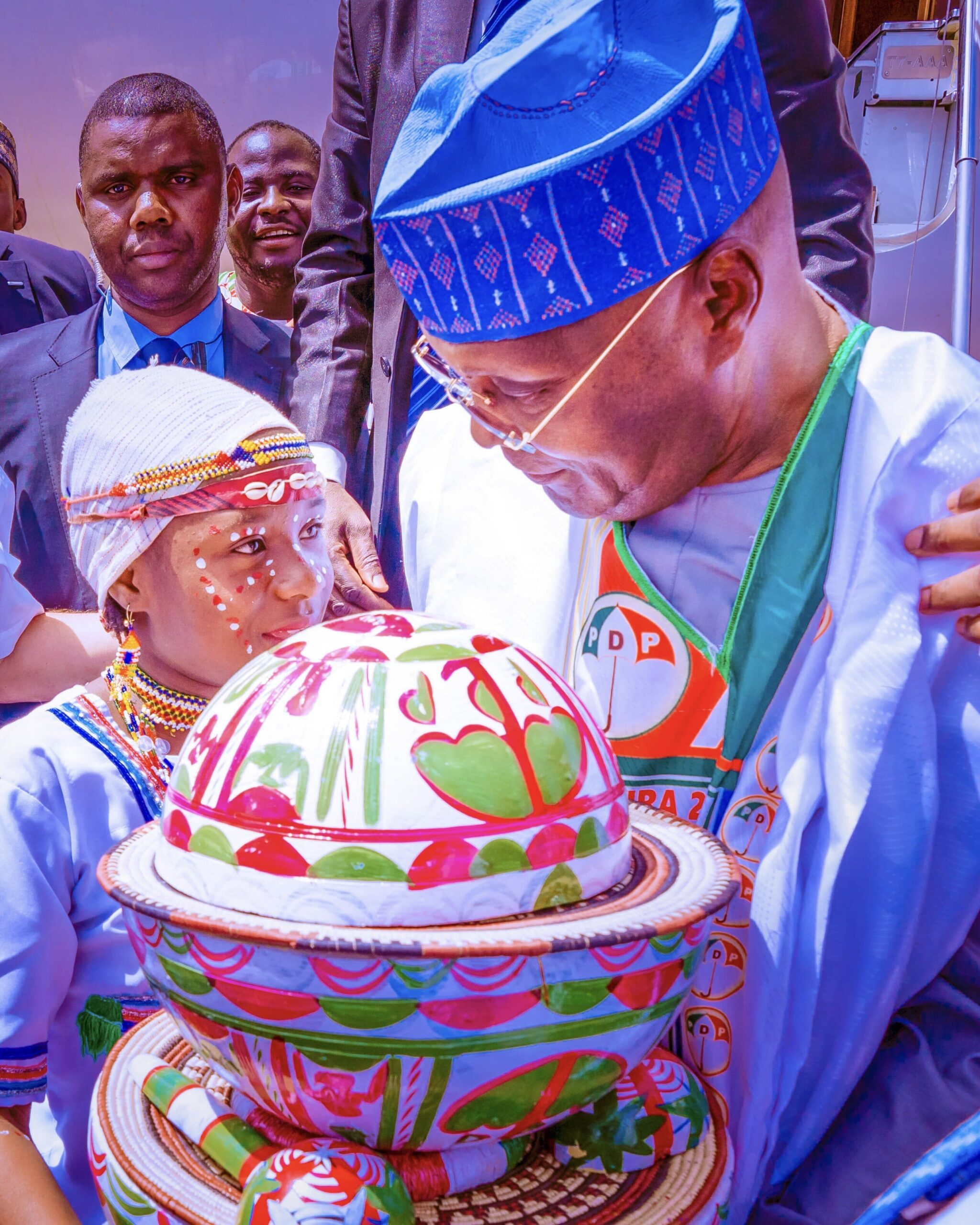
He added that he would “ensure that judgments on corruption cases are fully followed through and enforced by the appropriate law enforcement agencies and as well review the reward system for public and civil services.”
Prior to the 2019 general elections, Atiku during a live town hall programme hosted by ace journalist Kadaria Ahmed said he would consider granting amnesty to corrupt persons willing to surrender their loot.
Kwankwaso also propose preventative measures
The anti-corruption strategy of the presidential candidate of the New Nigeria People’s Party (NNPP), Rabiu Kwankwaso, is also pivoted on prevention.
His strategy is mapped out in his manifesto titled, ‘My Pledge’.
Mr Kwankwaso, a former two-term governor of Kano State, proposes to expose corrupt activities. He said he would enforce adherence to the seven principles of public life – selflessness, integrity, objectivity, accountability, openness, honesty, and leadership by example.
He also promised to strengthen anti-corruption institutions.
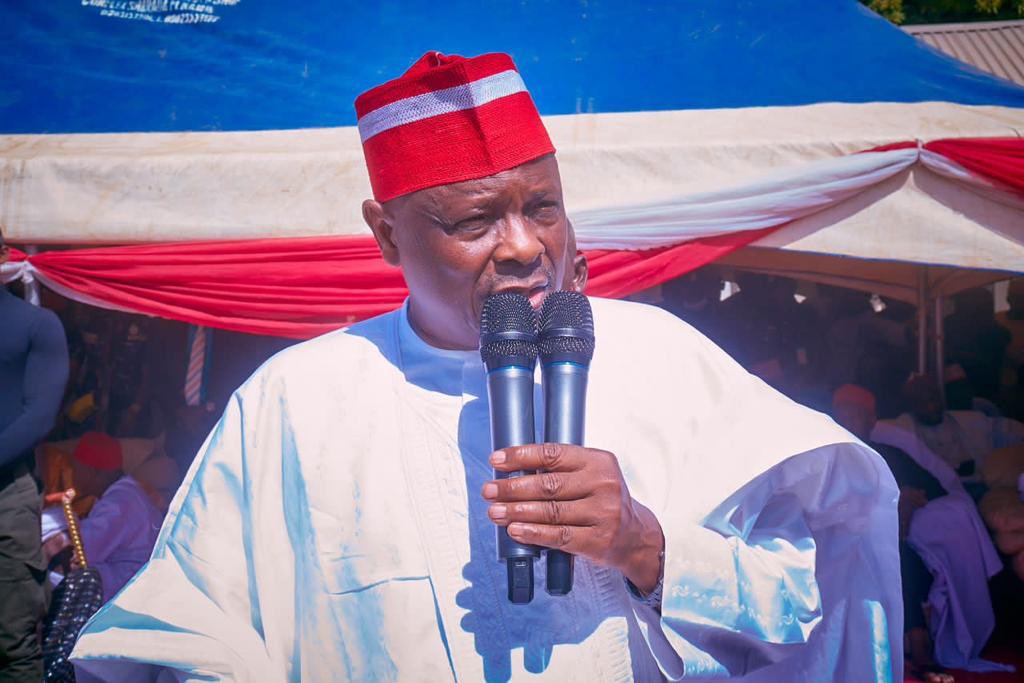
He said his government would publish on weekly basis, the proceedings and decisions of the Federal Executive Council, similar to what he did as governor of Kano State. This, according to him, would help citizens to track his administration’s activities, and ensure open government and transparency.
Support PREMIUM TIMES’ journalism of integrity and credibility
Good journalism costs a lot of money. Yet only good journalism can ensure the possibility of a good society, an accountable democracy, and a transparent government.
For continued free access to the best investigative journalism in the country we ask you to consider making a modest support to this noble endeavour.
By contributing to PREMIUM TIMES, you are helping to sustain a journalism of relevance and ensuring it remains free and available to all.
Donate
TEXT AD: Call Willie – +2348098788999
