
The presidential candidate of the Peoples Democratic Party (PDP), Atiku Abubakar, has explained how the Independent National Electoral Commission (INEC) allegedly reduced scores during the presidential election to “facilitate” Bola Tinubu’s victory.
Nigeria held presidential elections on February 25, but the results of the polls were contested by the main contestants in the race.
Mr. Tinubu, the president-elect and candidate of the All Progressives Congress (APC), was declared the winner of the election after polling 8.8 million votes to defeat his closest challenger, Atiku Abubakar.
But in a petition filed on Tuesday at the Presidential Electoral Petition Tribunal in Abuja, Atiku said the election referees “deliberately and massively deducted from” the “score to facilitate” the return of Mr. Tinubu.
In the petition filed by Atiku’s legal team led by Joe-Kyari Gadzama, Senior Advocate of Nigeria (SAN), Atiku and the PDP who jointly sued INEC, Mr. Tinubu and the APC as co-petitioners, vowed to “lead oral and documentary evidence. ” in court to prove the matter.

Atiku asserted that the Bimodal Voter Accreditation System (BVAS) machine meant to upload election data and transmit election results in real time to the electronic collection system and the IReV portal, was manipulated by INEC to “intercept the results, and filter them before releasing them to the IReV portal.”
Challenging the results of the presidential election, Atiku and the PDP said that INEC did not comply with its own rules and guidelines for conducting the presidential election by failing to transmit the election results in real time from the polling stations in Nigeria to the election collection system.
The petitioners also argued that there was non-compliance with the provisions of the Electoral Act and the Nigerian constitution in the conduct of the presidential poll.

Atiku noted that INEC’s attribution of the failure to transmit electronic results from the polling units to the election collection system to “disruption” is untenable.
Contrary to INEC’s claim, Atiku said that “there is no ‘server’ failure, because the server is cloud-based and virtual.”
To prove the case, Atiku said that he will lead expert evidence to “show that the ‘server’ is cloud-based, if there is an impossible challenge, Amazon Web Services, will smoothly switch to another server without any problems, becoming an autoscaling group automatically. various network reception and offline upload options.
South African companies and Globacom to testify in court
In order to provide an expert witness on the deployment of technology to carry out the presidential election, Atiku has announced that he will invite the South African company, Kaspersky Endpoint Security.
Kaspersky Endpoint Security provides system security for BVAS machines and the electronic transmission system that INEC operates during the polls.
In a filing before the court, Atiku said the South African company would be asked to “produce relevant documents and data as well as testify about the security of the system.”
The petitioners also stated that they will subpoena the Nigerian telecommunications giant, Globacom Nigeria Limited, the Internet provider for the system deployed by INEC during the election.


Atiku and the PDP accused Globacom Nigeria Limited of “disconnecting the Internet from the BVAS machine before transmission” of data to the election collection system.
Another firm Atiku intends to nominate is the Abuja-based Infrastructure Concession Regulatory Commission (ICRC).
He said the company did due diligence on the electronic transmission system deployed by INEC “using a comprehensive business case that had input from Emperor Technology Limited and issued a ‘Certificate of Objection’ for the system to be deployed.”
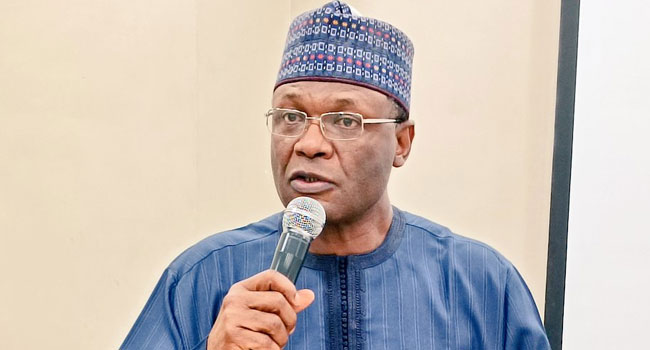
Atiku further confirmed that when the chairman of INEC, Mahmood Yakubu, declared Mr. Tinubu the president-elect on March 1 in Abuja, “all (election) results and (voter) accreditation data have not been transmitted and uploaded to” INEC’s “electronic collation system.”
The petitioner said that they will rely on forensic experts and ICT experts and data among others from the electoral act to establish the case.
“The petitioners will also call the evidence of statisticians, forensic examiners, fingerprints and ICT experts in the hearing of the petition to establish that the figures… awarded to “Mr. Tinubu” are not the product of the right vote,” the court said.
Atiku added that what INEC did during the presidential election was the “mere allocation” of votes for the president-elect. He said that the number of results declared was inconsistent and could not be reconciled with the number of accredited voters.
PREMIUM TIMES reports that Atiku based his complaint on four grounds of non-compliance with the provisions of the Electoral Act and the constitution by INEC in conducting the election, the failure of Mr. Tinubu to secure a two-thirds majority vote of the states of the federation and the FCT, and the president-elect’s alleged non- qualification for election contest.
Consequently, Atiku urged the court to either declare him the president of Nigeria or order a new poll in which Mr. Tinubu will not participate.
Support journalism integrity and credibility PREMIUM TIMES
Good journalism costs a lot of money. But only good journalism can guarantee the possibility of a good society, responsible democracy, and transparent government.
For continued free access to the best investigative journalism in the country, we ask that you consider making a modest contribution to this noble effort.
By contributing to PREMIUM TIMES, you help keep journalism relevant and ensure it remains free and available to all.
contribute
AD TEXT: Call Willie – +2348098788999
