
He came to Lagos to pursue higher academic degrees but found other pursuits. His name may not immediately ring a bell, but Stanley Okorie witnessed the birth of Nollywood, and his songs have been featured as soundtracks in over 1000 movies.
Some of his works include TikTok and Instagram favourites, ‘Billionaire’, ‘Happy Mumu’, ‘Ashawo no be Work’, ‘Fine Mama’ and ‘Iyeme’.
He is also the singer-songwriter behind the international hit song “I go chop your dollar”, the soundtrack of the Nollywood Movie “The MASTER”, featuring Nkem Owoh, who presented the song visually in the KAS-VID video.
The first Nollywood Soundtrack song was ‘Karishika (Queen of Demons)’ from the 1996 horror film KARISHIKA.
In this interview with PREMIUM TIMES, he spoke about his friendship with the late Sammie Okposo and his music career, among other issues.
PT: Tell us about your involvement in Nollywood as a soundtrack producer.
Stanley Okori: When we started making movie soundtracks, most of the people who got what, now Nollywood, all their hobbies learned in the project.
I came to obey my father’s wish to get a Master’s degree in Unilag. My father is a professor and is big on education. He didn’t think anyone could make a living selling plastic (The plastic he was talking about was cassette tapes).


I don’t want to do a masters, but I came to Lagos to fulfill my desire, but I am in Lagos to do a masters in Mass Communication I have got a degree from Nsukka Mass Communication as well.
I took some Political Science courses, and I thought I would become a painter because I was very good at painting, but my late grandfather said, “Who goes to school just to be a painter? Other people will build houses, and you will paint.”
They don’t know what I want, but I want to paint. I haven’t had the chance to be a painter yet.
Painting led me to music because when I was drawing and singing, my friends at school would always say Nna, your singing is better than your painting.
And so it began. I started going out with my father when I got a job at the Federal Ministry of Foreign Affairs in the late 90s, and I didn’t do it; I said I want to make music. That was the beginning of my problem with the man.
I’m shy, and I don’t go to nightclubs. I can back up singing to get by, but I’ll stay behind; I don’t want to be known.
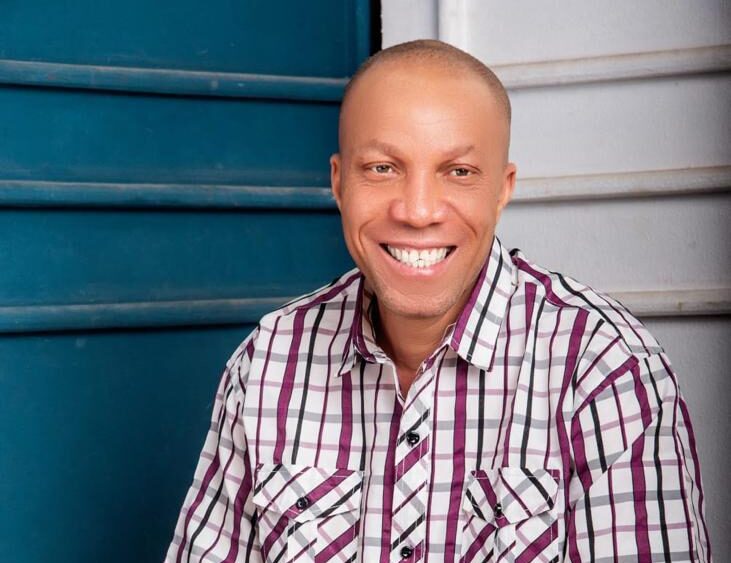
At some point, people started asking to see and hear who made the backup. Then I started playing in small shows.


So I met a friend called Sammie Okposo when I was in Lagos. I lived with Sammie for a few months. Sammie was my whole heart; I just came to Lagos and let school slide for a while. I registered for the program and sent proof of registration to my father, but I did not attend the lecture; instead, I follow Sammie to record in the studio.
PT: What is Klint Studios?
Stanley Okori: Yeah, it was Klint’s studio in particular, and then there was this guy named Johnson Davidson from Midtown and a lot of people. Sammie is an excellent keyboardist and producer. His production skills are as good as my writing skills.
We did some projects that I liked in the south. When I started working on my first album, the ‘Jesus I Love You’ record, Sammie was still doing the soundtrack.
PT: Between live music and studio recordings, which do you prefer?
Stanley Okori: I wouldn’t say I like live music. The live music was loud. I love studio music. Studio music can be tuned well.
Sammie is a live music guy. I wouldn’t say I like live bands, but he and I would go to the motherland and back it up. We were quite close until a few years after I left Nigeria for Canada. We lost contact, but we are now back in contact when I get back.
Sammie played an important role in my music career. Sometimes we come to a place together, and he makes music and asks me to write words.
I focused more on writing for Sammie, who produced the first soundtrack.
PT: Can you remember the soundtrack of your first film?
Stanley Okori: I am a ‘Compromise’. It was my first soundtrack. Sammie has done a lot of soundtracks, and I wrote and produced them. As a friend, sometimes there are full and partial payments, but I don’t mind.
Later, he started doing it himself, and I started doing it myself. The first time I got paid for the soundtrack was a bottle of Sprite.
PT: Tell us more about your relationship with Sammie.
Stanley Okori: I’m new in Lagos, and with Sammie’s influence, I can get some things done in the studio. Sammie and I started clashing because he felt I was concentrating on my work and not paying attention to him.
So I said, okay, Sammie, you know what’s going to happen; I will write for you, and you will play for me.
We agreed, but then on another occasion, Sammie now said he would play for me, but I would write for him and that for him.
I said ahh, I’ll do two things. I said okay if I want to sing for you, you have to find me something. It’s an argument between friends, but I love working with Sammie.
We trashed it, so We notice that he often suffered some things, I get into soundtracking.
PT: Are you creating soundtracks alongside your gospel music career?
Stanley Okori: Well, I do soundtracks, I work at an advertising agency, and I work at Ruyi Communications Sonny Irabor. At the same time, I also did some freelance jingle production for many people.
I’m singing backup, and I’m also printing, and I’m practicing what will bring money.
If I have to cough for a living, I will come and cough, and you will pay.
PT: How are these concepts?
Stanley Okori: When Nollywood started, there was no format of any kind. Sammie had been a key player in soundtrack production long before I came along.
You are given a script most of the time, and you are asked to come up with music.
They give you a hand, and you make music that will give you an interpretation. There is something unique about making music in the Nollywood industry. It is different from making music for Hollywood or Bollywood.
Making music for Nollywood is different, and interpretive, and you’re almost interpreting the story. Some people tell stories in music, but it doesn’t happen. After the scene has happened, you can now deal with it. But the editor can even play the song before the scene happens.
Here’s what happened. I remember that thing used to piss Sammie off a lot because many editors didn’t know much about playing music.
If there is a death scene you don’t play the hymn before the character dies. You wait and let them die first. But sometimes, these editors will start playing hymns and thus tell the audience that the character is going to die.
PT: Let’s talk about some memorable works, like the one making waves right now, ‘Millionaire.’
Stanley Okori: My first soundtrack was ‘Compromise’ for Emalex Productions. The second soundtrack is ‘Atrocity’ for Amako Investment.
My first big one was ‘Evil Genius. Then there was ‘Karishika’ (Queen of Demons)’ from the 1996 horror film KARISHIKA.
I recorded ‘Billionaire’ for my friend, Osi King, who made a movie for Aki and Paw Paw. My friend told me that there is already a song for the movie, but he wants me to do something better, a song that will talk about money, not much English but it is on the way.
To make sense to me, it has to be simple. I’m not into complicated things.
Before ‘Billionaire’ went viral, there was ‘Happy Mumu’. I can’t remember from which movie, but I know it was for Ossy Affason.
PT: You recorded your songs between the late 90’s and early 2000’s?
Stanley Okori: It must be early 2000s.
I’ve worked with everyone. My music has made many billionaires famous; some got movie titles from my music.
PT: Have you stopped just making soundtracks, and have you been tempted to act?
Stanley Okori: No, no, I’m more of a studio guy. I was too shy to act. But I used to be a gospel artist. I am primarily a producer, singer, and songwriter; that’s especially me.
PT: In your gospel music career, did you release an album, or did you just have a collection of songs?
Stanley Okori: I have only two music albums, including the famous ‘Jesus I Love You’.1. The album The Goodness of God released in 1997/1998 (as ‘Stanley Kaosi and the Grace Band’) remains a Nigerian Gospel Classic and is still very influential. The Nigerian gospel so far. I won many awards for that album which remains one of the most popular Christian albums in Africa.
READ ALSO: King of Thieves, ‘Anikulapo’, another amazing Nollywood movie in 2022
The full version of The Goodness of God, Vol. 1 and 2, released on digital streaming platforms on April 17, 2022.
I am the singer-songwriter behind the international hit song “I go chop your dollar”, the soundtrack of the Nollywood Movie “The MASTER”, featuring Nkem Owoh, who presented the song visually in the KAS-VID video.
I also produced ‘National Moi Moi’ for Mama G. I have almost 800 songs on Spotify, Youtube, Audiomack and more.
PT: So you get a lot from royalties.
Stanley Okori: Well, we thank God for doing this, but it could be better
PT: Your assessment of Nollywood?
Stanley Okori: You know, Nollywood is improving in one way and regressing in some places, like the quality of personnel.
A lot of people don’t have the training to jump in and start without anyone controlling them.
The quality of what we do remains the same. Then we didn’t do it for money; we do it with passion and share our gifts.
But now you need money, and now it’s more challenging, unlike before, to make a living from soundtracking.
It will be expensive if they ask me to do the soundtrack.
Nollywood needs to get back to telling stories our way. Another thing that needs to be improved is personnel training. There is a lot of mediocrity in it. The exposure must have been more complete.
If we continue to explore foreign concepts, it will keep us second best, but if we study and release films about our ancestors and culture, it will improve us. Our music will be unique. A lot of copying happens, and many people have lost with the offense.
PT: Are you an independent artist?
Stanley Okori: Before we started, there was DMI, Premier Recording and others, but they were all dead.
In time, the music moved to Iweka Road, Upper Iweka and Idumota, Ebimpejo Lane. You, as a musician, have to write, sing, record, produce and surround yourself with the masters, hoping to find a marketer, then become Confidence or Osi Aphason.
I had to finance the album and work by getting jobs to record and then sell it to labels who then sell it and pay me royalties.
Support the integrity and credibility of PREMIUM TIMES journalism
Good journalism costs a lot of money. But only good journalism can guarantee the possibility of a good society, responsible democracy, and transparent government.
For continued free access to the best investigative journalism in the country, we ask that you consider making a modest contribution to this noble effort.
By contributing to PREMIUM TIMES, you help keep journalism relevant and ensure it remains free and available to all.
contribute
AD TEXT: Call Willie – +2348098788999
