
In January 1973 there was a significant political revival in Durban. At the same time, generative political life ended in Conakry, Guinea. On January 9 workers at the Coronation Brick and Tile factory in Durban, began what became known as the Durban strike.
On January 20 of the same year, Amílcar Cabral, revolutionary Pan-Africanist, was assassinated in Conakry.
The Durban strike paved the way for the rebuilding of the black trade union movement, which had become a powerful political force in the 1980s. They also began the process of building a democratic popular politics that would leave the factories and, in the 1980s, bring millions of people into an often self-organized form of resistance centered on oppressed institutions.
Cabral, the main leader of the struggle for the independence of Guinea-Bissau and Cape Verde from Portugal, is often remembered as a military strategist and theorist, and as a leader who moved in the same circles as Frantz Fanon, Patrice Lumumba. and Kwame Nkrumah.
As a military leader in the Pan-African movement for national liberation, he is a figure closer to Umkhonto weSizwe intellectuals like Chris Hani or Jabulani “Mzala” Nxumalo than the labor leaders who emerged after the Durban attack, people like Jabu Ndlovu and Moses Mayekiso.
But contemporary events in South and West Africa are connected in many ways. The Durban strike is understood retrospectively as part of a wider Durban moment that included the emergence of the Black Consciousness Movement with the formation of the South African Students’ Organization (Saso) in 1968.
Steve Biko and the charismatic academic Rick Turner – leading personalities of the Durban moment – open new vistas of thought that activate new forms of practice. Both were banned in 1973, after the initial Durban attacks.
The following year the Young Turks in the Black Consciousness Movement in the city held a rally in support of the Frente de Libertação de Moçambique (Frelimo), the national liberation movement in Mozambique.
An electric moment
The rally is a direct challenge to the country. The organizers – among them Saths Cooper, Muntu Myeza, Aubrey Mokoape and Strini Moodley – were arrested, tried, and eventually imprisoned, ending the Durban Moment. In 1976, the Soweto Uprising shifted the locus of struggle to Johannesburg. Biko was assassinated in 1977 and Turner was assassinated in 1978.
However, for an electric moment, the armed struggle against Portuguese colonialism seemed excitingly close to Durban. There are different types of external connections as well. One of them is the Algerian struggle. At some point after 1973 – there is no public record of the exact date – Josie Fanon, Frantz Fanon’s widow, visited Durban, staying at Turner’s house, possibly under some cover.
After the Durban attack, Paulo Freire, a radical Brazilian intellectual, became a theoretical lodestar for many university-educated radicals willing to take a reflective approach to the question of praxis.
As I have noted in this publication before, Biko had introduced Freire’s thought to Durban, where it was taken up by Turner and other intellectuals trained at the university. Freire’s most famous book Pedagogy of the Oppressedfirst published in Spain in 1986 and then in England in 1970, it drew inspiration from many sources, including African anti-colonial struggles.
Fanon’s last book, earth louse, published shortly after his death in 1961, often reduced to talking about anti-colonial violence. But the book is very much concerned with praxis, combining theory and action in the struggle.
It takes the idea very seriously. For Fanon, the productive encounter between university-trained intellectuals and the oppressed was critical to building popular democratic power. He emphasized the importance of the development of “now enlightenment and enrichment” between protagonists from different social locations.
Fanon insisted that political education should not “treat the masses as children” and described this approach as “criminal superficiality”. Freire, who quickly understood Fanon’s thoughts, wrote: “Leaders who do not act dialogically, but force their decisions, do not manage people – they lie. They are neither free nor free: they oppress.” In 1987 he recalled that “I wrote Pedagogy of the Oppressed, and this book was almost finished when I read Fanon. I have to rewrite the book.”
General wind
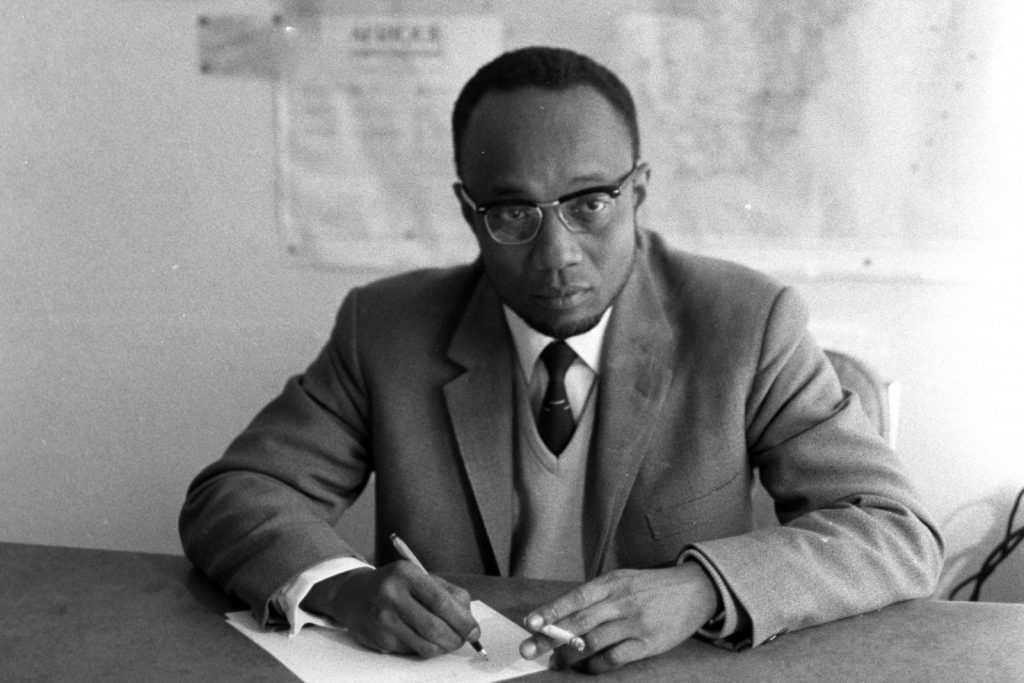
Cabral’s thoughts are also in the air, floating in what William Wordsworth, writing about Toussaint L’Ouverture – the leader of the revolution against slavery in Haiti – called “the breath of the common wind” that carries aspirations for emancipation throughout the planet.
Like Fanon, Cabral is fundamentally committed to the idea of praxis based on mutuality, listening with care and empathy and “using a direct language that all can understand” as essential to the development of revolutionary reason and practice.
He understood the collaborative development of thought in the struggle to be fundamental and emphasized that it must be “the consciousness of the people who guide the gun, and not the gun who guides the consciousness”. His first biographer, Basil Davidson, described him as “a supreme educator in the broadest sense”.
Cabral wrote that education is “the basic foundation that supports the work of emancipation of every human being”. The movement led by Cabral, the African Party for the Independence of Guinea-Bissau and Cape Verde (PAIGC), takes education at the center of its work. Since 1963, schools and libraries have been established in the liberation zone, an area that was captured through armed struggle.
After the Carnation Revolution of April 1974 in Portugal the independence of Guinea-Bissau, which was announced in September of the previous year after 10 years of war, was accepted and in September 1975 Freire came to the country with an invitation to collaborate with the new country. in a popular education project. At Pedagogy in Process: The Letters to Guinea-Bissaufirst published in 1978, which shows a keen interest in the thought and practice of Cabral, and the practice of the PAIGC.
He gives the sense of a political meeting that is committed to emancipation and is held in the shade of a tree that corresponds to Fanon’s previous formulation of these meetings as “special events given to humans to listen and speak. In each meeting … the eye discovers the landscape more and more in keeping with human dignity”.
Freire’s ideas remained important in South Africa during the upheavals of the 1980s. They are still, albeit on a smaller scale, involved in new forms and sites of struggle. He is a center at the Frantz Fanon School in eKhenana Commune, a land occupation in Durban associated with Abahlali baseMjondolo.
Freire’s ideas remain an important force elsewhere in the world, such as the Florestan Fernandes National School outside São Paulo. The school is run by the Movimento dos Trabalhadores Rurais Sem Terra, a Brazilian landless movement. Of course, because of Freire’s own internationalism, the movement of people and ideas between these and similar political education projects allows learning to continue and simultaneously cross borders.
There is still a direct connection between the Durban moment and contemporary organizations and struggles in the city. Rubin Philip, who was elected vice president for Biko in Saso in 1972 and banned the following year, was able to meet and engage with Freire personally. He remained deeply committed to the grassroots struggle during the post-apartheid period.
David Hemson, who was banned the same year, and played a key role in the development of the labor movement in Durban before, during and immediately after the 1973 strike, also remained involved.
Freire continued to read. Popular democratic power is still being built, although on a smaller scale than in the 1970s and 1980s and under conditions of severe repression. Three leaders in the eKhenana Commune were killed last year.
However, in the main, and with significant exceptions, the record of the left intelligentsia after apartheid, in terms of effective participation in the building movement, is one of failure. All too often the desire to dominate – to, in Freire’s terms, “deceive” – has precluded the sort of commitment to reciprocity and mutual learning that animated the thoughts and practices of people like Fanon, Cabral and Freire and active movement building.
The situation is compounded by an inadequate critical attitude towards the ubiquity of the NGO form and the relentless substitution of oppressed organizations in the name of “civil society”.
But the lessons learned from the struggle from Durban to Algeria and Guinea-Bissau are still floating in the general wind.
Richard Pithouse is editor-at-large at Inkani Books, which recently published a new collection of writings by Amilcar Cabral, Don’t Lie, Don’t Claim Easy Victory.