
Several Ripple executives have spoken about the banking crisis in the United States. The company itself has been affected by the collapse of Silicon Valley Bank (SVB). As Ripple CEO Brad Garlinghouse explained on Sunday, the company was affected “to some extent”.
SVB is a banking partner and holds part of Ripple’s cash balance. However, Garlinghouse assured that there will be no interruption in daily operations, as Ripple holds a large number of US dollars with a wider network of banking partners.
Here’s How Ripple Evaluates “Rescue Banks”
While some are calling the new intervention a bailout, US President Joe Biden confirmed yesterday that the rescue was not at the expense of taxpayers and was financed by banks paying into the deposit insurance fund. Ripple executives also see the intervention as necessary and just the right decision.
Susan Friedman, International Policy Advisor at Ripple, arranged that Senator Liz Warren laments the system that intervenes overnight to ensure that billion-dollar crypto companies do not lose a single cent in their deposits. “But there’s no doubt that if the government doesn’t step in, many businesses (not just crypto) will be destroyed.”
“And a point that bears repeating – crypto is a legal industry in the US and globally that deserves banks,” Friedman further explained, who was a senior adviser to CFTC chairman Heath Tarbert before Ripple.
Stuart Alderoty, Ripple’s Chief Legal Officer praised California Congressman Ro Khanna on Twitter for his role in protecting the deposits of Silicon Valley Bank customers. Alderoty thanked Khanna for his leadership, adding that the bailout included startups in various sectors:
Thank you Ro Khanna for your leadership in making the entire SVB deposit. Some may dismiss it as ‘VC and tech’ but this includes startups tackling very important issues in healthcare, climate change, AI, fintech, national security, and yes, sometimes crypto.
Alderoty also emphasized that “none of this money” comes from taxpayers, but from taxes on banks that finance the Federal Deposit Insurance Corporation (FDIC). He also expressed a proposal to raise premium payments for banks to protect salary depositors and regional banks and to prevent consolidation.
Lawyers also say that gaps in liability and regulations need to be addressed to protect depositors. “[They] doing nothing but depositing money in banks that then invest in government-backed debt. This is not risk taking, this is conservatism.
Asheesh Birla, General Manager of RippleNet, offered another perspective in an interview with Reuters. Birla was very happy with the US government’s decision to make the deposit but not to compensate the bank’s shareholders.
Meanwhile, he predicted that the big banks would be the winners of the crisis. Startups will open accounts with large US banks in the coming days as a result of the uncertainty surrounding smaller regional banks.
And for companies with significant cash on hand, they expect strong interest in hiring a treasurer who will be able to minimize the company’s cash holdings. Via Twitter, executive added:
If you are a Fintech who has problems opening a bank account, please contact me. I may have a few options for you.
The company seems to have no problem dealing with SVB and bankruptcy. The price of XRP was $0.3701 at press time, up 0.2% in the last 24 hours.
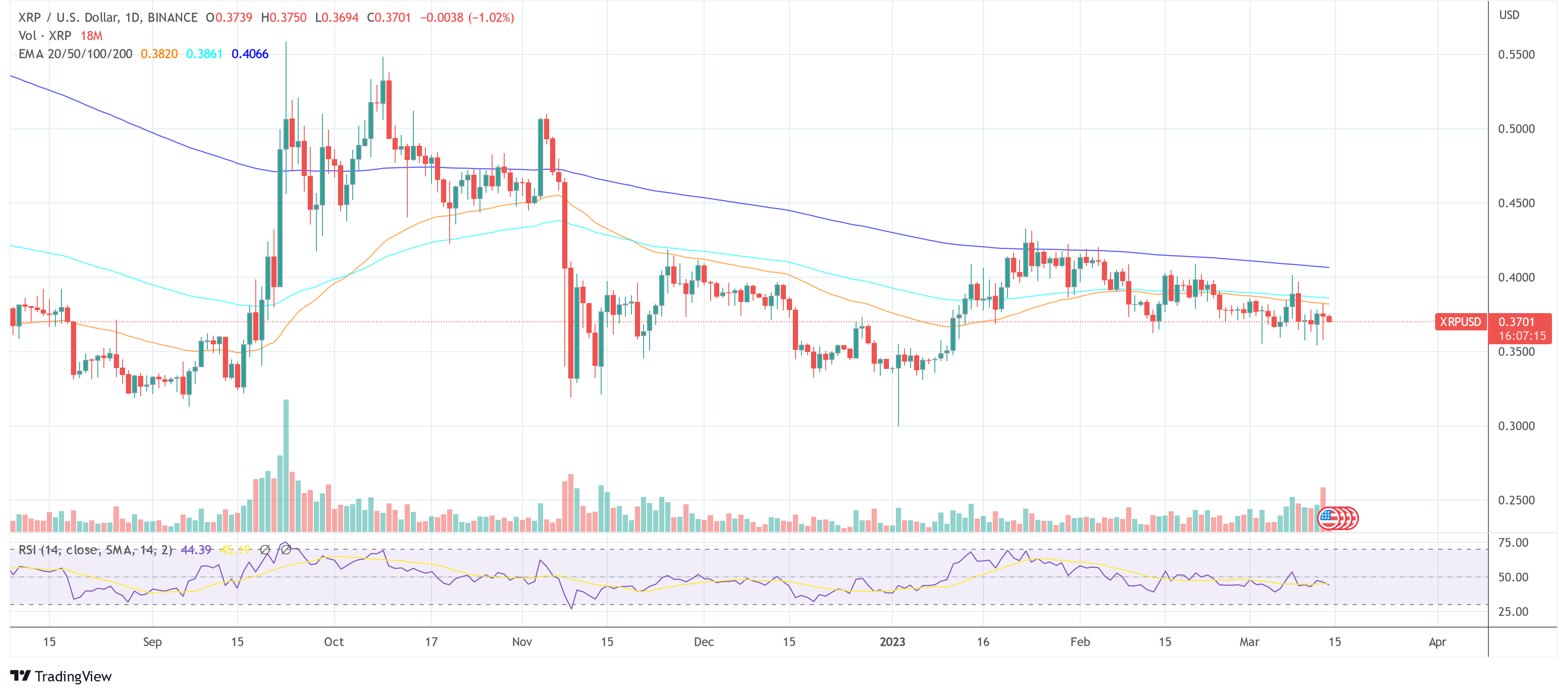
Image selection from Financial News, Chart from Tradingview.com