
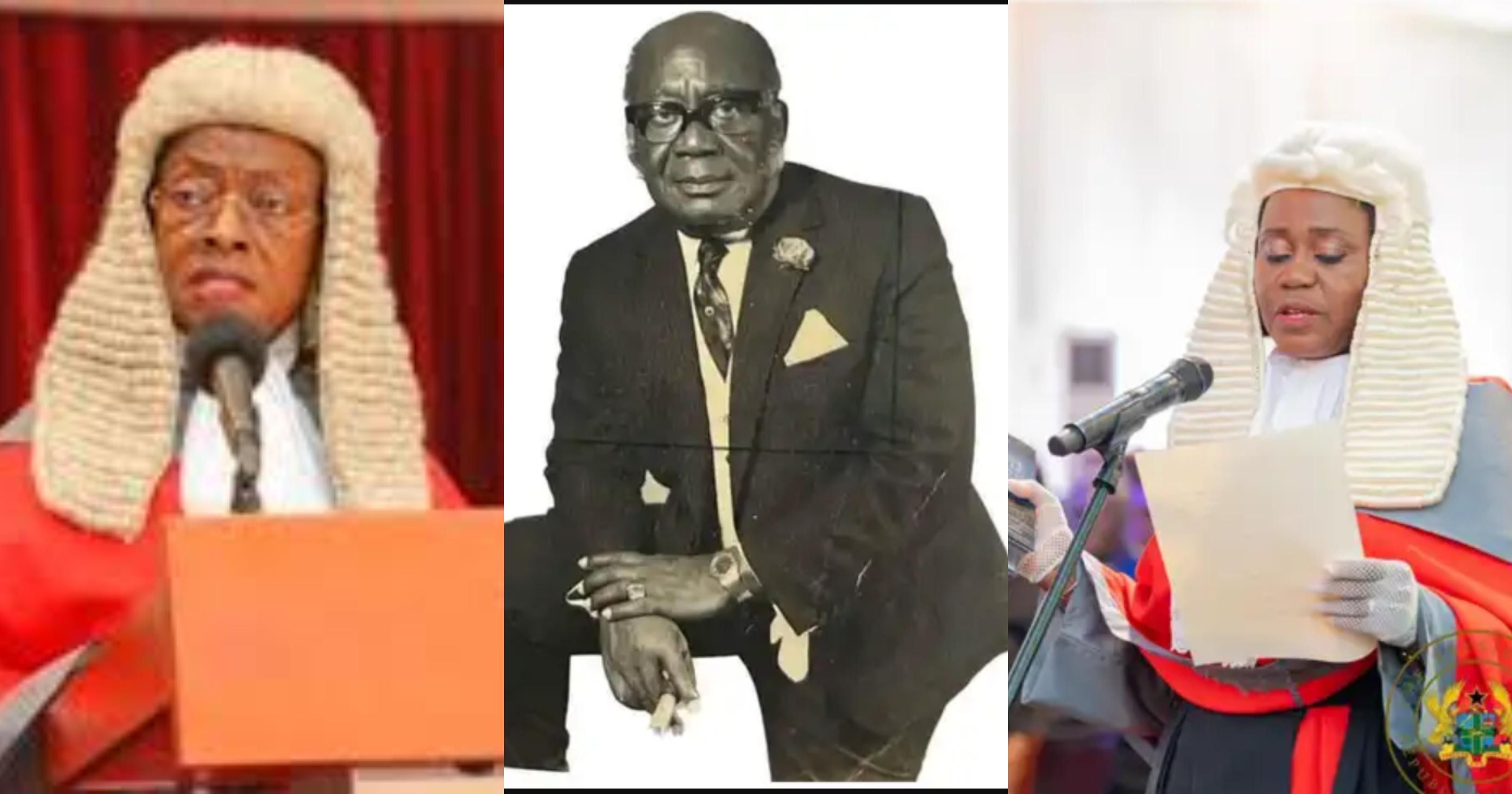
In a historic ceremony on Monday, 17th November 2025, Justice Paul Baffoe-Bonnie was officially sworn in as the 28th Chief Justice of Ghana by President John Dramani Mahama. His appointment marks a new chapter in the leadership of Ghana’s judiciary, an institution with roots stretching back to the colonial era.
The Office of the Chief Justice was established in 1876, long before Ghana achieved independence, as part of the Supreme Court of Judicature for the Gold Coast Colony. Over the years, the office has evolved, with the Chief Justice now serving as the head of the judiciary, a co-equal arm of government tasked with interpreting the nation’s laws and administering the courts.
READ MORE: Top 10 Countries in Africa with the Least Safe Drinking Water: 2025 Rankings
“It is both a privilege and a responsibility to lead the judiciary at this critical time in Ghana’s history,” Justice Baffoe-Bonnie said following his swearing-in.
Since the creation of the office, Ghana has seen 25 men and three women take on the role, each contributing to the development of the nation’s legal system. Below is a look at the individuals who have held this esteemed position:
1. Sir David Patrick Chambers (1876–1878) – The first-ever Chief Justice of the Gold Coast.
ALSO READ: Top 10 Countries in Africa with the Safest Drinking Water: 2025 Rankings
Sir David Patrick Chalmers was a British colonial judge who served as the first Chief Justice of the Gold Coast from 1876 until 1878.[1] He also had judiciary appointments in other British colonies like the Gambia Colony, British Guiana, Colony of Jamaica and Newfoundland colony.
2. P.A. Smith (1878–1879) – Succeeded Chambers.
P. A. Smith was the Chief Justice of the Gold Coast Colony from 1878 until 1879. He was appointed in place of Sir David Patrick Chalmers and was succeeded by Sir James Marshall in 1880.
3. Sir James Marshall (1880–1882) – Oversaw the courts during the early colonial period.
READ MORE: Edem disappointed as rapper Agbeko rejects rehabilitation programme
Sir James Marshall (1829–1889) was a Scottish Anglican clergyman who converted to Roman Catholicism and became Chief Justice of the Gold Coast, now Ghana.
4. N. Lessingham Bailey (1882–1886) – Continued building the judiciary’s foundations.
Newman Lessingham Bailey was the Chief Justice of the Gold Coast Colony from 1882 until 1886. He took the office after Sir James Marshall in 1882 and was succeeded by H. W. Macleod in 1886.
5. H.W. Macleod (1886–1889) – Maintained judicial stability during transitional years.
READ MORE: Patapaa laments lack of support from Ghanaians: ‘We allowed Nigerians to adopt One Corner’
Hector William Macleod was the Chief Justice of the Gold Coast Colony from 1886 until 1889.Macleod was appointed a puisne judge of the Supreme Court of the Gold Coast Colony in 1880. He succeeded Sir N. Lessingham Bailey as Chief Justice in 1886 and was succeeded by Sir Joseph Turner Hutchinson in 1889.
6. J.T. Hutchinson (1889–1895) – Led the courts at the close of the 19th century.
7. Sir William Brandford Griffith (1895–1911) – One of the longest-serving colonial Chief Justices.
Sir William Brandford Griffith, KCMG (11 August 1824 – 1897) was a British administrative official, Governor of the Gold Coast from 1880 to 1881 and again from 1885 to 1895.Brandford Griffith was lieutenant-governor in the Gold Coast, and acting governor from 1 December 1880 until 4 March 1881, when Sir Samuel Rowe was appointed governor. On Governor Young’s death, he became Governor of the colony for a decade, from 24 April 1885 until retirement on 7 April 1895
READ MORE: Shatta Wale apologises to MC Kojo Manuel following an unexpected scuffle on stage
8. Philip Crampton Symly (1911–1928) – Presided over a period of significant legal developments.
Sir Philip Crampton Smyly (28 March 1866–1953) was a British judge and colonial administrator.
9. Sir George Campbell Deane (1929–1935) – Guided the judiciary through challenging times.
Sir George Campbell Deane was the Chief Justice of the Gold Coast Colony from 1929 until 1935.He took the office from Sir Philip Crampton Smyly in 1929 and was succeeded by Sir Philip Bertie Petrides in 1936
10. Sir Philip Bertie Petrides (1936–1943) – Oversaw judicial matters during the early World War II era.
READ MORE: Daddy Lumba’s Abusuapanin defends GH₵30,000 withdrawal from bank account
He served on the Supreme Court of Nigeria from 1926 to 1930, was Chief Justice of Mauritius from 1930 to 1936, and finally Chief Justice of the Gold Coast Colony from 1936 until 1944, when he retired and returned to England
11. Sir Walter Harragin (1943–1947) – Maintained the integrity of the legal system.
In 1943 he was appointed Chief Justice of the Gold Coast Colony and remained in the role until 1947. On retiring from his position in the Gold Coast he was made a Judge of the High Courts of Basutoland, Bechuanaland Protectorate and Swaziland. He served as President of the Court of Appeal from 1964 until his death in 1966.
READ MORE: Arathejay breaks silence after PRESEC students boo him on stage: ‘I’ll still perform’
12. Sir Mark Wilson (1948–1956) – The last British Chief Justice before independence.
Sir Mark Wilson was an Irish-born British colonial administrator and judge. He was Chief Justice of the Gold Coast from 1948 until his death in 1956.
13. Sir Kobina Arku Korsah (1956–1963) – The first African Chief Justice and the inaugural Chief Justice of independent Ghana.
Sir Kobina Arku Korsah became Ghana’s first African Chief Justice (then known as Gold Coast) on 18 April 1956. Before his appointment, he was one of two Ghanaians appointed to the Legislative Council by the then-governor of the country, Sir Alan Burns. After the 1962 Kulungugu attack on President Kwame Nkrumah, Sir Arku Korsah presided over the trial proceedings of five defendants. The trial ended with three of the five accused persons being found not guilty, an adjudication that did not go down particularly well with President Nkrumah, who kicked him out of the CJ position.