
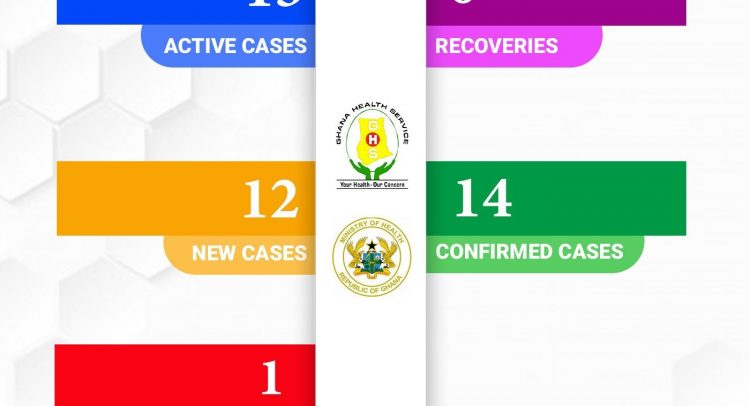
GHS recorded 12 new cases of Lassa fever

The Ghana Health Service (GHS) has confirmed 12 new cases of Lassa Fever, bringing the total number of cases recorded to 14 with one death.
The latest figures follow further tests carried out by the Noguchi Memorial Institute for Medical Research on 56 contacts traced from the two initial cases confirmed on Sunday, February 26.
According to GHS, there are 13 active cases so far with no recovery.
GHS announced that the first case was a 40-year-old trader, who was ill for two weeks and later died at the Korle-Bu Teaching Hospital.
“The second case is a contact of a fatal case and is now recognized but very stable. So far, 56 contacts have been identified and followed up by the Ghana Health Service,” the statement said.
General Director of GHS, Dr. Patrick Kuma-Aboagye, said Public Health Emergency Management committees at all levels (National, Regional and District) have been activated with detailed investigations including environmental assessment ongoing.
The Health Service added that essential medicines and logistics including personal protective equipment (PPE) are being mobilized, with contact tracing and management continuing.
“Quarantine contact has been implemented and daily follow-up by health staff, strict infection prevention and control (IPC) with nurse barriers has been implemented, sensitization of health staff and communities about Lassa fever has begun.”
Lassa fever is caused by the Lassa virus and the incubation period is 2-21 days. The virus is transmitted to humans through contact with food or household items contaminated with the urine or feces of rats (rats, mice).
Lassa virus can also spread between humans through direct contact with the blood, urine, feces, or other body fluids of a person with Lassa fever. Sexual transmission of Lassa virus has been reported.
Early symptoms of Lassa fever may include fever and general weakness. People may later experience headache, sore throat, muscle pain, chest pain, cough, and stomach pain.
In severe cases, there may be bleeding from the mouth, nose, throat or stomach. Death usually occurs within 14 days of the event in fatal cases.
There are drugs (antiviral) for treatment and they are very effective if taken early. There is currently no vaccine that protects against Lassa fever.
Prevention relies on community hygiene promotion to prevent rats from entering our homes.
Effective measures include storing grain and other food in rodent-proof containers, disposing of garbage far from the house, keeping the house clean and keeping cats away.
By Jamila Akwleey Okertchiri
Read the Full Story
Advertise Here contact advertisement[@]ghheadlines.com