
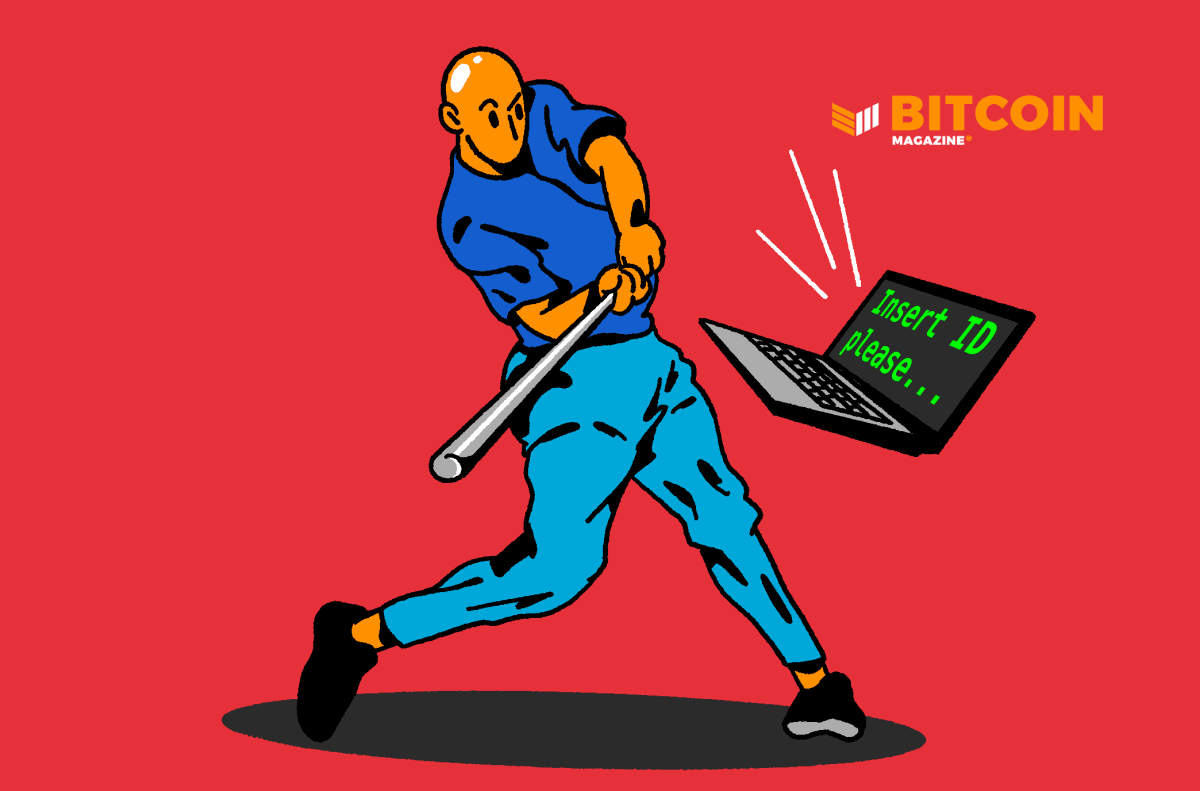
With institutional banks declaring war on Bitcoin, it is worth familiarizing yourself with the permission method to stack sats.
This is an opinion editor by Moon, Bitcoin Maximalist and writer.
Just in case we needed a reminder, banks have shown that they can and will keep their customers’ money out of bitcoin. This should be a call to action for Bitcoiners or anyone else who wants to maintain control over their finances to use more proactive bitcoin tools and practices.
Since Jamie Dimon condemned Bitcoin as a “hyped-up scam” and a “pet rock,” on CNBC in late January 2023, I have been unable to buy bitcoins using my Chase debit card in the Cash App. And I’m not the only one – if you’ve been following Bitcoin Twitter recently, you’ve probably noticed Alan Joy tweet about her experience with the same.
In both our cases, it is the bank that prevents the purchase of bitcoins and Limit incoming fiat transfers to the Cash App for customers associated with Bitcoin, all with “fraud protection”, of course.
No, it doesn’t make a lot of sense – Chase still allows ACH and fiat bitcoin purchases in the Cash App to be used to invest in stocks, savings or use the Cash App’s own debit card, not just bitcoin – but yes, it’s happening. Also, no one knows exactly when this became Chase’s policy. The fraud representative I spoke to wasn’t sure and couldn’t point to any documentation, but reasoned that the rule had been in place since early last year. But murkier still, a loose conversation can be found on Reddit about this issue until at least April 2021.
However, since I and many others will definitely be buying bitcoins via Chase debit in 2021 and 2022, I believe that this policy, so far, has only been implemented recklessly, selectively, arbitrary, even. Dark patterns abound, but right now, it seems I’m one of the unlucky ones…
That said, there is nothing to prevent this type of policy from being implemented widely and deliberately by one or many banks. If and as banks feel threatened by Bitcoin, we will certainly see more of this type of opaque practice.
It’s Time To Be Proactive
However, we should expect it and prepare for it. So, instead of fighting the banks, I want to use this as a learning experience to illustrate the importance of permissionless, non-KYC Bitcoining, and the practical actions that can be taken to promote the cause.
1. Bank with backup and remember the local option.
Banking is a service, not a devotion. Treat it as such. Keeping an account in several banks can provide some limited fault tolerance against banks that take a hostile attitude towards Bitcoin, assuming it is not the industry norm. Furthermore, small, local and regional banks may prefer to work with Bitcoiner customers, as individual accounts may be more important than larger national banks – although this is certainly not possible.
2. If you must use a KYC’d Bitcoin service, do so thoughtfully.
For Cash App (and services like it), consider first loading in fiat and making purchases out of the app’s native cash balance instead of buying directly through a bank account link / debit card where information is shared with the bank that allows to flag transactions related to bitcoin. Taking this small step can help avoid gatekeeping and can provide some small privacy, from the bank at least.
3. Be comfortable with non-KYC bitcoin exchanges.
Just as many precoiners drag their feet before making their first bitcoin purchase, so many Bitcoiners drag their feet using unauthorized channels to buy and sell bitcoins. Robosat, Bisq, Hodl Hodl — you can use these tools. For anyone just starting out, BTC Sessions has excellent video tutorial content on all three, linked together.
If you do not yet know how to use this service, it is better to pick up this knowledge now through calm, self-directed learning than during the panic of an emergency or under the pressure of another Bitcoin-hostile situation later. And for those of us who already know, we can actively support the service. For example, more people taking action to maintain ongoing orders on the platform can significantly increase volume and liquidity, help bootstrap and accelerate network effects.
4. Be flexible and creative with peer-to-peer payment methods.
App Cash, Zelle, PayPal, Venmo, Apple Cash, Revolut, etc. – services that most users see in exchanges without KYC – will all be enthusiastic and active financial gatekeeping agents in any antagonistic, anti-privacy environment, even when used in a “peer-to-peer” fashion.
Always remember that there are other payment options – such as gift cards, original digital-bearer items – that do not necessarily bring this problem. Perhaps, an enterprising soul could use the Fold to earn bitcoin rewards on the back for gift cards used in exchange…
5. Find a local Bitcoin community!
In the ongoing shadow war on all things permissionless, private, and peer to peer, this is your best defense. Don’t just wait until you need other Bitcoiners to get to know other Bitcoiners – to paraphrase Texas Slim, “Shake a local Bitcoiner’s hand.” Get to know people and don’t underestimate their power just ask. There can be real, living Bitcoiners near you looking to sell some corn and happy to see it go to another HODLer instead of to a bunch of lettuce-handing Fiat speculators in some faceless, centralized, Ponzi casino exchange. What’s more, let people know about your skills, talents and expertise — you might be surprised to find an interested market that pays BTC!
In the end, I believe we need to think about permissionless bitcoining as an important and necessary core competency, just as we do with our own custody. And we have to push with the same speed and intensity. But while doing this, we must also remember that this is a spectrum and a progression and there is no perfect solution, only tradeoffs. The realization of the importance of non-KYC practices will not be quick or obvious for near-normie newcoiners, coin-curious fence-sitters or even many minted Bitcoiners. My own experience is certainly proof.
When we promote the active practice of non-KYC Bitcoining, we can anchor to empathy, patience and humility – always mindful of the large number of don’t study at least you have to go through it to get there. So, even if people don’t get it the first time, or second time, what they heard from us, if it helps people get it faster in everything, then it is also worth it.
This is a guest post by Moon. Opinions expressed are entirely their own and do not necessarily reflect those of BTC Inc or Bitcoin Magazine.