
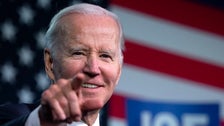
The Democratic National Committee voted Saturday to follow President Joe Biden’s recommendation and drastically alter the party’s early presidential primary schedule, elevating South Carolina, eliminating Iowa and angering New Hampshire.
The new calendar will also provide early voting status to Michigan and Georgia for the first time, significantly increasing the racial and geographic diversity of early voting states. With Biden unlikely to face a primary challenge in 2024 — and the DNC likely to roll back the changes before the next primary in 2028 — it’s unclear how much of an impact that would have.
Under the new calendar, the Democratic primaries will begin one year from this week. South Carolina will vote first on February 3, followed by New Hampshire and Nevada on February 6, Georgia on February 13 and Michigan on February 27.
But South Carolina’s elevation to first place proved the most controversial, putting it in direct contention with New Hampshire. Granite’s first state primary status is written into state law, giving the secretary of state wide leeway to protect its prized status.
“You can try to come and take it, but it’s not going to happen,” Gov. Chris Sununu (R) said in his inaugural address last month. “It is not in our DNA to take orders from Washington. We will not be blackmailed. We will not be threatened, and we will not surrender.
New Hampshire Democrats also argue Biden made a mistake, and it’s unclear how national Democrats plan to reconcile the new calendar and New Hampshire state law.
Beyond New Hampshire, national progressives have also questioned South Carolina’s elevation, noting its highly conservative electorate and history of anti-union sentiment.
“South Carolina has been first in the country in something to be proud of; it’s the lowest-density state in America,” Faiz Shakir, 2020 presidential campaign manager for Sen. Bernie Sanders (I-Vt.), said. wrote in the New York Times opinion piece in December. “As such, there should be no claim to being first on our calendar.”
Supporters of the change argue they will strengthen South Carolina’s Black Voters, rewarding the most loyal members of the Democratic base.
“Black voters in particular have been the backbone of the Democratic Party but have been pushed to the back of the early primary process,” Biden wrote in a letter to DNC members in December. “We rely on these voters at the polls but don’t understand their importance in the nomination calendar. It’s time to stop taking these voters for granted, and time to give them a voice louder and earlier in the process.
Iowa, whose first caucuses in the country have long been derided as undemocratic and where voting has been broken in 2020, will no longer have a place on the primary election calendar.