
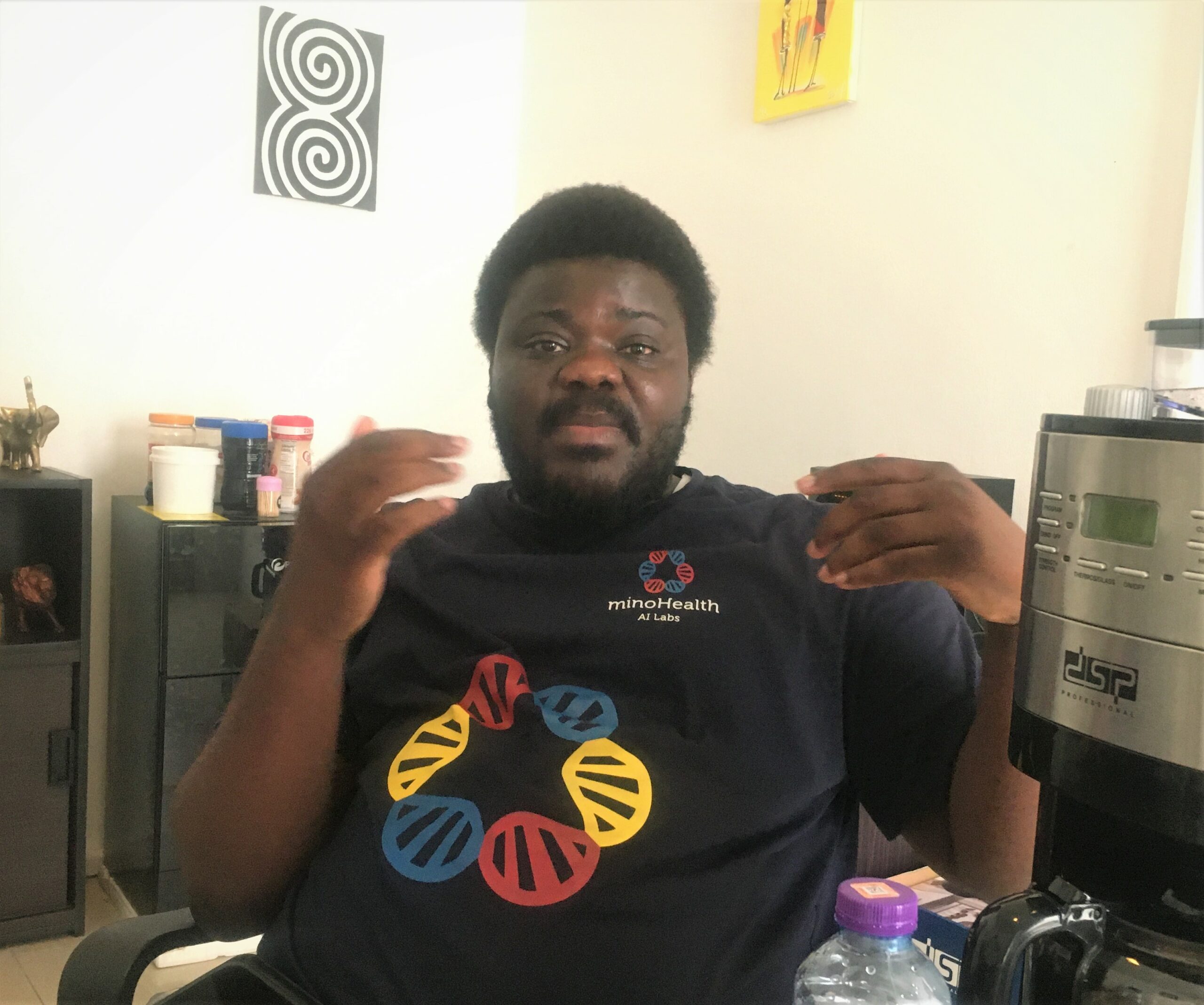
Darlington Akogo and MinoHealth are transforming healthcare in Ghana with artificial intelligence

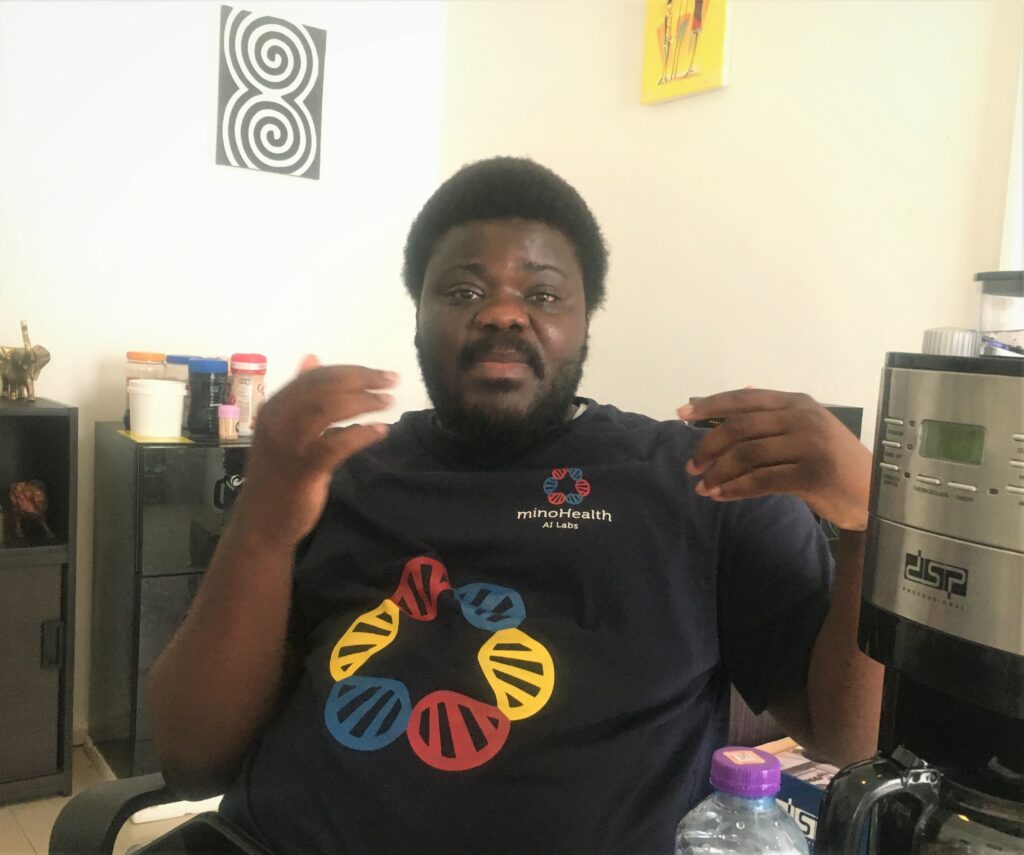
There is a quiet revolution led by unassuming but focused developers. Like all other innovators, he had to suffer the cold shoulder, be treated with suspicion, even belittled. But 28-year-old Darlington Akogo has stood the test of time and proved not only that he is capable, but that he has fulfilled his dream of developing an artificial intelligence (AI) system that will transform the healthcare system in Ghana and, of course, the world.
The founder and CEO of MinoHealth has been involved in technology for 12 years, but in the last seven years, he has started to step up and start one of the early artificial intelligence system startups for healthcare in the world. “I registered with Mino Health in 2016,” he said.
They are also using AI in agriculture with Kara Agro.
“As a young person, I like movies and I watch a lot of science fiction. I believe in technological utopia. I believe that with technology you can create some crazy things to solve the problems of the world. That’s how it all started,” he said in an exclusive interview with Ghana Business News.
“I bought some books and started building it in 2013, which is called ‘good old AI’,” he said.
Darlington’s vision was shaped and driven to work in the health sector by an experience he shared while visiting a hospital in Akosombo in the Eastern Region of Ghana.
At first no one wanted to talk to us. People in the health sector don’t give us an audience because we don’t have credibility,” he said.
Telling the story, he said he fell ill one day while visiting his family home in Juapong. Grandma decided that she should see a doctor. But this could only be done the next day, he said.
“I have to get up around 4:30 am so I can leave the house at 6 am and get to the hospital around 7 am. I don’t like it because I’m not an early riser. I work late into the night and sometimes I can sleep after 4 am. But here I woke up very early to go to the hospital. We got there and we weren’t the only people there. We had to join the queue,” he said.
“I have to see a specialist after 12 noon. He is an ear specialist. We spend half the day sitting, and some people come and jump the queue,” he said and lost his cool and made a scene.
But he also remembers what his mentor, who introduced him to computer programming, said in his journal. If someone sees a problem they should think about how to use technology to solve it.
“The experience in the hospital made me write down some ideas,” he said.
After evaluating the encounters in the hospital, the initial conclusion is that there is no proper appointment system, considering what is done in Europe, which I have experienced while working in Italy – you cannot see the family doctor without an appointment.
“I started working on the appointment system, and read a lot and talked to people. But then I realized that when the appointment system was a challenge, the real problem was the lack of doctors. For example, we don’t have radiologists in the country. Ghana only has 100 radiologists. Some areas don’t even have it,” he said, adding, “if you look at the doctor-patient ratio in Ghana before it was 9000 for one doctor, now it might be more.” He soon realized that the insufficient number of health workers and specialists was a real problem.
Akogo then started collecting data, engaging with machines and deep learning and figuring out how to develop an AI system that would diagnose things like pneumonia by reading x-rays.
“In the beginning no one wanted to talk to us. People in the health sector didn’t give us an audience because we didn’t have credibility,” he said, adding that he had to work on credibility to be accepted in the health sector.
Meeting and collaborating with Prof. Xavier-Lewis Palmer, conducting research in various areas and tests, including studying cancer and producing journal papers on AI in health increased his credibility and when officials in the health sector in Ghana began to listen to him. He started writing papers on AI in health for journals, and writing code.
But there was a disaster. He lost his computer, and all the work was done.
He then went to Italy in 2015, to do what he described as a gig in the tech industry, and returned to Ghana in 2016 to pick up where he left off.
When talking to people in the health sector, they gain a deeper understanding of the problem; is the shortage of doctors, and find out what could be the solution – AI technology.
“If you see the number of Radiologists available in Ghana, then it is even worse,” he said.
While Akogo thinks that providing a solution for the appointment system will help, it will not solve the shortage problem.
To come up with a solution, he decided to build an AI system that could do the work of some doctors.
“At that time I did not call it AI. I’m just saying that we can create technological solutions that can do some of the doctor’s work, diagnose patients and so on,” he said.
He initially started by writing the rules for the technology, and focused on pneumonia. Explore how technology can be used to diagnose cases. But writing the rules made him realize that they are not clear because there are an infinite number of rules.
“There are some symptoms that may be related to pneumonia, but the case may not be pneumonia, and may be related to other conditions. That’s when I started leaning and digging, and that led me to machine learning and then studied deeply, “I explained.
He established the diagnosis of pneumonia for starters because to diagnose pneumonia, radiologists look at x-rays and look for some patterns and opacities.
“Instead of writing rules to try and identify that opacity, just collect the data,” and that’s what he did. He started building an AI system that, when given an x-ray, could read the mapping in the data and give a reading in seconds, he said.
Akogo believes that deepening the study in the health sector and appreciating the need for validation and the work of doctors, increasing the understanding of what needs to be done with AI in the sector.
Drawing a comparison between fintech and health, he said with fintech, if you build a system to transfer money, and the regulator is satisfied that the money can be sent, it will be enough. But it is not the same as health. Regulators in the system, saying that they are made to know will not allow it, because human life is involved.
Therefore he studied regulation, policy and validation to fully appreciate how the health system works, in order to create an acceptable AI system.
So far, the Mino Health system has been deployed and users from all over the world are using it. When the user inserts the x-ray film into the system, it can diagnose the condition of the chest within seconds.
The number of users is increasing and the trust in the system is also increasing.
With funding support from Nvidia, GIZ and others, Akogo and a team of dedicated staff are pushing the limits of AI in health with Mino Health and setting the pace for AI use to improve physician shortages by enabling some actionable numbers. apart.
The future is AI, and Darlington Akogo is already there, making its mark and changing the landscape in healthcare in extraordinary ways.
By Emmanuel K Dogbevi
Copyright ©2023 by NewsBridge Africa
All rights reserved. This article or part of this article may not be reproduced or used in any way without the written permission of the publisher except for the use of brief quotations in reviews.
The post Darlington Akogo and MinoHealth transform healthcare in Ghana with artificial intelligence appeared first on Ghana Business News.
Read the Full Story
Advertise Here contact advertisement[@]ghheadlines.com