
Credit Suisse Group AG, once one of the leaders of the global financial system, is no more.
After tense talks over the weekend, UBS Group AG agreed to buy Credit Suisse in an all-stock deal for about $3.25 billion, less than the market value of US lender First Republic Bank. The government-owned sale marks the Swiss bank’s final fall from grace, succumbing to a crisis of confidence that threatens to spill over into global financial markets.
For 166 years, Credit Suisse helped Switzerland become the linchpin of international finance and kept pace with the Wall Street giants before scandals, legal troubles and management upheaval undermined investor confidence. While the decay had been going on for years, the end came quickly.
After the collapse of Silicon Valley Bank last weekend, struggling Credit Suisse quickly became the center of attention. After Saudi National Bank’s top shareholder told Bloomberg Television on Wednesday that he would “absolutely not” invest more in the lender, there was a rout.
A $54 billion financing backstop from the Swiss central bank — sealed overnight on Thursday to calm jitters — failed to be the lifeline Credit Suisse had hoped for. With the country’s banking sector at risk, Swiss authorities stepped in to push UBS into a reluctant white knight.
The Swiss government “regrets that the CS cannot solve its own difficulties – that would be the best solution,” said Finance Minister Karin Keller-Sutter at a press conference in Bern on Sunday. “Unfortunately, the loss of confidence from the market and customers can no longer be stopped.”
Defined as one of the world’s 30 systemically important banks, Credit Suisse was the biggest victim of the financial turmoil triggered by central banks as they tightened monetary policy to curb inflation. While concerns about further contagion are likely to remain, the sale to UBS avoided a disorderly collapse.
Before the global financial crisis – which Credit Suisse survived without a bailout, unlike its peers – the Swiss lender had more than $1 trillion in assets, but after years of decay, they have shrunk to about $580 billion, about half that of UBS . .
“Let’s be clear, in terms of Credit Suisse, this is an emergency rescue,” said UBS Chairman Colm Kelleher, who will remain in his role after the transaction.
For Switzerland, the blow could be significant. Home to 243 banking groups and 24 branches of foreign banks, the country’s stability and wealth are heavily dependent on the financial industry. The combined assets of UBS and Credit Suisse are roughly twice the size of Switzerland’s gross domestic product, and Sunday newspapers from tabloid to broadsheet are filled with stories about the death of a national icon.
Even as market anxiety grew, Credit Suisse insiders acted as if they still had the situation under control. Despite the somber mood, managers held town hall meetings to allay employee fears and investment advisers took calls from clients to discuss liquidity issues, according to people familiar with the discussions.
But in his hometown of Zurich, doubts and frustrations are growing. Outside its headquarters on the majestic Paradeplatz, someone wrote: “The next bank to go?” The question was then replaced by an expression of anger and disgust as the truth gradually dawned on him.
Throughout history, Credit Suisse has financed the Alpine railroad and the development of Silicon Valley. It deals with the fortunes of Arab royals and Russian oligarchs and tilts at the giants of Wall Street. But struggle to control risk and consistently make money.
In recent years, the bank has experienced changes in senior management, with each leadership change putting more pressure on performance. The stock has fallen more than 95% from its pre-financial crisis peak, and the company was worth just 7.4 billion Swiss francs ($8 billion) at Friday’s close — less than a tenth of what Goldman Sachs Group Inc. was worth. .
“In Zurich, we already have a ring-side seat to this regular fiasco in slow motion,” said Matthew Ruesch, founder and managing partner of Broad Creek Capital, a family office. “We’ve watched the bank lurch from scandal to scandal for so long that it’s hard to remember them all at this point.”
Burning Bed
The seeds of Credit Suisse’s rise and eventual collapse were sown in the summer of 1990 when then-Chief Executive Officer Rainer Gut saw the opportunity to take control of the US partner of the Swiss bank, First Boston, for a modest capital injection and backstopping of bad debts.
First Boston has embraced the high-yield debt market during the 1980s and lent billions of dollars to finance risky buyout transactions. The once-lucrative industry has imploded, and one of the most problematic deals was a $457 million loan for a leveraged buyout of the Ohio Mattress Co. Financing failure will go down in Wall Street infamy as a “burning bed.”
After the takeover, Credit Suisse settled on the same types of risky businesses — such as leveraged finance and mortgage bond trading — that fueled the bed-burning deal. The leaders of the Swiss lender then carried out a series of reorganizations, which finally eliminated the first name of Boston in 2006.
The acquisition is part of an aggressive growth strategy, including the acquisition of a Swiss rival, and the complexity continues to grow. After replacing Gut as CEO, Lukas Muehlemann bought Winterthur Insurance Co. in 1997. Swiss Bank then acquired Donaldson, Lufkin & Jenrette Inc. in 2000, but the deal for the New York-based investment bank turned out to be a costly misstep. as some of the top-producing DLJ bankers left to compete in short order.
Winterthur was later sold in 2006 by CEO Oswald Gruebel, who ran the bank alongside John Mack for a while. Frequent management changes create strategic turmoil at the top, while increasing pressure on the rank and file to produce returns.
Cut and Paste
In 2015, a fraud committed by a private banker who had no clients and no banking experience before joining Credit Suisse came to light. In the aftermath of the 2008 market turmoil, Patrice Lescaudron – a soft-spoken Frenchman – began surreptitiously dipping into the accounts of wealthy clients, using the money to try to win back losses for other customers.
The scam was shocking. He cut out the signatures from documents, pasted them into trade orders and photocopied them, according to Lescaudron’s own admission. There were red flags along the way, including verbal warnings and written warnings by supervisors in 2008, 2011 and twice in 2013 for violating compliance policies. But Credit Suisse failed to stop him. He was convicted of fraud in 2018 and suicide in 2020.
As long as the money was flowing, the bank indulged in Lescaudron’s bad behavior, according to an independent investigation commissioned by Finma, the Swiss banking regulator, although it could not conclude that the bank was aware of the fraud.
Boardroom Spying
In January 2019, a long-standing dispute between CEO Tidjane Thiam and Iqbal Khan, who manages wealth management and has a goal of one day leading Credit Suisse, opened during a dinner in the wealthy suburb of Lake Zurich. .
What began as a disparaging comment by Khan about Thiam’s garden developed into a shocking corporate scandal, tarnishing the company’s reputation for discretion and exposing a culture where personal vanity transcends ethical and legal boundaries.
A few weeks after the dinner party, Khan was put down for promotion and then quit in July. When he later accepted a job at UBS, the move raised concerns at Credit Suisse’s top ranks that he could poach key personnel. A private security firm was hired to monitor his activities, but was discovered by Khan in an incident that led to a physical altercation.
Although the bank rushed to eliminate the embarrassing incident, it was soon revealed that something was not unique. Thiam was forced out in February 2020, when leader Urs Rohner blamed “the damage in terms of trust, reputation and credibility among all stakeholders.”
As part of the investigation prompted by the Khan episode, the Swiss banking regulator in October 2021 discovered five additional supervisory cases from 2016 to 2019. The toxic atmosphere at the top contributed to the deterioration of operational errors.
Trading Debacles
In March 2021, Credit Suisse’s trading desk was informed that its largest client would not be able to repay more than $2 billion in debt tomorrow. Archegos Capital Management, a New York-based investment company that manages the personal wealth of billionaire Bill Hwang, has spent the previous two days with other lenders after the out-of-scale bet went bad, and there was not enough left for Credit Suisse.
The news sparked an internal blame game, with executives in New York, London and Zurich turning on each other instead of focusing on damage control. Competitors were faster to sell Archegos bonds, and in almost two weeks Credit Suisse made the initial exposure amount: $4.7 billion. It will eventually grow to $5.5 billion, wiping out more than a year’s worth of profit and sending the bank into an existential tailspin that fueled last week’s crisis of confidence.
Executives have come under fire for failing to protect the bank and its wealthy clients from the collapse of a $10 billion fund run by financier Lex Greensill. The twin episodes shocked the world of finance – but, in hindsight, they were decades in the making.
The bank’s complexity, culture and controls are to blame for Archegos’ heavy losses, according to an independent report on the collapse by law firm Paul, Weiss, Rifkind, Wharton & Garrison. Credit Suisse had a “poor attitude towards risk” and “failed at many points to take significant and important action,” the report concluded.
The bank responded with a series of measures to fix the shortcoming and vowed to use the incident as a “turning point for its overall approach to risk management.”
But time is running out.
Final Plan
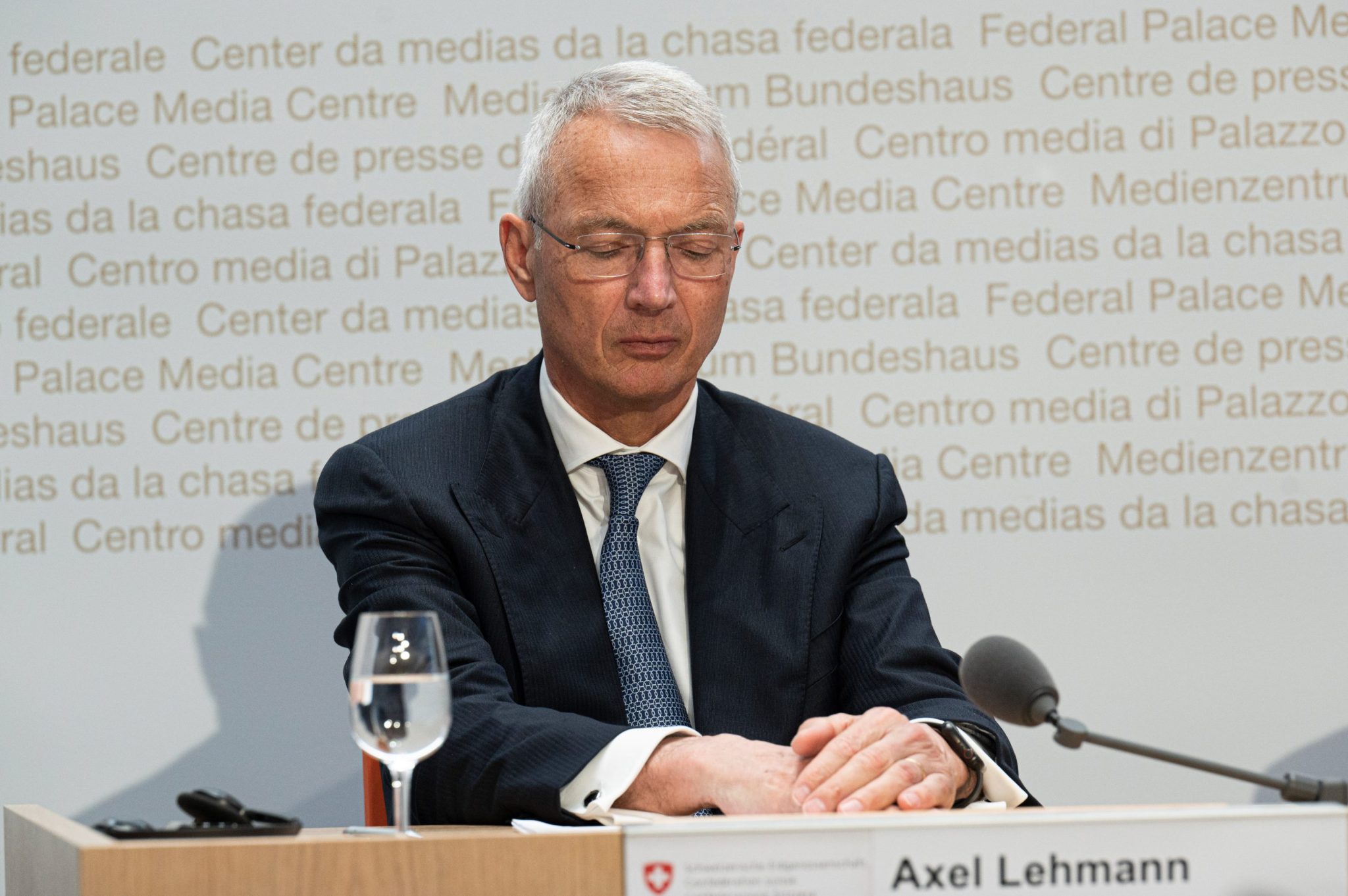
In October last year, the new leader of the leader Axel Lehmann and Chief Executive Ulrich Koerner – who took charge last year after the fallout from the trading debacles – returned to Switzerland Credit Suisse as the best way forward.
They cut jobs and raised $4 billion in new capital. Above all, he plans to carve out his investment banking operations and eventually spin off the revived First Boston unit to end his three-decade effort to compete on Wall Street.
“The new Credit Suisse will definitely be profitable from 2024,” Koerner said after presenting the restructuring plan. “We don’t want to over promise and not deliver, we want to do it the other way.”
But the world does not stop. The cheap money is finally over, the global economy is in turmoil, and investor confidence is in short supply – a combination that proves too much for banks that have never learned from the global financial crisis.
“The banking sector is not like any other sector,” said John Plassard, an investment specialist at Geneva-based Mirabaud. “Once trust is lost, you can’t rebuild it.”
–With assistance from Claudia Maedler, Natasha Doff, Philip Lagerkranser, Loukia Gyftopoulou, Donal Griffin, Hugo Miller, Sagarika Jaisinghani, Julien Ponthus, Allegra Catelli, Bastian Benrath and Bryce Baschuk.