
As such, my guess is that whoever wins this election, the contradictions the country is facing at this time require the grace of God, and the most intelligent action by the Muhammadu Buhari government to hold the country together. , between Election Day and May 29, in particular. Significantly, there is no evidence on the ground to suggest that the government has this type of capacity, and / or reservoir of will call upon, to lead this cost.
Nigeria is at a crossroads. Elections, for better or for worse, have represented a critical element by which commitment to democratic principles will be measured by social formations. This is usually a very serious problem in our climate, because of the questionable attitude of the power elites, as well as the electorate, towards a unique path to political power. Many of the more challenging nation-building crises that Nigeria has seen since its divestment from British colonial enterprises have actually hinged on, if not fueled, the mismanagement of the electoral process. But the 2023 elections promise to be more challenging than anything the country has seen since 1999; and the reason is obvious. The two main candidates have reached a stage in their lives where it would be legitimate to conclude that this year’s election is their last shot at the country’s presidency, one position they have coveted for a year. Both, therefore, have reason to despair. Nigerian youths, or some good ones, it seems, see this election as one that can redefine the country’s trajectory, and make the government more responsive to the interests of a critical demographic, which Nigeria has actually done. abandoned, over the years, in the desert of alienation, frustration, and hopelessness. Will the Christians, by this election, be shut out of power for another four or, in all probability, eight years? This is on the minds of many Christians across the country. Is it inevitable that the country has four or, most likely, eight more years of a Northerner, indeed, a Fulani, in the presidency, and all that it represents, many southerners have been thinking?!
About 11 months ago, when the issue of who would be the best presidential candidate was still in the realm of conjecture, I had indicated, in PUNCH newspaper interview (April 10, 2022), what, for me, is the attribute of a person who should be president. I itemized it like this, “Good education; intellectual depth; bold vision and the ability to market the same to the population; courage of conviction; compassion for those who do not have it; breadth of mind; cosmopolitan outlook; self-confidence; commitment to justice and desire that is not can be done to help deepen the democratic process in Nigeria. They must have unbroken integrity, discipline and incorruptibility. As I said a few days ago, on the WhatsApp discussion platform, in a question asked by my friend, that I was hired as a consultant in the recruitment process the president of Nigeria, this will indeed be my recommendation. It will then be left to the panelists scrutinizing the candidates – in this example Nigerian voters – to determine which of them is currently in the hustings appropriate bill, or the closest to do it. We only have a few days again, for voters to make this critical choice.
As far as things are concerned, whoever wins this election, the contradictions facing the country today require the grace of God, and the most intelligent action of the Muhammadu Buhari administration to hold the country together. , between Election Day and May 29, in particular. Significantly, there is no evidence on the ground to suggest that the government has this type of capacity, and / or reservoir of will call upon, to lead this cost. If anything, the pages of Nigerian government history for the past eight years are littered with evidence of the lack of organization and delivery capabilities needed to hold the country together after what promises to be a divisive and consequential election. The mismanagement of the nation’s diversity, which should normally be its power base, and the reckless way in which the naira redesign policy is right and commendable – for the country’s economy, security, and electoral process – have been dealt with in the past few weeks. , is a ringing testimony to the maxim popularized by Ivan Illich (1968) that the road to hell is paved with good intentions!
The implication of all this is that for Nigerian voters in this election, the signs remain bad! It is similar to what the award-winning British novelist, Fredrick Forsyth (1979), called ‘the devil’s alternative!’ in the novel by that title. It will take the best of intent, hard-core sagacity, and Leadership, on the side of whoever emerges champion, to assuate the feelings of those who have legitimate reason to worry, fear, or anger; and thereby keep the country together.
If Atiku Abubakar of the PDP wins, the southern part of the country, including members of the ruling party and, indeed, the presidential candidate, will raise the inevitable question of equity. How these concerns will be implemented remains in the womb of time. If Bola Ahmed Tinubu of the APC wins, a good percentage of the nation’s Christian population, especially from the Middle Belt, which has borne the brunt of the arrant mismanagement of Nigeria’s religious diversity at least eight years ago from the APC government, will immediately feel alienated by the victory of the Muslim-Muslim ticket. If Peter Obi of the LP emerges the winner, it is doubtful that the loudest of the ethno-national iridentists in the North will persuade him to rule. It includes elements that insist that the ‘sin’ of the January 1966 coup will never be forgiven or forgotten; and the Igbo of all generations must bear the burden of whatever mistake Major Kaduna Nzeogwu and his cohorts are supposed to have made, the actions associated with the July 1966 counter coup though. This school of thought might hold that, in any event, the Biafrans would have wanted out of Nigeria. It will not be important to argue that Igbo votes alone cannot be the ones propelling Obi’s victory, if that is the case. If Peter Obi does not win, can anyone convince the hordes of youths and women who are rooting for him, who will think that a new day has come? How to make up for the disappointment, given the general trust deficit in the air, especially with this critical demographic?
The implication of all this is that for Nigerian voters in this election, the signs remain bad! It is similar to what the award-winning British novelist, Fredrick Forsyth (1979), called ‘the devil’s alternative!’ in the novel by that title. It will take the best of intent, hard-core sagacity, and Leadership, on the side of whoever emerges champion, to assuate the feelings of those who have legitimate reason to worry, fear, or anger; and thereby keep the country together. It will be very dangerous and, if you want, the mother of all mistakes, replaying in 2023 what the incumbent president did eight years ago when the country faced a similar situation, but certainly less challenging. Everywhere, I have inexplicable characteristics faux pas as the ‘Buhari Doctrine of Justifiable Exceptions’ (The Guardian, 03 July 2016), where the president made it clear that he would treat people who gave 97% of their votes differently than those who gave 5%! Whether the three main candidates, any of whom can become president-elect after the election on February 25, have the extraordinary ability to bring people and nations – in all the tapestry of diversity – together, and very quickly, remain in the realm of conjecture. Only when this most critical task is completed will we be able to start talking about the kind of economic programs needed to give hope to the hopeless, reclaim the dignity of Nigerians, strengthen the bonds of unity, and improve our region , no global visibility.
Now, our democratic duty, as Nigerians, compels all of us, who are duly registered for the election, to come out to vote, on the 25th of February, and the 11th of March. In doing this, we have the right to expect that, as promised, INEC is not only fair to all, but like Caesar’s wife, appears to be fair. The security services as well, we must expect Nigerians to do well, by doing their job properly and effectively to secure our votes, voters, election officials, and indeed our commonwealth…
What all this means is the need to reorganize the structure of the country’s government. We must devolve powers, and resources, to sub-national units, so that the reality of power concentration, which makes the central government so compellingly attractive, will, in one fell swoop, be done! Call it any name – restructuring, recasting, devolution of power, ‘true’ federalism, functional federalism, or whatever – it is certain that a country of Nigeria’s size and diversity cannot be managed effectively and successfully with a unitary-cum-constitutional structure. , although it falsely identifies as federal. Such a move would eliminate the concerns discussed here, and make them irrelevant, as sub-national units – absent a central government – become the locus of power, influence, and attention. This is what history lessons teach. It is what has been settled, both in theory and praxis federalism; and the more we try to deny this fact, the more Nigeria will be in this general state of shadow. More importantly, the country would be in constant fear of being able to travel to Yugoslavia or, indeed, the Soviet Union. This is why it should be a priority for the next president, whoever he is. There are many ways it could have been done smoothly, by a determined, visionary, imaginative and courageous president, who chose to live for history.
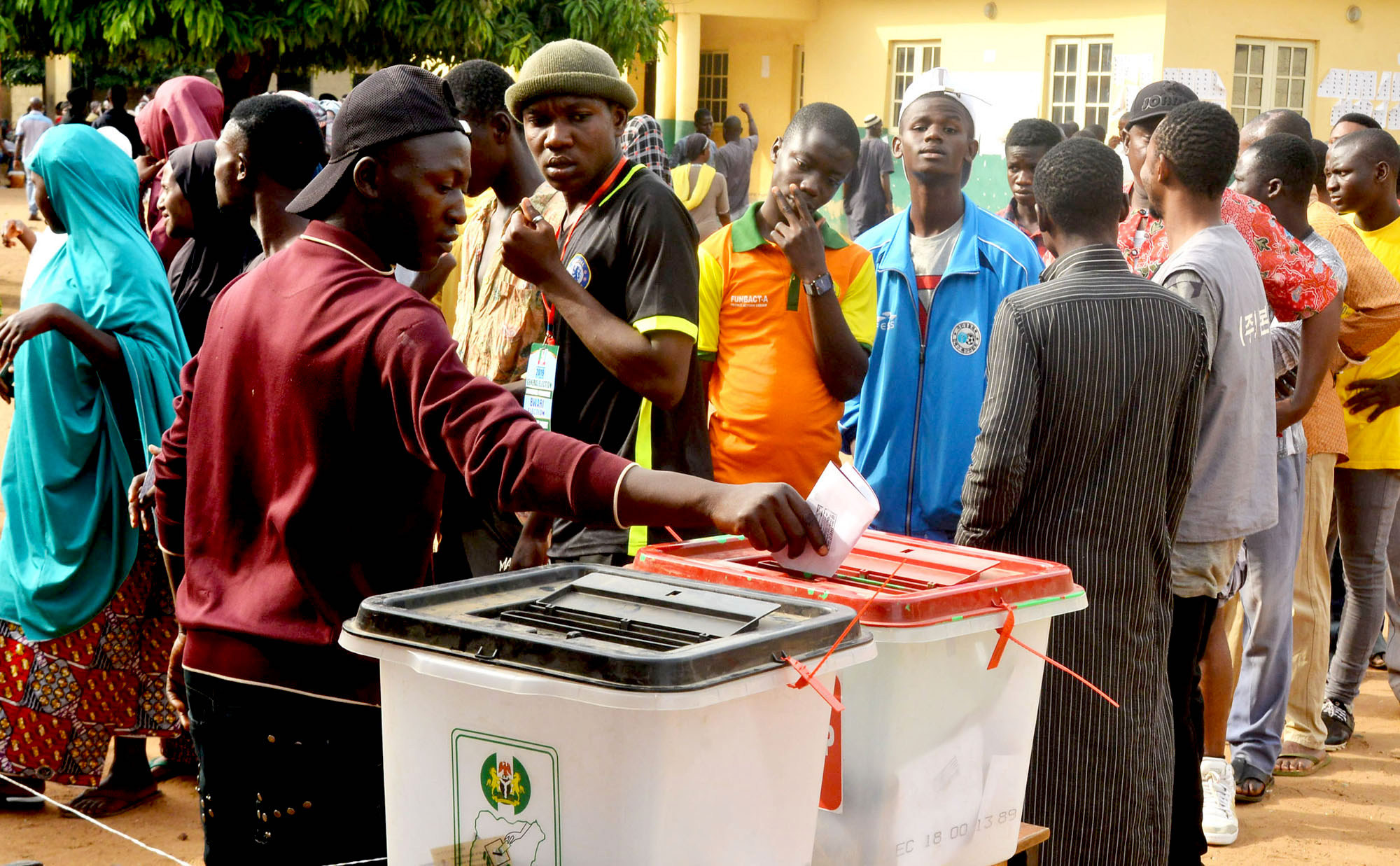
Now, our democratic duty, as Nigerians, compels all of us, who are duly registered for the election, to come out to vote, on the 25th of February, and the 11th of March. In doing this, we have the right to expect that, as promised, INEC is not only fair to all, but like Caesar’s wife, appears to be fair. The security services as well, we must expect Nigerians to do well, by doing their job properly and effectively to secure our votes, voters, election officials, and also our commonwealth, before, during and after elections. But, make no mistake about it, the 2023 presidential election, the way it is being conducted, is a do or die election for Nigeria!
Femi Mimiko, Mni, is a member of the Department of Political Science, Obafemi Awolowo University, Ile-Ife. E-mail: femi.mimiko@gmail.com; @FemiMimiko
Support the integrity and credibility of PREMIUM TIMES journalism
Good journalism costs a lot of money. But only good journalism can guarantee the possibility of a good society, responsible democracy, and transparent government.
For continued free access to the best investigative journalism in the country, we ask that you consider making a modest contribution to this noble effort.
By contributing to PREMIUM TIMES, you help keep journalism relevant and ensure it remains free and available to all.
contribute
AD TEXT: Call Willie – +2348098788999