
Military intervention will not solve the underlying problems that caused the ‘insurgency’ in the first place
Cabo Delgado province in Northern Mozambique has been at the center of a violent conflict that has claimed the lives of more than 4 000 people and displaced nearly a million over the past five years. So far, military intervention has had limited success and has only brought relative stability to limited areas of the province. Dialogue with all parties involved – the government, the mining companies, the communities that live there and the extremists – will be difficult, but essential to end the violence. Civil society leaders can and should play a critical role in creating a platform for dialogue where relevant stakeholders can come together, voice their interests and grievances, and work together to find mutually beneficial solutions that will reduce the need for violence.
Center for Democracy and Development, Good Governance Africa (GGA) and Mail & Guardians held a webinar featuring researchers and practitioners from Mozambique and the wider region, to discuss the current state of conflict and the potential of alternative interventions to bring peace to remote provinces and the region.
Chris Maroleng, Global Advisor and Executive Director of GGA, opened the proceedings with a brief overview of the situation in Cabo Delgado, and introduced the speakers. He said there was an “over-focus” on military intervention without a concerted effort to address the root causes of the conflict. GGA believes that inclusive governance and equitable resource allocation are key to resolving conflicts in Northern Mozambique and across the continent.
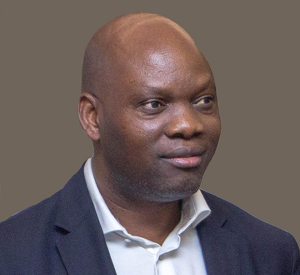
Professor Adriano Nuvunga, Executive Director of the Center for Democracy and Development (CDD) and Chairman of the Mozambican Network of Human Rights Defenders, was asked to brief him on the situation in Cabo Delgado. He said it had become a “forgotten but dangerous” conflict. At first, the government failed to take the conflict seriously and treated it as a simple “bandit”. As the situation has become more serious over the past few years, the government has worked to blame the work of external forces and not “recognize the failure of its own government as one of the main factors of the conflict there”.
The main triggers of the conflict are the violation of human rights and the extraction of minerals without adequate compensation for the people living in the area. Nuvunga said there are many historical grievances in the area, which go back to the civil war, in addition to the environmental problems of mining and logging; resources are extracted without being put back into providing basic services to local communities. Since the beginning of the conflict there has been a lack of coordination of military forces there, allowing the rebels to capture large areas with ease.
Professor João Feijó, Research Coordinator, Observatorio do Meio Rural (OMR), made a presentation on the possibility of dialogue in Cabo Delgado – between the mining companies there, the government and the people living in the area. He said Mozambique had a long history of violence, dating back at least 100 years, with “very little dialogue”. There is no debate about what is causing the conflict in the province, but the government has generally refused to communicate with communities to listen to their grievances, increasing the risk of violence.

Despite massive unemployment in the province, mining companies bring in thousands of external workers. This is one of the most important triggers of conflict, and causes anger and mistrust in local communities, Feijó said.
Professor Anthoni van Nieuwkerk, Thabo Mbeki School of Governance, University of South Africa, said that military intervention is not enough to tackle what is driving violent extremism in Cabo Delgado. “We need a broader discourse than counter-terrorism,” he said. The causes of these conflicts include state fragility, poor governance, political and social marginalization, youth marginalization and a predatory global economy.
“Governments play an important role in the rise of violent extremism, by planning and arbitrating the physical, social and political conditions that produce certain behavioral outcomes in the human population,” said Van Nieuwkerk. “Politicians can avoid situations that lead to violent extremism, but now, they are increasingly motivated by self-interest.”
Organized crime depends on governments and corrupt corporations to facilitate their operations, and extremists interact with organized crime syndicates to maintain their activities. Increasingly sophisticated methods are being used by extremists such as Al-shabab to recruit disaffected youth into their ranks, particularly through social media such as TikTok and WhatsApp. African governments are not handling this threat well. In Mozambique, the government’s strategy was first avoidance, and now counter-terrorism, perhaps inspired by business partners. “As we have seen in Nigeria and Somalia, these initiatives have not been effective,” he said.

Van Nieuwkerk said that SADC and SAMIM (Southern African Development Community Mission in Mozambique) are facing many challenges, especially in coordinating their forces in Cabo Delgado. “Governments in the Southern African region must provide assistance that goes beyond military intervention. SADC’s response to the crisis in Mozambique is to form counter-terrorism units, instead of focusing on moral leadership and better governance.
He used the example of the conflict in Ukraine, and said that throwing more military resources into the conflict would only perpetuate the situation there. This is not a solution; dialogue is. “All parties must be given the tools for a negotiated settlement, even those considered ‘enemies’.”
Feijó said the causes of the Cabo Delgado conflict are many and complex. There is a deep feeling that the state is against the people, not for them, and this goes back a long way. Like most South African countries, Mozambique is just a “corridor to extract and export raw materials”, designed for Western interests, not for the betterment of local communities and development. It is evident that there is a war between the West and the Islamic State movement, and Mozambique has become another stage where this war is being played out.
Piers Pigou, South Africa Project Director, Institute for Security Studies, was asked by Maroleng about the security situation in Cabo Delgado. He said it was difficult to get accurate information from and about the region, as he often relied on a single source of information, and this was often sporadic. State sources often suggest that the conflict is under control and that the rebels are losing. While there have been fewer reports of violent incidents, especially in areas where Rwandan forces are deployed, the situation of internal displacement of people is still very complex. The conflict has also increased: initially there were incidents of violence in eight districts, but now there have been reports from 16 districts, including the Southern district. This led to the expansion of Rwandan forces into more districts.

SAMIM forces appear ill-suited for this conflict, and lack sufficient intelligence and air support. There is some content to the conflict, but smaller non-state armed rebel groups are still able to attack, especially in the supply trains of the armed forces. About 125 of those attacks have been claimed by the Islamic State, but ties between the Islamic State and local rebels in Cabo Delgado remain tenuous. Keeping troops in a given area is a problem. The rain was late, which hindered the number of attacks. As the security situation varies from region to region, the “improvements” claimed by the Mozambican government are difficult to prove.
Will the military response continue to yield meager results, Maroleng asks? Pigou said he wasn’t sure about that, but keeping troops on the ground was a problem, as South Africa carried a lot of costs. Consolidating the security situation is important – and a clear strategy is needed for this – so that other interventions can be effective. “The Rwandan army has established good relations with the local community, and this is certainly something to learn from,” he said.
Flap
Van Nieuwkerk said we should think about the lessons we can learn from Afghanistan. South African troops should be deployed for security reasons in their own country; Eswatini is burning; and there may be an emergency due to a power crisis. It can be a problem to cross the border and try to solve the neighbor’s problems. “We must boost democracy and good governance in all areas, and civil society leaders must take up the baton.”
Feijó said that the problem is one of development and reconstruction, providing services such as education and health, social participation channels and agricultural aid. All of these require good governance, but unfortunately the main debate today is about how to fight terrorists. “I’m not optimistic about the future, but I hope I’ll be proven wrong about that.”
Maroleng said that there is no single solution to the problems in Cabo Delgado, but it is possible that the parties involved can start talking in some kind of dialogue to resolve the complaints of the people who live there. “It is time for civil society actors to come together and make a difference.”
Nuvunga said that we need to know at a granular level who the people of Cabo Delgado are, and what their real grievances are. How do we measure “progress” in this conflict if we don’t clearly understand the situation? Mozambican soldiers are not properly fed or paid, and neither are many other members of the civil service, such as teachers. The state failed; Maputo looks beautiful, but the outlying districts have fallen into disrepair. Dialogue is needed at the national level and in Cabo Delgado. “Bad governance creates space for violent extremism, but governments are still looking for military solutions, not sustainable solutions.”
— Derek Davey