Below is an excerpt from the latest issue of Bitcoin Magazine PRO, Bitcoin Magazine’s premium market newsletter. To be the first to receive this insight and other on-chain bitcoin market analysis straight to your inbox, subscribe now.

Net Liquidity and Moving Averages

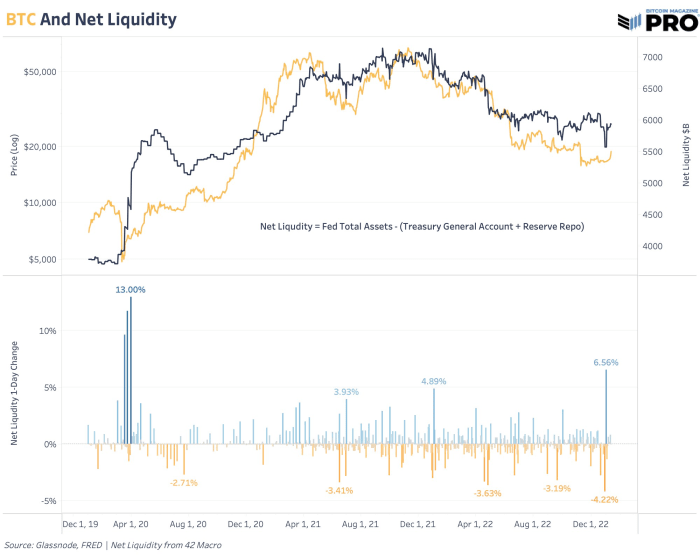
One of the most useful models for tracking cycle peaks for the S&P 500 Index and bitcoin since March 2020 has proven to be net liquidity, the original model by 42 Macros. Net liquidity tracks changes in the Federal Reserve’s total assets, the US Treasury’s general account balance and the reverse repo facility. Lower net liquidity means less capital is available for distribution in the market. We find it useful as a key macro indicator to assess current liquidity conditions and how bitcoin is trading in the market.
Bitcoin has acted as a liquidity sponge throughout its life and liquidity contracts in all markets have had a significant impact on the price of bitcoin and its trajectory. In the end, this is one of the main causes of the core long-term thesis that the growth of bitcoin depends on an environment of continuous monetary debasement and continuous liquidity to counter unstable national debt levels and deflationary forces. In the short term, it is not clear when overall liquidity will increase massively again. It’s the trillion dollar question and the topic of conversation that has everyone speculating. Net liquidity provides a view into that trajectory as a measure that is updated weekly with new data.
Bitcoin saw some of its greatest relative strength since January 2021, but it also came at a time when we saw a significant increase in net liquidity after a period of low volatility. The uptick was driven by lower reverse repo balances since the beginning of the year. With the Fed’s “longer” stance, core CPI view at 3.5% for 2023 and balance sheet runoff continuing, we will likely see a decline in net liquidity – barring a spontaneous or emergency policy reversal.

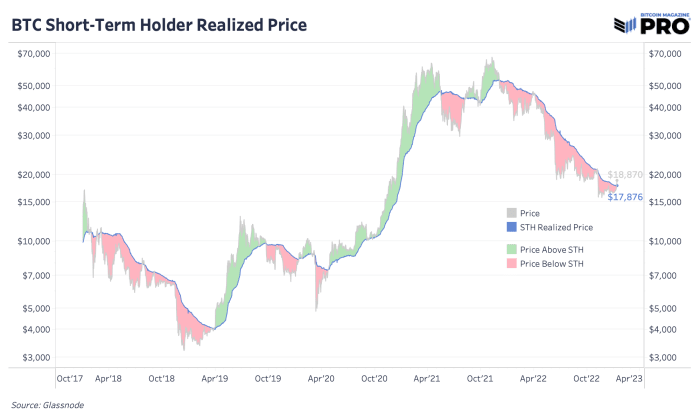
The price has broken above the short-term price realized. That’s only happened a few times in this bear market and the event didn’t last long. Since this price reflects the average cost base of newer buyers, it will be key to see if these market participants want to sell here at cost or if they will continue to move forward.
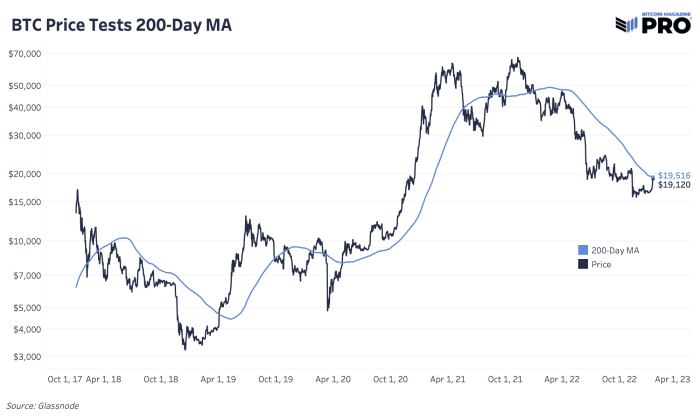
The 200-day moving average may seem arbitrary, but the fact that many technical traders and momentum- and trend-based investors monitor this level gives it importance. A clean break above could mean continued strength for bitcoin in the days and weeks ahead.
The price action to start the new year has been quite a promising sign for bitcoin bulls. In addition, over the past week, shorts as a percentage of futures liquidation have reached the highest level in the history of the data. When the shorts are reduced at the end, this possibility of immediate upside can be closed.
While there is a long way to go in terms of exceeding the height of the previous bull market, the year-to-date performance has been hopeful after a year where the industry practically imploded.
Overall, this is a good start to 2023.
Enjoy this content? Subscribe now to receive PRO articles directly in your inbox.