
School graduates need better information about TVET education
Artisans are in short supply worldwide, but in South Africa, enrolling in Technical-Vocational Education and Training (TVET) colleges has historically been seen as a last resort. Young people should be more aware of the value of technical education.
Kagiso Trust held a very important Twitter Space Chat to show that TVET training is a vehicle for employment and socio-economic upliftment of our communities. TVET colleges offer a wide range of vocational skills, which can reduce the number of unemployed in the country, while equipping students with the skills to be employed directly or entrepreneurship.
The Twitter chat was moderated by Khaya Sithole, who said that there are many options available to school leavers, but information around TVET colleges is quite opaque, which means that many school leavers miss out on important opportunities – a situation that can lead to career mismatches. for them.
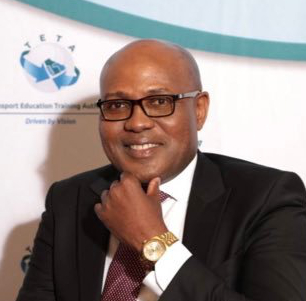
Zamokuhle Sam Zungu, the Deputy Director General in charge of the TVET sector in the Department of Higher Education and Training, was asked for a brief overview of what the department oversees. He said there are 26 universities and about 50 TVET colleges with over 300 campuses spread across the country; there are also several Community Education and Training colleges (CET colleges) with various programs, and 21 Sector Education and Training Authorities (SETA).
In the TVET education sector, there is a program starting from NQF (National Qualifications Framework) Level 2 to Level 4, called the National Certificate Vocational, which gives 9th grade students a vocational alternative to academic grades 10-12 by offering industry-focused training. Then there are various specialized courses, from engineering to business studies, and qualifications N1 to N6 from Report 191 (18 months of theoretical studies in college, and 18 months of relevant practical application in the workplace). There are also training and job skills programs, which are in high demand.
Inverted pyramid
Zungu said there is an “inverted pyramid” of school leavers who want to go to universities instead of TVET colleges; The top of the pyramid is the school leavers who want to join TVET colleges. The goal of the National Development Program is to have 2.5 million students in TVET colleges by 2030 – currently there are only half a million students – without compromising the quality of the programs offered there.
“The majority of South Africans have a strong belief that they need to go to university to have a decent career, but if you look around you, the clothes you wear, and everything you sit at, the table, the food you eat; everything has got the touch of the craftsman somewhere. Generally the people who serve food in restaurants and build houses are foreigners, but we have a problem of unemployment among the youth,” Zungu said.
TVET college training creates opportunities for self-employment as well as working for others; for example, one can drop out of TVET College and become a self-employed plumber. In countries like Germany, doctors often start their careers in the artisanal trade. Having more TVET-trained students will help revive South Africa’s economy.

Lethiwe Nkosi, Network Mobiliser at Youth Capital, was asked if the youth have a clear concept of the TVET sector. He said that Youth Capital – a campaign that promotes youth-centered and evidence-based solutions to youth unemployment – is trying to help students complete their studies and integrated learning. Many young people recognize the value of the skills they learn at TVET colleges, but many say they are not ready for the world of work, and need more job readiness training.
Students also struggle to apply what they learn to the outside world. Transportation costs during in-service training are often an issue, so finding training closer to where they live is beneficial. They also have to bring lunch to work because food has become expensive. “It’s a small problem, but that’s what I’ve come across,” Nkosi said.
He said for most young people, TVET college is usually the last option. Many people think that they should just do something else instead of sitting at home, and maybe they are in TVET college for this reason. Most young people don’t know how many plumbers there are, for example, so they don’t value learning artisanal skills.
Zungu said 151 technical colleges were merged into about 50 TVET colleges in 2004. Most TVET courses require mathematics and science as subjects in school. School graduates can go to universities or TVET colleges, but now in Gauteng there is a specialization school, which is linked to the DHET specialization centre, because industry experts can provide practical knowledge. To become a craftsman one must train on the job. The university now accepts students who come from TVET colleges and understand their training.
Clear up the confusion
Nkosi says there is still some confusion among school leavers about what TVET colleges offer; many are unsure of what careers they can pursue by going the TVET route, according to small business owners interviewed by Youth Capital. He said that there is a need for more career days in schools, so that young people can understand what the role of craftsmen is, among other things, and the value of choosing this career route.

Have we invested enough to remove confusion about enrolling in these colleges, asks Sithole? Zungu said there is an increase in TVET education, but there are budget constraints. There has been a lot of investment in ICT, as some TVET courses can be taught online. Several new TVET campuses have been built recently.
There has been a marked growth in the number of Trade Test Centers – before, there was only one, called Indlela, in Olifantsfontein – and we now have 34 in the country, which is important, because all artisans must pass a trade test before they can work. to be a skilled craftsman. We want to increase enrollment to one million TVET students by 2025, and increase capacity in TVET staff training. This gives students more options; there are currently about 600 occupations to choose from. Programs are also updated to ensure responsiveness and relevance; for example, the robotics course was recently introduced, which is a diverse development.
Audience member Dingane kaSenzang said more research was being done among entrepreneurs, asking about what training young people think they need to do. The financing model must be clear, to produce the right number of craftsmen to match the market and solve the problem of unemployment.
“Iceberg Slim” agrees, and says unemployment is driven by a mismatch between training and what the industry requires. He added that a lot of agility is needed, so that the TVET curriculum matches what the market wants.
Zungu said steps are being taken to ensure training remains relevant, but rarely do students exit training into “real” employment. Specialization centers try to create alignment between what is taught and what is needed. We are moving towards demand-led education, so that the people we train can cope with a changing world. At the new peak there is input from people in the industry. In countries like Germany, a lot of training takes place in small businesses, and there is a “master artisan” qualification that allows you to run your own business.
Skills relevant to industry demand
Sizakele Mphatsoe: Kagiso Trust’s Head of Education, said the focus over the years has been to produce engineers, through the Beyers Naude School Development Programme, which emphasizes math and science skills. However, it became clear that not all students progressed to university. When the Department of Higher Education and Training introduced the Three-Stream Model (academic, technical vocational and technical occupation), Kagiso saw an opportunity to align with the technical vocational stream. We are currently building a pipeline together with the Sasol Foundation to prepare 9th grade students for TVET college education. We also hold a career expo that demonstrates that technical learning creates valuable skills.
Research shows that each engineer needs about 15 craftsmen. Current load shedding is breaking down equipment, creating more demand for artisan training. We help the government in terms of the NDP. In accordance with the Three-Stream Model, we help generate 60% technical training and 40% academic, which will reduce unemployment, and allow more youth to become self-employed. Also, if the focus in later grades is more technical and not just on academics, more youth will stay in school, which will reduce the dropout rate, Mphatsoe said.
Should we create more partnerships with large organizations like Sasol and Eskom, so that students entering the TVET system will have a better idea of where they are going to go, asked Sithole? Mphatsoe said yes, of course, our strategy in Kagiso is to work in partnership; we walk the road together with big industry. It is important to pool resources, because it is very expensive to create workshops for practical learning. It really helps that the students know in school the direction they want to go later, and the skills they have helped to be able to be absorbed by the big industry.
To listen to the lecture, click below: