
The visualization of altcoin death shows Bitcoin as a lone project among various scams and failed “projects”.
A new report by CoinKickoff shows the failure of various altcoin projects over the years, and how bitcoin is the superior survivor.
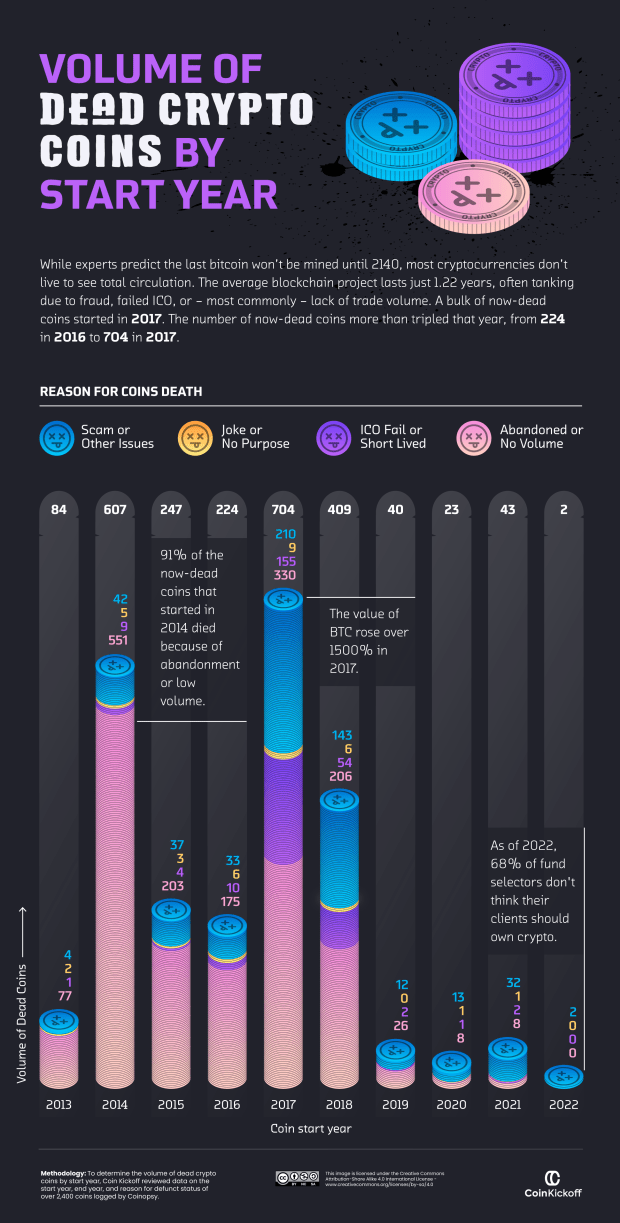
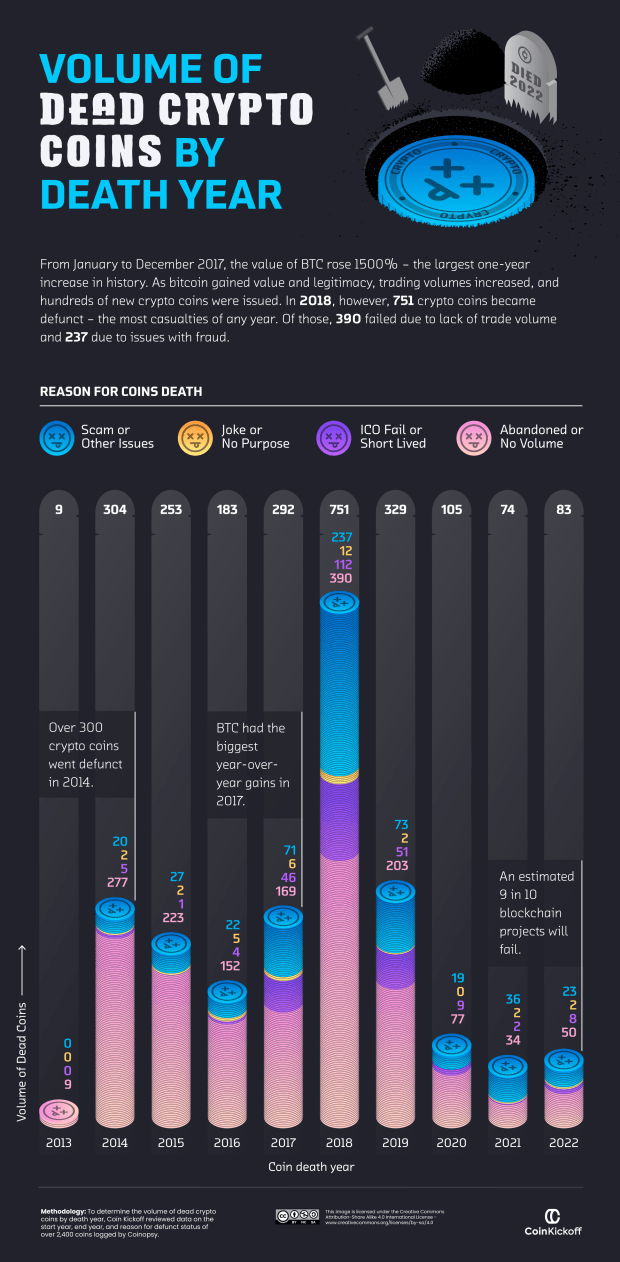
According to the data, 91% of the coins that existed for the 2014 cryptocurrency market crash have now been abandoned. Most of the now dead coins were minted in 2017, with 704 now dead coins minted that year. The crown for the single deadliest year in cryptocurrency history was 2018, during which 751 coins died.
A visualization created by CoinKickoff illustrates just how many of these projects come and go, along with their respective reasons for failure. Reasons include being a scam or other related issue, being a joke or having no purpose, being an ICO or a scheme that doesn’t last long, or simply running out of volume.
Bitcoin, in the midst of all this, remains strong. The hash rate continues to rise, currently up to 270 EH/s according to the Hashrate Index.
In addition, more than 1 million addresses now hold one bitcoin or more, although it should be noted that Bitcoiners can use multiple addresses. beyond that, more than $14 trillion in the volume of annual transactions carried out through the Bitcoin network last year, an increase of 13,900% of the volume of transactions in 2015.
And like that metric, the number of bitcoins held on the exchange hit a new lowshowing that there are more Bitcoiners than there are holders of coins in a sovereign way.
Metrics continue to demonstrate that, aside from bitcoin’s price, the network continues to grow, while altcoins hoping to ride its coattails don’t have much longevity. Bitcoin has proven its resilience by continuing to face existential attacks like the Blocksize War, political challenges like the Silk Road story and major exchange collapses like Mt. Gox or more recently, FTX. Even major hits to the network such as the drop in hash rates after China’s mining ban have proven to be just speed bumps on Bitcoin’s path to dominance. These events only reinforce the narrative of Bitcoin as a country’s monetary policy built on a collapse-resistant network.