
Governorship candidates from the five main political parties in Kano, on Saturday, announced their plans for the state in a debate organized by BBC Hausa Service.
During the event held at the Dangote Business School of the Bayero University, Kano, the candidates spoke on how to increase school enrolment, address insecurity, and address the country’s health challenges, among other policy discussions,
The candidates participating in the debate are Sha’aban Sharada of the Action Democratic Party (ADP), Nasiru Gawuna of the All Progressives Congress (APC), Abba Kabir-Yusuf of the New Nigeria Peoples Party (NNPP), Muhammad Abacha of the Peoples Democratic Party (PDP), and Salihu Tanko from the People’s Redemption Party (PRP).
The debate is the first in a series of gubernatorial debates in northern Nigeria.
While the NNPP gubernatorial candidate was at the event, however, he obtained permission and left the debate for another political event in the neighboring state of Kaduna.
The debate anchored by Ibrahim Isah lasted more than three hours.

Kano, the most populous state in northern Nigeria, is struggling with the menace of Almajiri also known as street children, who make up a large portion of the out-of-school children in the north.
The United Nations Educational, Scientific and Cultural Organization (UNESCO) in its latest global data says Nigeria currently has about 20 million children out of school.

The candidates promised to improve school enrollment and strengthen security if they are given the mandate in the March 11 gubernatorial election.
Mr. Tanko of the PRP said that if elected, he would prioritize primary education because he considers the primary school level to be a critical stage in laying a strong educational foundation for the development of all children.
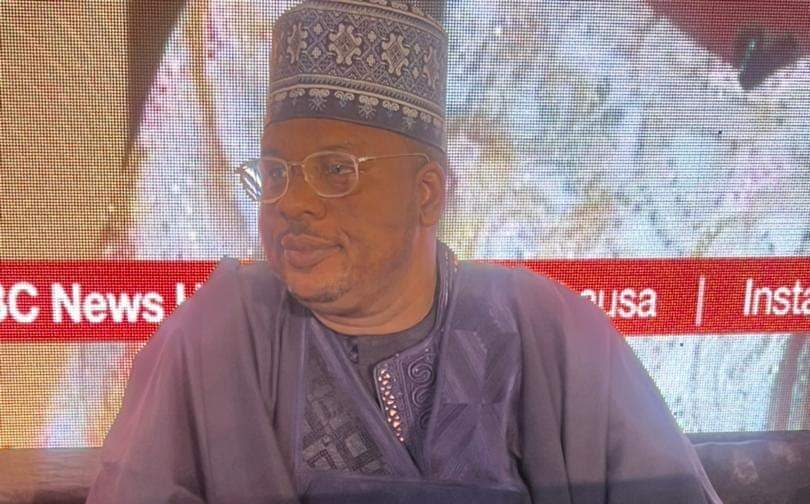
He said, “Kano State leads the northern states in the number of out-of-school children, this is unfortunate because it has affected (negatively) the development of our society.
“At the high school level, I will also prioritize the development of engineering schools and provide sufficient funds in higher institutions so that lecturers can work on solutions to common problems through research,” he said.


“Children who are out of school, the government has for years failed to build enough classrooms to facilitate the enrollment of children. I will ensure that I build at least 28,000 classrooms in four years through direct contracts to accommodate about 2 million children who walk the streets of the country,” he said.
On his part, the ADP candidate, Mr. Sharada, said that in his first hundred days in office, he will assess the state of education in the country to see what category the country is in, before taking a decision.

“To assess the quality and quantity of teachers, and to determine whether they are qualified to teach or not, I will begin the transfer of services to those who are not qualified to teach,” he said.

“If we improve the infrastructure standards of public schools like private schools with an environment conducive to learning, this will attract the interest of children to attend school.
“School feeding is also key, my administration will ensure the sustainability of the program and ensure the quality of teachers to solve the problem, said Mr. Sharada.
The PDP candidate, Muhammad Abacha, said schools in the country are inadequate. He also stated that some teachers are not qualified.
“I visited one of the schools in Fagge my government area, and I found that the teacher was sitting at the window, and failed to answer my questions, the learning environment was not conducive,” Mr. Abacha said.
“But street children, poverty and hunger, many parents are unable to bear the responsibility of their children’s education. My government will make it mandatory to solve the problem of such children because I believe that the only thing you can do for children is to ensure that they have an Islamic and conventional education.
“For the past 20 years, out-of-school people are part of the problem of insecurity, thuggery and kidnapping because they cannot secure the environment,” Mr. Abacha said.
The NNPP candidate, Mr. Kabir-Yusuf, said if elected he would make education free for all children to ensure more enrollment in schools and reduce the financial burden on parents.

“There are about 7000 primary schools in Kano, with a population of over three million children, 60 percent of whom are out of school due to poverty, this is in addition to the number of children who drop out of school.
“Many teachers have died, many have retired from service and the government has failed to replace them.
“Funding to make education free for all is possible if we tackle bribery and corruption and invite donor agencies around the world who are always willing to help and develop education.
“I can also get free education for all through federal government agencies through UBEC partner funding, for me, this can be done if we can also increase internal revenue,” said Mr. Kabir-Yusuf.
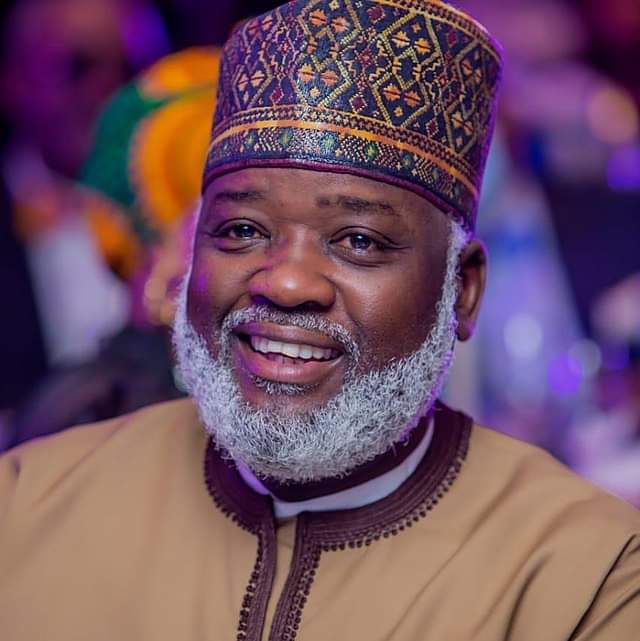
The APC candidate, Mr. Gawuna, said he is an experienced administrator and politician who has served in various capacities, knowing that education in developed countries.
“I had the opportunity to be in government since 1999 and since then, each successive administration has built more classrooms and provided more infrastructure than the previous government.
“The administration of Governor Abdullahi Ganduje has built more classrooms and infrastructure than the previous administration, now in Kano, education is not only free but also compulsory.
“Before the free and compulsory education policy, the out-of-school figure was about 1.8 million, but now after the policy, the enrollment figure has tripled to about 3.7 million and the beauty of the enrollment figure shows that girls are approx. 60 percent of that figure.
“The high school enrollment numbers have resulted in the school feeding program in Kano. I believe that the problem of education is a collective effort, and without much debate on the challenges of education, I believe that with all my heart we will solve this problem,” said Mr. Gawuna. .
In health
Kano with about 20 million people, but there are only 22 secondary health facilities, with less than 600 medical doctors which is not enough to meet the health needs of the people.
The NNPP candidate, Mr. Kabir-Yusuf, said the challenges in the health sector are serious issues that his government, if elected, will address with concern over the rate of women dying from childbirth complications in the country.
“I plan to develop the health sector through the provision of adequate manpower, we have 100 medical doctors sponsored by the previous administration of Rabiu Kwankwaso who are not yet employed, and we will ensure that they are employed,” Mr. Kabir. – said Yusuf.
Mr. Abacha said he will address the challenges in the health sector through the provision of adequate funding by ensuring that 25 percent of the state budget goes to the health sector, and sponsoring students to study health-related courses to bridge the labor gap in the health sector.
Mr. Sharada said he will ensure that each of the 484 political wards in the state have primary health facilities and increase secondary and tertiary health facilities in the state if elected as the next governor.
Mr. Tanko said he would also give top priority to health and ensure the welfare of medical and health workers across the country.
READ ALSO: Again, FG exceeded the NIN-SIM verification deadline
Gawuna said that in addition to adequate procedures and infrastructure, it is also necessary to enlighten the public to use approved health facilities when sick or in need of medical assistance.
He said women were encouraged to use health facilities, adding that Kano was rated number one by the WHO in providing primary health care in the North under the administration of Governor Abdullahi Ganduje, which he would build on his achievements if elected.

Security
On security, Mr. Gawuna said he has enough experience to deal with security issues because he is in a government that has been committed and assured Kano as one of the safest states in the north-west.
He said in his advice that the problem of phone seizure in the country has been dramatically reduced by 90 percent according to the security directive after the Kano government announced the restriction of the night operation of the tricycle rider.
Mr. Sharada accused the government of covering up the insecurity in the country. He said about 37 boarding schools were closed due to insecurity.
Mr. Tanko said he would address security challenges by engaging stakeholders at the ward level. He said he would use traditional rulers to ensure community security
Mr Abacha said he believed it was the government’s responsibility to ensure the security of lives and property. He said being elected would address insecurity at the community level.
Support journalism integrity and credibility PREMIUM TIMES
Good journalism costs a lot of money. But only good journalism can guarantee the possibility of a good society, responsible democracy, and transparent government.
For continued free access to the best investigative journalism in the country, we ask that you consider making a modest contribution to this noble effort.
By contributing to PREMIUM TIMES, you help keep journalism relevant and ensure it remains free and available to all.
contribute
AD TEXT: Call Willie – +2348098788999
