
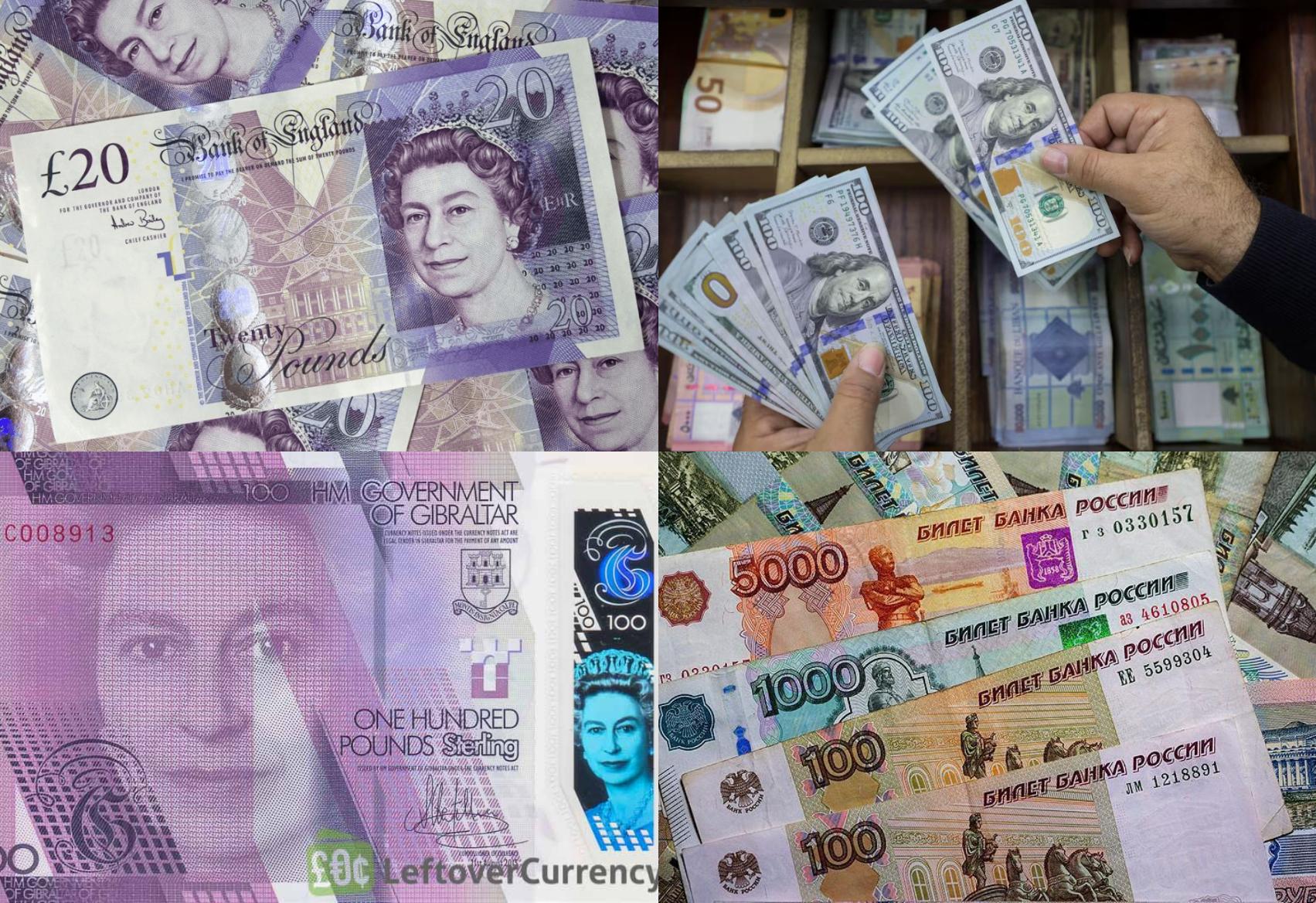
Currency is more than just a medium of exchange—it represents centuries of history, cultural evolution, and economic resilience. While many ancient currencies have disappeared into the pages of history books, some have remarkably survived through empires, revolutions, and economic upheavals.
Here Are The Ten Oldest Currencies That Are Still In Circulation Today.
1. British Pound Sterling (1200+ years)
The British Pound Sterling holds the prestigious title of being the oldest currency still in use today. Its origins trace back to around 775 AD during the reign of King Offa of Mercia, who introduced the silver penny. The term "pound sterling" itself emerged in the 12th century, referring to a pound weight of sterling silver.
MUST READ: Popular breast cancer myths that put victims at risk
The pound has survived the rise and fall of the British Empire, two world wars, and countless economic crises. Despite Britain’s proximity to mainland Europe, the country has steadfastly maintained its historic currency rather than adopting the euro. Today, the pound remains one of the world’s most traded currencies and serves as a reserve currency for many nations.
2. Serbian Dinar (1214)
The Serbian dinar has a claim to being one of Europe’s oldest currencies, with its roots stretching back to mediaeval Serbia in 1214. During the reign of King Stefan Nemanjić, the dinar was first minted as silver coins, establishing Serbia’s monetary independence.
READ ALSO: Top 15 strongest currencies in Africa in 2025
Though the dinar’s history has been turbulent—disappearing and reappearing through various incarnations as Serbia navigated Ottoman rule, the formation of Yugoslavia, and eventual independence—it represents an unbroken monetary tradition spanning more than 800 years. The modern Serbian dinar was reintroduced in 2003 following the dissolution of Yugoslavia.
3. Russian Ruble (1300s)
The Russian ruble’s history extends back to the 13th century, making it one of the world’s oldest currencies. The name "ruble" comes from the Russian word "rubit", meaning "to chop", as the earliest rubles were literally chopped-off pieces of silver bars.
READ ALSO: Cristiano Ronaldo makes history as football’s first billionaire player ever
The ruble was first officially recognised as a currency during the reign of Dmitry Donskoy in the late 1300s. Throughout its long history, the ruble has weathered the fall of the Tsarist empire, the Soviet era, and the transition to modern Russia. Despite periods of hyperinflation and economic instability, particularly after the Soviet Union’s collapse, the ruble remains Russia’s official currency.
4. British Pound (Jersey, Guernsey) and Manx Pound (1300s-1400s)
The currencies of the Crown Dependencies—Jersey, Guernsey, and the Isle of Man—have their own distinct histories while being tied to sterling. These island nations began developing their own currency systems in the mediaeval period, with the Manx pound traceable to the 14th century.
READ MORE: 15 Interesting Facts About The Central African Republic You Didn’t Know
While these currencies maintain parity with the British pound sterling and share similar designs, they are technically separate legal tenders. This unique arrangement has allowed these small jurisdictions to maintain their monetary identity for centuries while benefiting from sterling’s stability.
5. Swiss Franc (1798)
The Swiss franc’s official birth came in 1798 during the Helvetic Republic, though various cantons had used different currencies before unification. The modern Swiss franc as we know it was established in 1850 when Switzerland created a federal currency to replace the various cantonal and foreign currencies in circulation.
READ THIS: Black Stars set for Asian tour as Otto Addo eyes stronger World Cup squad
Switzerland’s long-standing neutrality, political stability, and strong banking sector have made the franc one of the world’s most stable currencies. It’s considered a "safe haven" currency, with investors flocking to it during times of global economic uncertainty. The Swiss franc’s reputation for reliability is a testament to centuries of careful monetary policy.
6. United States Dollar (1792)
The United States dollar officially came into existence with the Coinage Act of 1792, making it one of the older continuously used currencies. Inspired by the Spanish dollar, which was widely circulated in the Americas, the U.S. dollar was adopted shortly after American independence.
READ ALSO: Black Stars Player Ratings vs CAR: Ayew 7/10, Kudus 6/10, Semenyo 5/10, Partey average
What makes the dollar remarkable isn’t just its age but its global dominance. Since the Bretton Woods Agreement of 1944, the dollar has been the world’s primary reserve currency. Today, it’s involved in approximately 88% of all foreign exchange transactions, a position of power unmatched in monetary history.
7. Haitian Gourde (1813)
The Haitian gourde has a unique place in currency history, emerging from the world’s first successful slave revolution. Introduced in 1813, the gourde replaced the French colonial livre after Haiti gained independence in 1804.
READ MORE: Top 10 strongest currencies in the world in 2025
The currency’s name comes from the French word for the Spanish and Spanish colonial "gorda" coins that circulated in the region. Despite Haiti’s economic challenges and political instability over two centuries, the gourde has remained the nation’s currency, symbolising the country’s hard-won sovereignty and resilience.
8. British Gibraltar Pound (1825)
The Gibraltar pound has served the British Overseas Territory of Gibraltar since 1825. Like other British Crown Dependencies, the Gibraltar pound maintains parity with the British pound sterling but features unique designs reflecting Gibraltar’s distinct culture and heritage.
READ MORE: Prophet predicts Issahaku’s rise, Semenyo’s struggles and wild 2026 World Cup event