
[ad_1]
Former boxing world champion Ricky Hatton was looking forward to the future and it was not clear he intended to take his own life, the inquest into his death
heard.
The 46-year-old was described as a doting father, in good spirits and despite past troubles with alcohol and drugs, had been the best “in years”, his family told Stockport Coroner’s Court.
Hatton took his daughters and granddaughter out to a pub for a meal on the evening of Friday September 12 last year, the court heard.
He appeared normal and after dropping them off told them he would see them in a couple of days after a trip to Dubai where he was due to take part in an exhibition boxing match, the court heard.
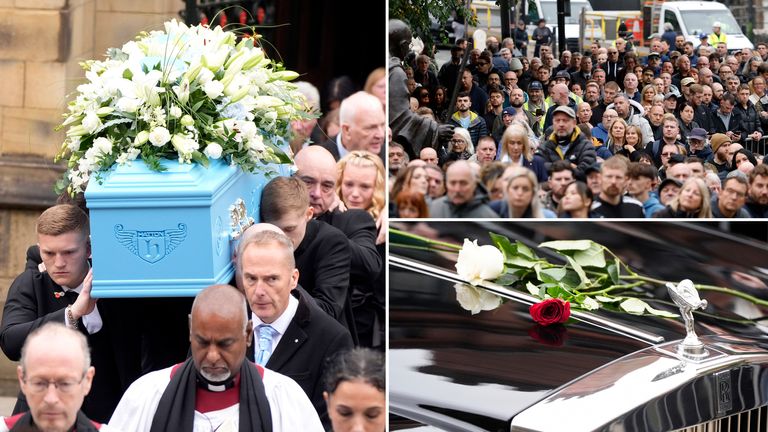
Liam Gallagher, Tyson Fury and Wayne Rooney were among those who attended Hatton’s funeral
But he failed to attend an engagement on Saturday and at 6.30am on the Sunday morning, his manager Paul Speak arrived at his home in Hyde, Greater Manchester, to take him to the airport to catch the flight to Dubai.
Hatton was found unresponsive in the upstairs games room at his house.
Tests showed the boxing great was “well over” the drink-drive limit at the time of his death. Traces of previous use of cocaine and cannabis were also found.
And post-mortem evidence showed some damage to his brain identified as chronic traumatic encephalopathy CTE associated with boxing.
Alison Mutch, senior coroner for South Manchester, told the court, attended by the boxer’s father, son and ex-partner and mother of his daughters, that no notes had been found from Hatton and there was no information uncovered by police to suggest he was planning to take his own life.
Concluding the inquest, she said: “He had made significant future plans and no notes were found indicating he intended to take his own life.
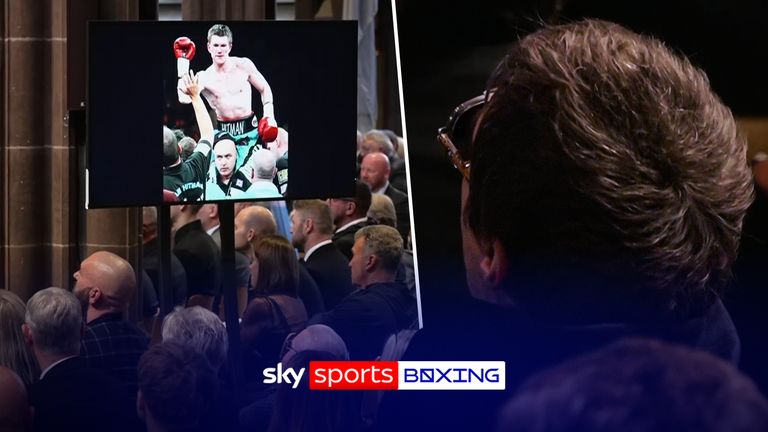
An ‘Oasis’ themed tribute was paid to Hatton at his funeral in Manchester. For anyone affected, support is available at sky.com/viewersupport
“I have listened very carefully to all the evidence. When I add everything together, I cannot be satisfied he intended to take his own life.
“Therefore, it is not possible in law for me to conclude suicide. I have concluded a narrative verdict.
“His intention remains unclear as he was under the influence of alcohol and the neuropathological post-mortem found evidence of chronic traumatic encephalopathy and that’s the conclusion I draw.”
Hatton’s son Campbell broke down in tears at the conclusion of the inquest and was hugged by his grandfather, Ray Hatton.
If you are affected by these issues or want to talk, please contact the Samaritans on the free helpline 116 123, or visit the website www.samaritans.org
[ad_2]
Source link