
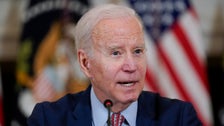
WASHINGTON (AP) – The US national emergency to respond to the COVID-19 pandemic ended on Monday when President Joe Biden signed a bipartisan congressional resolution to close it after three years – weeks before it was set to expire along with a separate public health. emergency
A national emergency allows governments to take measures to respond to the virus and support the country’s economic, health and welfare systems. Some emergency measures have been successfully lifted, while others are still being lifted. The public health emergency — it underpins tough immigration restrictions at the US-Mexico border — expired on May 11.
The White House issued a one-line statement Monday saying Biden had signed the measure behind closed doors, after opposing the resolution despite not issuing a veto. More than 197 Democrats in the House voted against it when the GOP-controlled chamber passed it in February. Last month, when the measure passed the Senate by a vote of 68-23, Biden let lawmakers know he would sign it.
The administration said that it was clear that Congress was going to declare a national emergency, so it could accelerate the agency’s preparations to return to normal procedures. Among the changes: The Department of Housing and Urban Development’s COVID-19 mortgage program will end at the end of May, and the Department of Veterans Affairs is now returning to requiring home visits to determine eligibility for caregiver assistance. .
Legislators last year extended the flexibility of telehealth for another two years introduced as a result of COVID-19, leading health care systems across the country to routinely deliver care by smartphone or computer.
More than 1.13 million people in the US have died from COVID-19 in the past three years, according to the Centers for Disease Control and Prevention, including 1,773 people in the week ending April 5.
President Donald Trump’s Health and Human Services Secretary Alex Azar first declared a public health emergency on January 31, 2020, and Trump declared the COVID-19 pandemic a national emergency in March. The state of emergency has been repeatedly extended by Biden since taking office in January 2021, and he expanded the use of emergency powers after entering the White House.