
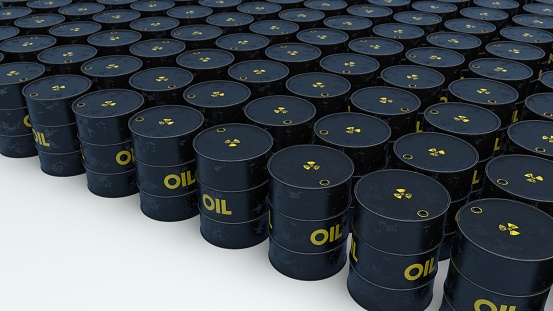
According to an analysis of the government’s oil production report, excluding condensate, the country’s oil production increased from 1,258,150 barrels per day in January 2023 to 1,306,304 barrels per day in February.
This means that the country produced an additional 48,154 barrels of crude oil per day, for a total of 1,348,312 barrels of oil for the 28 days of February.
According to Statistica, a global statistics company, the average cost of Brent, the international benchmark for crude oil, in February 2023 was $82.3/barrel.
This means that oil earnings for the month under review increased by $110.966 million (N51.16 billion at the official exchange rate of N461/$). As a result, Nigeria’s oil revenue increased by N51.16 billion by February 2023.
Since last year, the Federal Government has stepped up efforts to boost Nigeria’s crude oil production and reduce theft by vandals and thieves.
The Chief Executive of the Nigerian Upstream Petroleum Regulatory Commission (NUPRC), Gbenga Komolafe, has highlighted how oil theft is a threat to the country’s oil base, as he said, “Admittedly, one of the major areas of value erosion in the industry is the menace of crude oil theft. Our records show that the menace of oil theft has affected the oil and gas sector for two decades at a huge financial loss to our country.
He claimed that the commission, working with the various security forces, the Nigerian National Petroleum Company Limited, and the host communities, has been able to stem the alarming trend of declining hydrocarbon values.
The chief executive of the commission also stated that the commission is focused on shut-in wells that can be reactivated and in this regard, the commission created a committee on June 23, 2022, to conduct an industry-wide study on the reactivation of shut-in strings.
“The committee has submitted a report and includes recommendations categorized into quick wins, medium and long term initiatives that will increase the volume of national oil and gas production.
The findings of the report show that more than 900,000 barrels of oil per day can be obtained from quick win interventions, while medium and long-term initiatives can add 1.2 million barrels of oil per day if implemented correctly and comprehensively.