
Despite clamors for increasing women’s participation in public life around the world, Nigeria seems to be moving in the wrong direction.
From 1999 to the present, only 157 women have been elected to the 469 members of the National Assembly (38 senators and 119 members of the DPR), compared to 2,657 men (616 senators, 2,041 representatives) during the same period.
The results of the February 25 presidential election and the National Assembly have further exposed Nigeria’s failure to implement some agreements and regulations that were signed, which aim to ensure the involvement of women in politics.
Of the 92 women who were elected to the Senate in the February elections, only three won, while of the 286 who contested seats in the House of Representatives, only 15 were declared winners.
Mercy Abang, CEO of Host Writer, said the low number of women in elective and appointed positions in Nigeria is directly proportional to the level of development.

He said Nigerian political parties are not interested in prioritizing women development issues, saying decisions should still be made for women by people, even though women are an important part of the voting population.
“The government of the Taliban removed the freedom and basic rights of women and girls. If you look at what is happening in Afghanistan in terms of how women are seen, would you say that there is a difference between the Nigerian state and its political structure? he asked rhetorically.
Nigerian women continue to excel in the private sector and serve in top positions around the world, but presenting public life at home remains a challenge.


UN Resident Coordinator in Nigeria, Matthias Schmale, noted this when he told PREMIUM TIMES in an interview that Nigeria has produced so many women of excellence across the world and the private sector but in public life, Nigeria lags behind most African countries.
What does the data say?
A total of 18 political parties fielded 380 female candidates for the National Assembly elections; 92 for the Senate and 288 for the House of Representatives.
Of the 92 contesting for 109 senatorial seats, representing 8.4 percent, only three won. They are Ireti Kingibe of the Labor Party (LP) of the FCT; Idiat Adebule of the All Progressives Congress (APC) from Lagos West District; and Ipalibo Harry Banigo of the Peoples Democratic Party (PDP) from Rivers West District.
Only 15 of the 288 women who contested for the House of Representatives seats also won, with eight from the APC; four from PDP, and one each from LP, APGA and YPP.
Oby Orogbu, LP; Maureen Gwacham, APGA; and Chinwe Nnabuife of YPP won the House of Representatives seat in Anambra State.
Ebikake Enenimiete of PDP won in Bayelsa while Blessing Onuh and Regina Akume of APC won in Benue State.
Zainab Gimba won in Borno under APC, Erhiatake Ibori-Suenu of PDP won in Delta State; Miriam Onuoha, Ogbara Kafilat and Adewunmi Onanuga of APC won in Imo, Lagos and Ogun states respectively.


Beni Lar and Boma Goodhead of PDP were the winners in Plateau and Rivers State, while Fatsuma Talba and Khadija Ibrahim of APC won the contest in Yobe State.
The only female presidential candidate, Chichi Ojei of the Allied People’s Movement, only got 25,961 votes out of a total of 24,025,940 valid votes in the election.
According to figures from INEC, the number of eligible voters increased by 9,464,924 or 11.3 percent from the 84,004,084 recorded in the 2019 general election to 93,469,008 in 2023. Of the total registered voters, 49.04,45 percent, and 49 .04 percent of the remaining 49.04.45 percent, and 49.04 percent. or 47.5 percent are female voters.
Nigeria, according to the Inter-Parliamentary Union Women in Politics Report 2022, ranks 184 out of 192 for women’s representation in the national parliament.
In line with this ranking, there are only 21 women in the ninth National Assembly out of 469 members. At the sub-national level, data from Invictus Africa shows that there are only 45 women out of 990 state House of Representatives members; 15 out of 36 countries have no female members.
The tenth assembly will be worse than the previous ones numbered so far.


Number of women in the Nigerian Parliament / credit: Invictus Africa
Nigeria’s place in Africa
Among the 54 countries in Africa, Nigeria ranks lowest, 54th with 5.45 percent female representation, while Rwanda ranks first with 47.95 percent.
In the list of five worst-performing countries, Algeria is second after Nigeria with 6.20 percent; Republic of Benin, 7.40 percent, while Gambia and Liberia followed with 8.60 and 11.00 percent.
Senegal ranks second in the overall ranking after Rwanda with 44.20 percent; Mozambique followed with 42.60 percent, followed by South Africa and Burundi with 41.60 and 39.60 percent, respectively.
Representation trends
Between 1999 and 2003, the House of Representatives had 12 female members comprising 3.3 percent of the total of 360 members, while men made up 96.7 percent with 348 members.
From 2003 to 2007, there were only 21 women in the House of Representatives, increasing the percentage to 5.8 as men occupied 339 seats with 94.2 percent.
Only 628 out of a total of 7,160 candidates in the April 2007 election were women, representing 8.8 percent of the total number of candidates. There are a total of 3,141 candidates running for seats in the National Assembly, and only 209 (6.7 percent) are women.
While there were 25 representatives elected in 2007 and 19 elected in 2011, the number of female senators increased to nine in 2007 and remained the same in 2011.
In 2019, 235 women ran for a Senate seat out of a total of 1,904 candidates, while 533 women ran for a House of Representatives seat out of a total of 4,680 candidates.
Ahead of the 2023 elections, the number drops to 21 women serving in the National Assembly, eight in the Senate and 13 in the House of Representatives, representing 4.47 percent of National Assembly members.
Women speak
Adenike Aloba is Program Director at Dataphyte, a data and media innovation hub. He said that every International Women’s Day, Nigerian women have nothing to celebrate.
Ms. Aloba said in 2022, Nigerian women will suffer the rejection of relevant gender bills, and this year, “INEC, because it could not read the room, chose March 8 (International Women’s Day) to announce that only 18 women “were cut.”

She said the poor performance of women in the polls is not unusual because “we see it in the number of female candidates competing in elective positions.”
They argued that increasing the chances of women being elected would increase the number of female candidates, and since that did not happen, the results were easily predictable. “So this is sad but not surprising.”
Also speaking, a spokesman for the Labor Party, It’s Katohe said Nigeria has taken some steps back, he said it was clear from the beginning “how the numbers do not add up.”
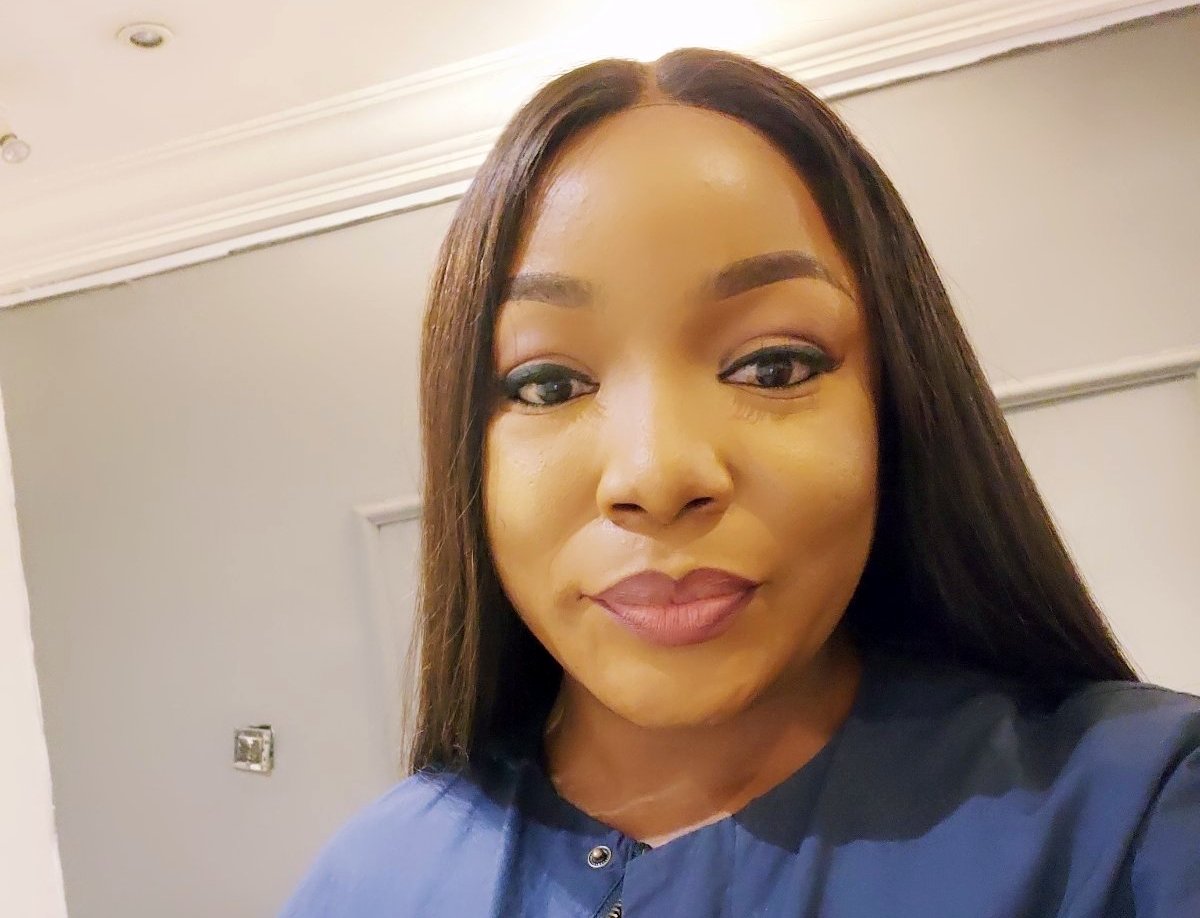
“I think where we are now is really bad and I can see the signs during the election. I think to myself that it doesn’t look like many women who passed in the primaries… It looks like it will get worse, I can see the signs because as a woman who is part from the election period but not running, I have time to see how many women there are, especially for the main political parties. It seems that there are not many and it is a problem for me,” he told PREMIUM TIMES.
Way forward
Ebere Ifendu is the Women President of the Political Forum. He said the only way forward is to initiate activities to promote women’s participation in politics.
According to Mrs Ifendu, political parties are mainly sold and the process makes it difficult for women to compete.
“This is why we will continue to support laws that guarantee women’s political participation; Otherwise, our male counterparts will continue to use excuses like religion and culture to undermine women’s political participation. Let me say here that Sokoto State listed 11 women candidates in this election and for me, this is a positive proof for the work done by other CSOs to promote women’s political participation.
“The results for the National Assembly may not be visible as Nigerian women know, but we have started preparing for 2027 and we expect a positive impact.”
Ms. Aloba advised that campaigns and advocacy should not only be loud on designated days like International Women’s Day.
“It must be preserved. As I often say, we need to go louder, faster and longer. Yes, it will require significant investment but it is not impossible,” he said.
He accused the media of complicity, stating that if the media portrays the problem, then it exists and vice versa.
“Framing, gate-keeping and agenda-setting are still imported roles that the media play and the media must, as a matter of necessity, take this role conscientiously to tackle gender inequality,” Mrs Aloba added.
Ms Kato decried the often last minute attempts by civil society and international organizations to galvanize support for women in politics.
“I think a long-term, well-thought-out effort to get more women involved and then to break down the loopholes that prevent women from participating is the key,” she advises.
For Ms. Abang, women should make decisions and be part of making laws; women should lead in cabinet meetings, control resources, and lead teams in privacy decisions that concern the general population.
“It must be a top-bottom and bottom-top approach to achieve development. The face of power must change for reforms to happen in Nigeria; for too long, the other gender has caught up,” he said.
Ms Abang added that the only way Nigeria can change the index is by flipping the coin and opening up space for more women in decision-making, “and don’t say 35 percent, that was 2000 and last, we say 50 and 60 percent here.”
Support journalism integrity and credibility PREMIUM TIMES
Good journalism costs a lot of money. But only good journalism can guarantee the possibility of a good society, responsible democracy, and transparent government.
For continued free access to the best investigative journalism in the country, we ask that you consider making a modest contribution to this noble effort.
By contributing to PREMIUM TIMES, you help keep journalism relevant and ensure it remains free and available to all.
contribute
AD TEXT: Call Willie – +2348098788999
