
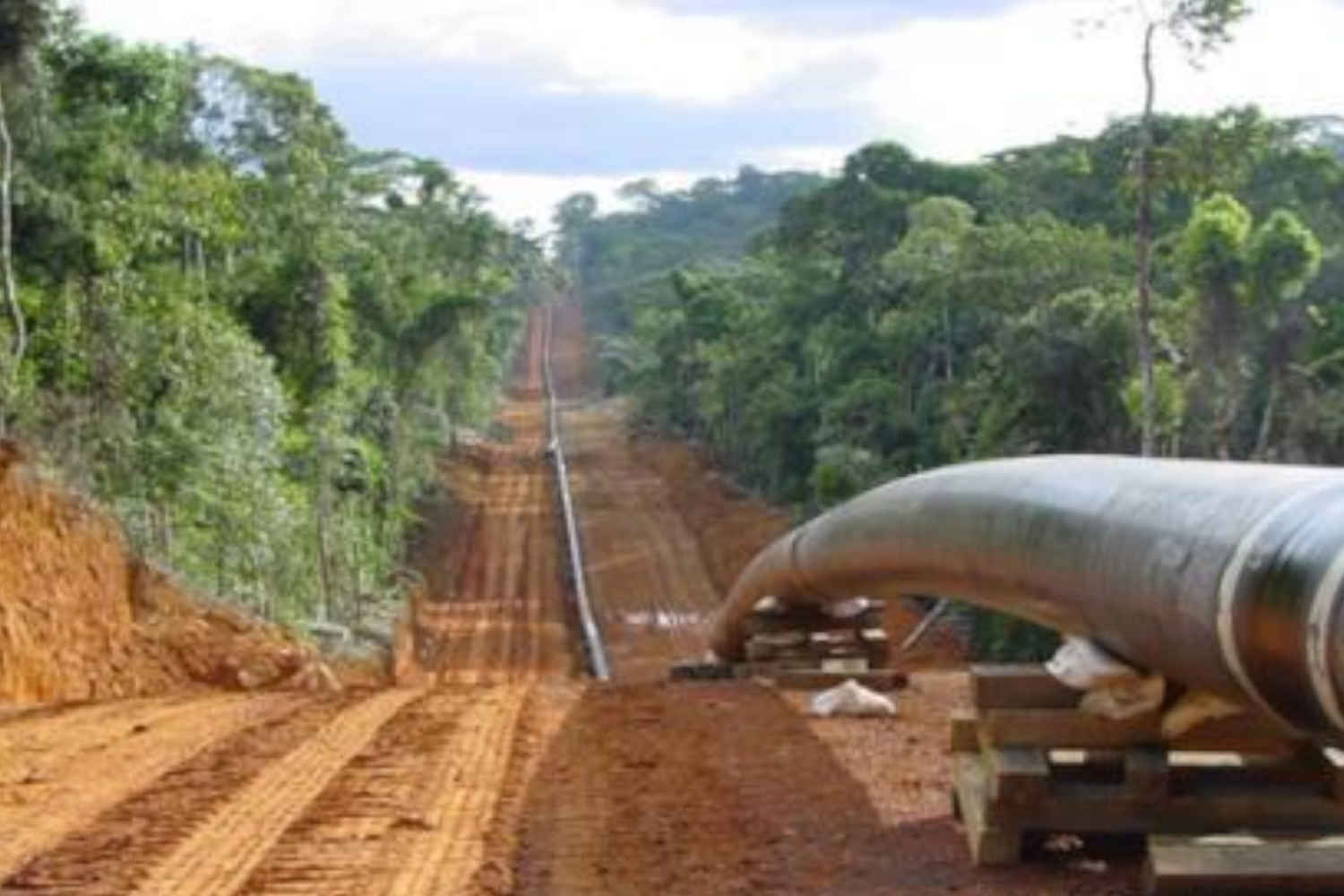
Tanzania approved the construction of the pipeline on Tuesday, weeks after Uganda did the same a month earlier. Peter Muliisa, the chief legal and corporate affairs officer at the Uganda National Oil Corporation, claims that this has allowed countries to start sending machines to the location.
According to Wendy Brown, general manager of Eacop Tanzania, the permit allows for construction to begin there.
Climate activists have criticized the Eacop, which is scheduled to run 1,443 km from Lake Albert in western Uganda to the port of Tanga in Tanzania, claiming it threatens to displace thousands of people and destroy vital ecosystems in two East African countries.
On February 22, people from around the world joined members of the Stop Eacop alliance to pressure Standard Bank, Sumitomo Mitsui Banking Corporation (SMBC), and Standard Chartered to stop sponsoring Eacop.
Activists contend that the project violates the Equator Principles, a set of standards adopted by this particular lender to evaluate, define, and manage social and environmental risks for project finance.
“Standard Bank (South Africa) and SMBC (Japan) are financial advisors to the project’s operator and are reported to have helped arrange a billion-dollar loan to build Eacop, while Standard Chartered (UK) has expressed interest in financing the project,” 350.org, a New York-based climate-focused nonprofit, said in a statement on Wednesday.
In addition to Kampala, London, Paris, and New York, Eacop demonstrations also took place in 18 other cities, including Tokyo, Johannesburg, Frankfurt, Brussels, Sendai, Hoima, Nagoya, Toronto, Fukuoka, Goma, Cape Town, Amsterdam, Copenhagen, and Vancouver.
On the other hand, Uganda has defended the country’s oil projects, saying that environmental activists are only aware of the global energy revolution.
“The cause will eventually be ignored,” said Mr. Peter Muliisa.
“The global North has returned to using coal-fired power plants but climate activists are focusing on smaller projects in Africa.
There is no climate change, but we are dealing with energy poverty here,” he added.