
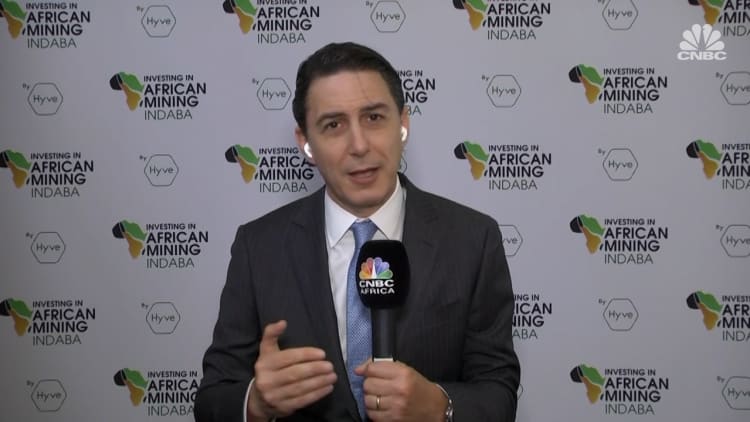
The US has some urgent work to do if it is to secure supply chain reliability and independence from competitors like China, a top White House adviser acknowledged this week.
“Look, this is a major concern for the US and I think around the world. When we’re going to have a cleaner, greener, new energy system, we have to make sure that we have a diverse supply chain,” Special Presidential Coordinator Amos Hochstein told CNBC’s Hadley Gamble on Friday.
“We cannot have a supply chain that is concentrated in any one country, regardless of the country,” he said. “We have to make sure that from mining and the refining process to the building of batteries and wind turbines that we have a diversified system that we may be provided for. It is the only way this will work from an economic perspective.”
Asked if the U.S. is lagging behind in this effort, Hochstein, who also served in the Obama administration as chief energy envoy, replied: “It’s true that we’re behind.” However, he added, “It doesn’t mean we’re out.”
Workers transport soil containing rare earth elements for export at a port in Lianyungang, Jiangsu province, China October 31, 2010.
Stringer | Reuters
China controls about 60% of the world’s production of minerals and rare earths, according to a new report by Rice University’s Baker Institute for Public Policy. These resources include lithium, cobalt, nickel, graphite, manganese and other rare earth elements that are essential for making things like electric vehicles, batteries, computers and household items.
They are also important for renewable technologies like solar panels and wind turbines, which are central to the US’s efforts to transition energy away from fossil fuels. As just one example, China refines 95% of the world’s manganese – a chemical element used in batteries and steel manufacturing – despite mining less than 10% of global sources.
For the US, whose relations with China can currently be described as the most strained, this poses several security risks, if China decides to use its market dominance at any point. The Covid-19 pandemic and the Russia-Ukraine war have also highlighted the fragility of global supply chains.
‘We haven’t invested’
The White House, in a February 2022 fact sheet, wrote that “the US is increasingly dependent on foreign sources for many processed versions of these minerals. Globally, China controls most of the market for processing and refining for cobalt, lithium, rare earths and other critical minerals. “
“We have to recognize that we have not invested, and what the United States is trying to do now, not just saying the same old talk we want to have a partnership,” Hochstein said. “We will come to this table together with our G7 allies, we will pool our resources, we will make sure the money is there.”
These include special financial and business incentives, Hochstein said. The Biden administration’s 2022 Inflation Reduction Act aims to invest heavily in supply and access to critical minerals in allied countries, and offers about $369 billion in funding and tax credits to increase renewable energy technology and production of critical minerals.
“We give incentives, through the IRA, to tell companies ‘look, if you do mining in the US or in another country and bring it to the US for refining, processing and battery manufacturing, there will be a kind of financial incentive there,'” he said.
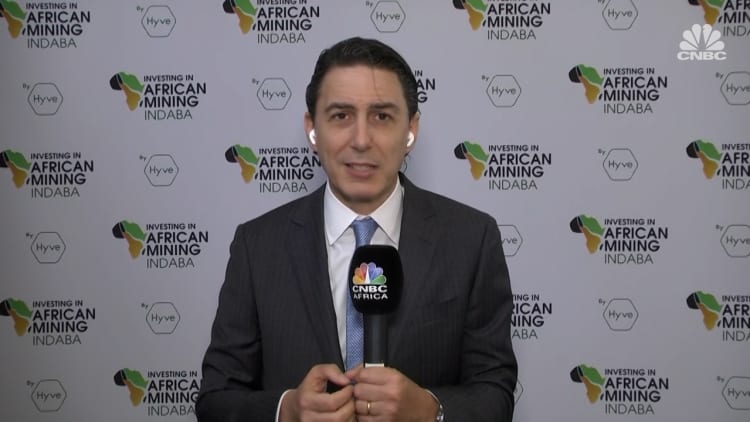
Despite warnings about supply chain risks, Hochstein rejects the idea that the U.S. is being held captive by China.
“I don’t want to talk about hostages, at the end of the day China does what it thinks is right for them,” he said. “They are trying to build an energy economy in the clean energy space and we all need to do the same.”
“We need to learn from what we are doing in the oil and gas energy space, as we move into new energy markets that are still dependent on natural resources,” he said.
“They may not be oil and gas, but they are still natural resources – there are not many of them anywhere in the world – so we need to make sure from the US perspective that we have a supply chain for the United States, and what laws are in place in the United States attempt is made.