Our weekly news from East Asia organizes the most important industry developments.
Huawei moves to trademark NFT
According to a January 28 report by Sina News, Chinese telecommunications giant Huawei recently filed for eight trademarks related to Huawei’s “YunYunBao” nonfungible token (NFT) series. Trademarks include digital collections in the scientific instruments, furniture, education, jewelry, advertising and telecommunications sectors. Last April, Huawei announced YunYunBao NFTs, featuring characters inspired by its namesake cloud service. Huawei NFTs are printed on the Huawei Petal Chain, which the telecom giant says has more than 1,000 nodes and can handle more than 50,000 transactions per second.
Toyota sponsors a blockchain hackathon
In a February 1st Medium post, Sota Watanabe, founder of the Japanese blockchain Astar Network, announced that Astar has received sponsorship from Japanese car manufacturer Toyota for its latest Web3 hackathon. Astar is now a parachain built on the Polkadot blockchain.
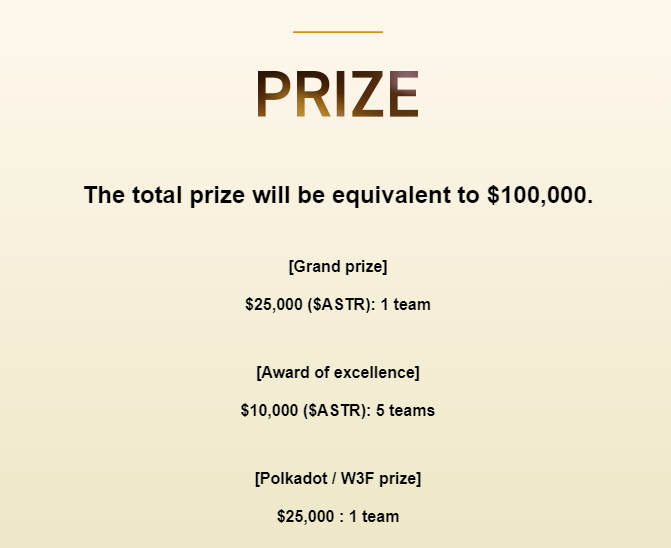
According to Watanabe, a prize of more than $100,000 will be distributed to projects that develop an “intra-company DAO.” [Decentralized Autonomous Organization] support tools for this hackathon that Toyota employees can use in the future. The hackathon will take place from February 14th to March 25th.
“Needless to say, Toyota is Japan’s largest company and one of the world’s leading international companies,” Watanabe wrote. “We are very happy to host the Web3 Hackathon at Astar with Toyota. During the event, we aim to develop the first PoC DAO tool for Toyota employees. If a good tool is produced, Toyota employees will interact daily with products on the Astar Network.
North Korea destroys crypto
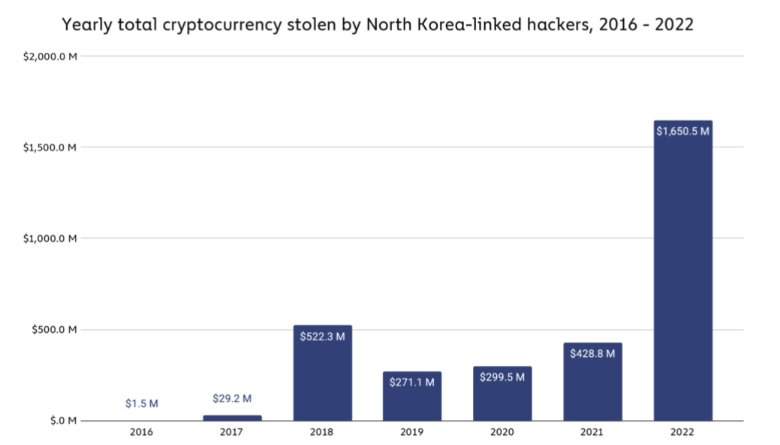
On February 2, blockchain forensic analysis company Chainalysis revealed that North Korean hackers stole approximately $1.65 billion of the $3.8 billion in funds siphoned from decentralized finance (DeFi) protocols by 2022. For context, entities related to North Korea alone stole $299.5 million. 2020 and $428.8 million in 2021. The company also warned that although the United States Department of the Treasury imposed sanctions on the Tornado Cash cryptocurrency mixer on August 8, North Korean hackers are increasingly going to other digital asset mixers, such as Sinbad, to launder funds that stolen. . Chainalysis says:
Hackers linked to North Korea tend to send much of what they steal to other DeFi protocols, not because these protocols are effective for money laundering – they are actually bad for money laundering due to their increased transparency compared to centralized services – but because DeFi Hacking often leads to cybercriminals gaining illiquid tokens that are not listed on a centralized exchange. So hackers have to turn to other DeFi protocols, usually DEX, to exchange for more liquid assets.
On January 29, the decentralized finance analyst Zachxbt admit he has tracked another 17,278 Ether (ETH) – worth around $ 27.18 million – laundered by North Korean hackers in the aftermath of the $ 100 million Harmony Bridge hack last June. According to Zachxbt, the funds were then transferred to 14 wallet addresses distributed across four exchanges. On January 24, the US Federal Bureau of Investigation confirmed that North Korea’s Lazarus Group was behind the attack.
There is no Binance metaverse currently
In an ask-me-what session on January 14, Changpeng Zhao, CEO of the cryptocurrency exchange Binance, said that the firm “is more open to just investing in other virtual reality or metaverse games,” as the firm is not a game-builder and does not have a team game building.
“No one knows what the metaverse means. Everyone has a different concept,” the crypto executive said, according to a transcript published on January 27.
Read too
Features
An insider’s guide to crypto OGs: Part 1
Features
The Bitcoin ledger is a secret weapon in the fight against ransomware
However, Zhao said that Binance will focus its “next big product” on releasing multiple proofs of reserves and proofs to increase transparency. The exchange has set a target of 1 billion users passing Know Your Customer verification for the new year.
Huobi denies data sharing allegations
Digital asset entrepreneur Justin Sun has responded allegations that the Huobi exchange provided client information to the Chinese tax authorities. TRON’s founder tweeted that Huobi “does not share client information with tax authorities unless following international judicial assistance procedures.”
Earlier, Sun praised the introduction of a new 20% Chinese cryptocurrency income tax as “a clear indication that the Chinese government sees cryptocurrencies as a legitimate form of wealth and wants to ensure proper taxation.”
Although based in the Seychelles, Huobi has a large number of employees working in mainland China, who reportedly rebelled against strict new labor policies earlier this month.
The new venture of the founder of Huobi
After selling all shares in Huobi to Sun’s About Capital last October, Chinese entrepreneur Lin Li has devoted his time to managing Hong Kong blockchain holdings firm New Huo Technology. On January 30, New Huo launched a staking technical support service, called “Sinohope Staking,” which will serve the Cosmos community first before expanding to Ethereum, EOS and ChainLink.
According to the developer, Sinohope Staking will provide “multi-node deployment, real-time monitoring of node operation process, 7*24h online support, 3-layer wallet structure and various signature technologies” for users interested in staking assets on the public blockchain. New Huo says it will help clients set up stake nodes and monitor operations “without handling or holding client assets,” and claims clients will retain “100%” of the cryptocurrency they buy in the process.
Bitzlato allegedly defied despite sanctions
The co-founder of Hong Kong-based cryptocurrency exchange Bitzlato said the platform will reopen after being shut down by United States authorities last month.
In a YouTube interview on January 31, Russian citizen Anton Shurenko said that the exchange will open later at an unspecified time and claimed that up to 50% of the funds held in the hot wallets held will be available for withdrawal at that time. Also, the supposed founders don’t know why their company was chosen.
On January 18, Bitzlato was shut down after an investigation by law enforcement officials, including the US Department of Justice, alleging that the exchange implemented Know Your Customer rules and allegedly laundered more than $700 million in illegal funds through crypto-fiat transactions. Shurenko’s founder, Anatoly Legkodymov, was arrested in Miami the same day. After the revelation that Binance was one of Bitzlato’s top partners, the exchange froze several accounts associated with the entity.
According to a recent report, Spanish police have detained three executives from the company, namely the CEO, sales executive and marketing director.

Subscription
The most interesting read on blockchain. Delivered once a week.