
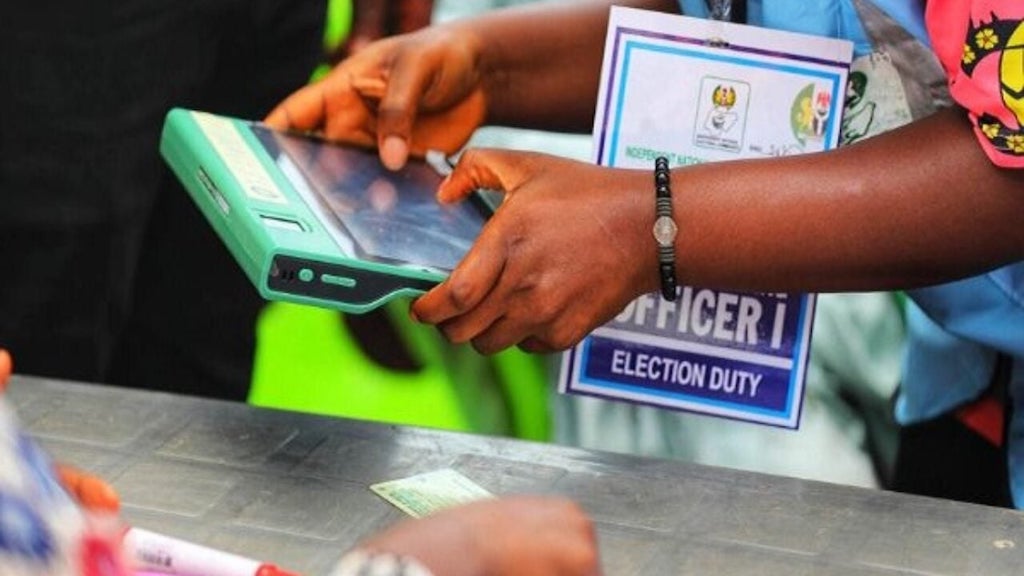
While I agree with INEC and most Nigerians that there is nothing to do with BVAS, But I boldly say that there is a lot wrong with the operators, especially those who came up with the idea of synchronization. For me, all stakeholders who want to deepen our electoral system and democracy must create a way to solve the synchronization of BVAS reports before the presidential and National Assembly elections.
When in August 2022, I announced to the whole world that in Osun, my principal, Adegboyega Oyetola, did not lose the July 16 governorship election, but only lost the number of votes, some Nigerians, especially sympathizers of the Peoples Democratic Party (PDP) were outraged. They call me names. But he couldn’t make a sufficient argument to refute my position.
So, the verdict at the Osun State Election Petition Court last Friday, for me, is proof of my position before the 2018 governorship election that the majority of Osun people, who are reasonable, intelligent and who value education cannot vote. people who fake certificates and who, apart from ‘dancecraft’, have nothing to offer the country. His administration of Osun in the last 60 days has exposed him as a man devoid of substance and capacity of character.
In addition, the result of the Tribunal is also a proof of the postulation of August 2022 that we only lost the number of votes and not the election.
Contrary to the claims of the interim governor and his groups, three judges agreed that he forged the certificate, while two agreed that there was indeed over-voting in the July 16 gubernatorial election. And in accordance with the Electoral Act, the invalid votes were separated from the valid ones and Oyetola was declared as the legally elected governor of Osun state. Therefore, the issue of “Member 1” and “Member 2” proposed by Senators Ademola Adeleke, Kolapo Alimi and others is only in the imagination. Unfortunately the interimg governor does not know and those who we think should know end up misleading the poor.
In the main judgment, which is more than 90 pages long, the collective pronoun “we” is clearly displayed to indicate that the position reached was reached by two or more people. However, in the dissenting judgment, which is only eight pages long, “I” is clearly displayed to indicate that the judge was alone in the decision. How Senator Ademola Adeleke’s people could confuse him that an eight-page judgment could be used to alter over 90 pages of a sound and scientific judgement, which is based on law and facts, remains a mystery to me.
How the Tribunal Arrived at the Conclusion
Before explaining how the Tribunal came to its conclusion, I would like to deal with the issue of forgery, as defined by the Tribunal.
Recall that Oyetola and the APC approached the Tribunal with two basic reasons: One, that when Senator Adeleke contested, he was not qualified. Two, they didn’t get a legitimate vote.
According to the Tribunal, presided over by Justice Tertsea Kume, APC and Oyetola can prove the case of forgery against Governor Adeleke in the form of EC9, which is an affidavit to support personal details about the governor “falsely himself.”
The three judges of the Court went further to continue that “a clear reading of the above reproduced part of the Criminal Code and EC9 exhibits reproduced above reveals that EC9 tells lies about himself. See ACN vs. Lamido (2011) LPELR-91741 (CA) 1 in 79 80 paras C- A, and 80 81 paras F- A.
“In that regard, the falsification of the documents given by the 2nd Respondent (Ademola Adeleke) to the 1st Respondent (INEC) has been proven.
“The same consequences apply to FILE D because its contents relate to ‘Osun State’ which did not exist before 1991. Read PDP v. Degi-Eremenyo (2021) 9 NWLR (Pt. 1781) 274 in 292 paras AC cited by the learned counsel for the Petitioner.”


The Tribunal Justice went further as follows: “But the question is, if we have found forgery in part of the EC9 exhibit and FILE D, the Respondent 2 (Ademola Adeleke) is acquitted by the exhibit 2R.RW6 and 2R.RW9. We think he. Of course if there is no other qualification certificate in the institution given to Respondent 1 for election.
As a layman, the fact that the Tribunal only said “think,” shows that this is another powerful pendulum that can swing the interim governor in the appeals court. The reason is that the additional qualification, which is the basis of what I want as a temporary break in terms of qualification, was obtained using an O’Level which has been proven to be false.
Therefore, if we go to the popular axiom, you can not build something on nothing and expect it to stand. There is no further investigation that the interim governor has not been released, due to his qualifications to vote. He can be disqualified for submitting false documents, such as those on file with INEC.

But let’s get back to the over-voting issue. The Election Law is clear. To return to the announcement of the election results, the chairman must pay attention to what BVAS transmitted, which is behind. In this case, Senator Ademola Adeleke was declared the winner of the election by INEC on July 17 based on the figures submitted by BVAS. These APC figures and Oyetola applied for and got from INEC.
After filing the petition, the PDP rushed to INEC and got what it called the “synchronization” BVAS report. Assuming without conceding that there should be a BVAS report reconciled, the next question to ask, which I raised in September is: On what basis did Adeleke announce the winner on July 17?
By that argument, it means that Adeleke was declared the winner before the “synchronization.” Since Adeleke was never declared the winner by opening the BVAS machine, how will you now persuade the Court to accept it? At any rate, even in one, the expert hired by Adeleke, Samuel Oduntan, to analyze the BVAS machine, also admitted in court that there was over-voting. The only difference is that he said he found only six polling units.
But during cross-examination, APC counsel and Oyetola were able to prove that apart from the six PUs they claimed over-voted, there were actually others.
“Under the supervision of the Independent National Electoral Commission, INEC, I conducted a forensic analysis of the BVAS machine. I then analyzed the results with the EC8A series form. My report did not determine who won or lost. I only gave numbers. I observed over-voting in six polling units . I am paid for the job. But it does not affect the numbers and facts in my report”, he said.
In cross-examination by counsel for the petitioner, Akin Olujinmi (SAN), Odutan, when confronted with the witness statement and BVAS report (Exhibit RBVR) on the accredited figure in Ward 4, unit 7, said, “in the witness statement, page 7, serial number 138, the accreditation number extracted in the BVAS machine is 388, but in the RBVR exhibition, it is 313.
But because it is difficult to cover up lies, even in the synchronized BVAS report presented before the Court by INEC, the legal team of APC and Oyetola were able to prove over-voting in over 100 polling units in 10 local government areas (LGAs). , which are challenging.
What is more, INEC, the beneficiary (Adeleke) and PDP, who sponsored Adeleke, could not even agree with the BVAS report presented before the Court. This is what prompted Adeleke’s counsel to dispute the synchronized BVAS report that INEC presented to the Court.
Again, the INEC witness, who testified before the Court, did not deny the BVAS report given to Oyetola and the APC and he admitted in cross-examination that there was excessive voting in the election. Note that apart from the BVAS report obtained by APC and Oyetola, all other BVAS reports were made after the petition was filed and served. Therefore, it is easy to conclude that they are the product of an afterthought.
And the Tribunal reiterated the above position when it said: “What’s more, the exhibit BVR (given to Oyetola and APC) has not been withdrawn by the first respondent (INEC), which was created and issued. The petitioners relied on exhibit BVR to maintain this petition.
“Similarly, the exhibition tendered by the respondent after the BVR exhibition submitted by the learned counsel to the petitioners is considered after the declaration of results on 17 July 2022.
“The conduct of the respondents, especially the first respondent (INEC) is to destroy the official records. The conduct of the first respondent in the said election which has been considered has produced many reports of allegations, contrary to the declaration of votes, to conduct a free, fair and credible election based on one man or woman with one vote.
The tribunal further said: “In other words, the defense of the respondent is tainted with fundamental defects, inconsistent and unreliable, unable to defeat the reliable evidence presented by the petitioners regarding the 744 polling units where the voting has been established.”
While I agree with INEC and most Nigerians that there is nothing to do with BVAS, But I boldly say that there is a lot wrong with the operators, especially those who came up with the idea of synchronization. For me, all stakeholders who want to deepen our electoral system and democracy must create a way to solve the synchronization of BVAS reports before the presidential and National Assembly elections.
I would like to leave the readers with footage from one of the observer groups, the North Patriotic Front (NPF) which observed the governorship election on 16 July 16.
In a media report that I read on July 25, 2022, the group, among others, said: “Between the Sekona and Edunabon roundabouts, there are no checkpoints or patrols by security personnel on the axis.
“According to the election guidelines, the official closing of polling units is at 2:30 p.m. In most of the polling units that were opened and as reported by NPF observers, voting was completed in various polling units in the state by 2:30 p.m. with the 2022 amended election law.
“However, this was not followed in some polling units in the Ede axis which was still being conducted until 21:00. This is a clear violation of the provisions of the Election Law. This anomaly was also reported by some analysis of other observer groups in the media.
“Electoral conduct in Ede South and Ede North areas should be investigated to help the commission prevent the admission of voters queuing up after the stipulated time,” NPF added.
Ismail Omipidanjournalist and political analyst writing from Ile Olorisa Compound, Eyindi, Ila Orangun, Osun.
Support the integrity and credibility of PREMIUM TIMES journalism
Good journalism costs a lot of money. But only good journalism can guarantee the possibility of a good society, responsible democracy, and transparent government.
For continued free access to the best investigative journalism in the country, we ask that you consider making a modest contribution to this noble effort.
By contributing to PREMIUM TIMES, you help keep journalism relevant and ensure it remains free and available to all.
contribute
AD TEXT: Call Willie – +2348098788999
