
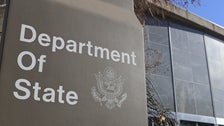
The State Department will begin using the Calibri font in official communications to improve accessibility for employees with disabilities, The Washington Post first reported reported this week. A department spokesperson confirmed the change to HuffPost on Thursday.
Secretary of State Antony Blinken gave his domestic and overseas offices until February 6 to use sans-serif fonts in all high-level internal documents, a spokesman said in an email.
Calibri will replace Times New Roman, which has been the department’s standard since 2004. The change was recommended as an accessibility practice by the secretary of the Office of Diversity and Inclusion, the email said.
About 20 million Americans have a visual impairment, according to the Health Policy Institute Georgetown University. Meanwhile, the data show that 1 in 5 children in the country have learning or attention problems.
Fonts such as Times New Roman contain decorative, angular lines known as serifs. This can hinder accessibility to people who use assistive technology such as screen readers and those with learning disabilities such as dyslexia, the State Department said.
“Calibri does not have wings and feet and is the default font in Microsoft products,” a spokesperson said, referring to the serif. “The new font change will make the Department’s written products and communications more accessible.”
The move drew mixed reactions from department employees, with some saying they didn’t like Calibri, according to the Post.
Among the general public, opinions also differ on the use of serifs. While some studies show that sans-serif fonts can be easier for certain people to read, others show that strokes can help when reading books and other long texts, said Daniel Castro, the vice president of the Information Technology and Innovation Foundation.
Often, the difference is in aesthetics, Castro said, adding that some preferences are generational.
Still, the State Department’s switch will have a positive effect on people with disabilities, bringing them closer to a more accessible workplace.
“While this change is ultimately relatively minor, it is a sign that top officials at the State Department are taking the issue seriously,” Castro told HuffPost.