
Of all the projects undertaken by the administrations of presidents Thabo Mbeki, Jacob Zuma and now Cyril Ramaphosa during almost 30 years of democracy, the disaster management of the expansion of the country’s electricity generating capacity will prove to be the most dangerous for the country’s long term. prospects.
At the center of a significant expansion plan first brought before policy makers since 1997 is the electricity utility, Eskom.
The rapid doubling of Eskom’s generating capacity became a reality for the company’s directors 25 years ago as the economy and, in particular, the mining and industrial sector revived after the international sanctions that paralyzed it in the mid-1980s as a result of apartheid.
Nelson Mandela’s administration also brought electricity as part of the Reconstruction and Development Plan (RDP) to millions of previously excluded South African households.
Although South Africa has underperformed globally over the past three decades, GDP per capita growth has improved, increasing by 1.6% a year from 1994 to 2000 and 2.2% between 2000-09 compared to global growth of 3.1% over the same period.
It is an expansion that Thulani Gcabashe-led Eskom has warned will come as many of its coal-fired power plants, spread across Mpumalanga, are nearing their end of life.

The average age of the coal fleet, excluding the most recently built Medupi and Kusile, is approximately 41 years. Historically, plants have been retired at an average age of 46 years worldwide but can last for 50 to 60 years if properly maintained.
Developing Eskom and the country’s generating capacity is a must and something that the Mbeki administration and the governing ANC already know.
A factional battle with powerful alliance partners in the labor federation, Cosatu, and the South African Communist Party over privatization will, in the end, delay the decision to give Eskom the start rather than just replacing its aging fleet. but building additional capacity.
The indecision of the Mbeki administration was followed by the period of Zuma’s mistrust, directionlessness and corruption – hindering the country’s response to the forecast electricity crisis in 1997. Ramaphosa’s administration came into the middle of the crisis – and the response has been bewildering.
At Mail & Guardians this week has tried to paint a complete picture of just why South Africa is developing into a new year with open-disposal that has the country grappling with up to 12-hour power cuts.
The most critical period in the project to rebuild Eskom’s generating capacity was when Jeff Radebe, former ANC policy chief, was public enterprises minister from 1999 to 2004.

Radebe failed to respond to the challenge of securing electricity supply, focusing only on economic and competition regulations in the 2000 policy framework for public companies.
Radebe’s successor, Alec Erwin, architect of the framework together with Radebe and then finance minister Trevor Manuel, responded to the electricity crisis, which began in 2005, but failed to create a plan to prevent load shedding, which began. on his watch.
Erwin’s initial response to the first episode of load shedding in 2005 – the damage to the Koeberg power station – was to falsely claim sabotage, setting the tone for the ruling party’s response to the crisis.
In January 2008, Erwin said, the government “thought it would relieve the burden” but promised to finish within four weeks.
In May of the same year, Erwin fired calls from the ANC – and opposition benches – for independent inquiries to Eskom after an internal report pointed to mismanagement at the entity.
The ruling party had planned to call on Mbeki to vote for the investigation at the national electricity summit in May 2008, which was initiated by the ANC and its alliance partners, but Erwin killed the move in parliament, telling MPs that South Africa’s National Electricity Regulator (Nersa) had investigated and dismissed the call as an opposition plot.
“Nersa was charged; have the responsibility to investigate Eskom,” said Erwin in a parliamentary debate at the time. “Eskom has and will be investigated and Nersa is obliged to provide a report on Eskom and load-vomiting. To call all the time for an independent investigation is just an attempt to get the commission itself. The structure is there.
Erwin also made previous support for Eskom’s proposed tariff hike – which was previously publicly approved – saying that while it was the fastest way to deal with the crisis, there were other ways to do it. They failed to provide the necessary budget for maintenance and new construction.
Erwin recognized the need to “double our production capacity in the next 20 years” and to “diversify our primary energy source away from coal”, along with the need to stimulate the domestic manufacturing sector focusing on renewable energy.
Addressing the portfolio committee of public companies, Erwin admitted that the planned power station would “reduce the crisis in the short term” and that the reserve margin – which fell from 22% in 2002 to between 8% and 10% in October 2008. – means four years open-waste to reduce demand.

Erwin told parliament that he was happy with the progress of the planned new power plant construction and that the supply problem would be solved in five to eight years.
It is not.
Much has been written about Eskom’s systematic corruption during Malusi Gigaba and Lynne Brown’s tenure as public enterprises minister, much of it due to the Zondo commission.
Brown facilitated the secondment of Brian Molefe to Eskom from Transnet at the “insistence” of the Gupta family, state capture report Zondo noted, after four senior executives, including chief executive Tshediso Matona, were suspended in an order issued during a meeting at Zuma’s house. . Of the four, only Matshela Koko was restored.
At that time, the Eskom board was weighed in with family allies in the state’s detention center. Brown was aware of this, but told the Zondo commission: “I spoke to a number of people at the time and I didn’t think I should be fired because of the connection with the Guptas.”
Molefe briefly persuaded the country to contain open-shedding by “playing Tetris” with boxes. It means focusing on maintenance, and finding money for it no matter how, but constantly adjusting the work schedule to bring enough generation capacity back on the line to compensate for unplanned outages and keep the lights on.
Load-shedding stopped for about a year – mainly as a result of high demand – but Molefe cautioned that it will return unless the country procures 9.6 gigawatts of additional nuclear generation capacity. In 2016, they refused to sign a R58-billion purchase agreement for renewable electricity projects, citing impracticality and high cost.
At the same time, Molefe claimed that Eskom can manage the cost of building nuclear and convinced then energy minister Tina Joemat-Pettersson to designate the means to lead the procurement process.
This reckless nuclear move was eventually halted by a legal challenge in the Western Cape high court, but then led to disaster in the form of Zuma sacking finance minister Nhlanhla Nene for refusing to sign a letter of commitment with the Russian authorities.
Meanwhile, Zuma has tasked Ramaphosa with overseeing the turnaround of Eskom, the South African Post Office and SAA. Ramaphosa leads the “war room”. Although SAA is not the Post Office has survived the ineptitude of the government.
The battle room includes the departments of energy, cooperative governance and traditional affairs, public enterprises, treasury, economic development, and water and sanitation as well as Eskom experts. The war room blueprint is the cabinet’s five-point plan, which includes interventions such as extending existing contracts with the private sector, replacing diesel with gas and “launching a coal-fired independent power producer program”.
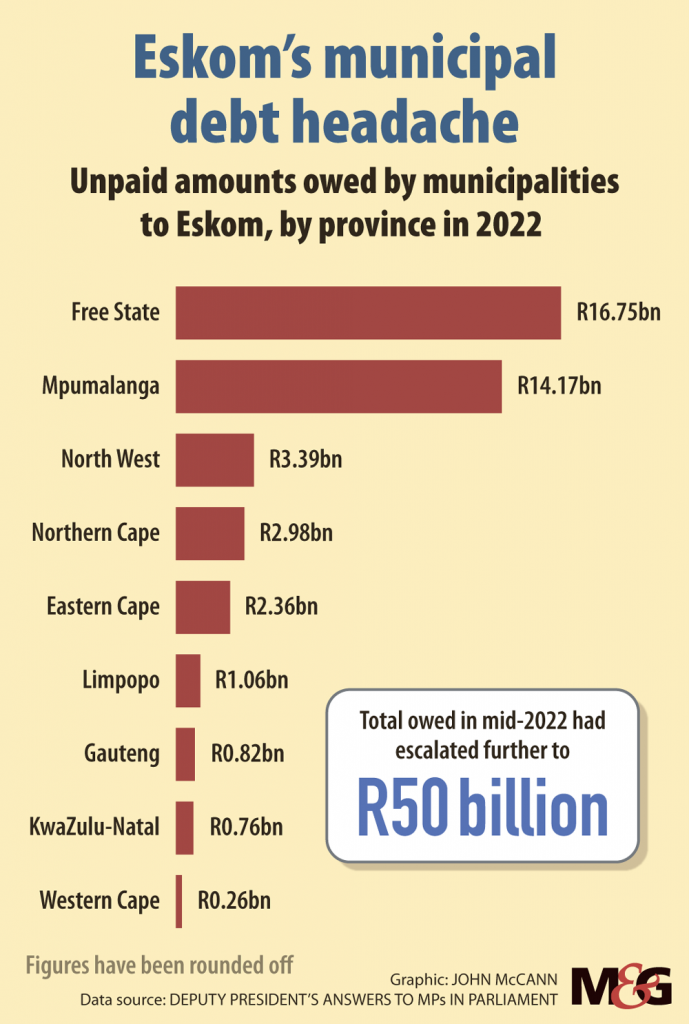
In the background, Molefe and then mineral resources minister Mosebenzi Zwane had effectively wrestled Glencore’s Optimum Coal Mine to allow Tegeta to acquire and sign a R3.7 billion contract with Eskom for the supply of a Majuba plant. When the baul manager received sub-standard coal from Tegeta, Koko stepped in and told them to use it. The deal was eventually found invalid and set aside by the Pretoria high court in 2020.
The following year, the same court ordered the Minister of Mineral Resources and Energy Gwede Mantashe to release planning documents related to the new 1,500 megawatts of coal-fired power plants included in the Integrated Power Plan 2019. He rejected the argument that he could not do so because of the plan cannot be seen. Mantashe has railed at foreign funding for a fair energy transition as “colonial interference” and obstructed the procurement of other renewable energy for the grid.
As Anton Eberhard, from the University of Cape Town’s Graduate School of Business, pointed out the other day, not one megawatt of publicly procured renewable energy so far has been added to the grid on Mantashe’s watch.
In December, Mantashe finally signed the contract for the 13 projects approved during the 5th bid window – which continued seven years after the previous round – but these will only come online in 2025 and only add 975 megawatts to the grid. Here the necessary context is that the first four bid windows resulted in some 100 projects producing 6 400 megawatts.
Mantashe’s argument is that Eskom’s problem is not generation, but transmission, but the $8.5 billion Energy Transition Plan he rejected made provisions to address the problem.
What is needed to increase renewable energy is to reconfigure the grid historically to deliver power from coal fields in Mpumalanga and the North West to connect the solar and wind power generated in the Northern, Eastern and Western Cape.
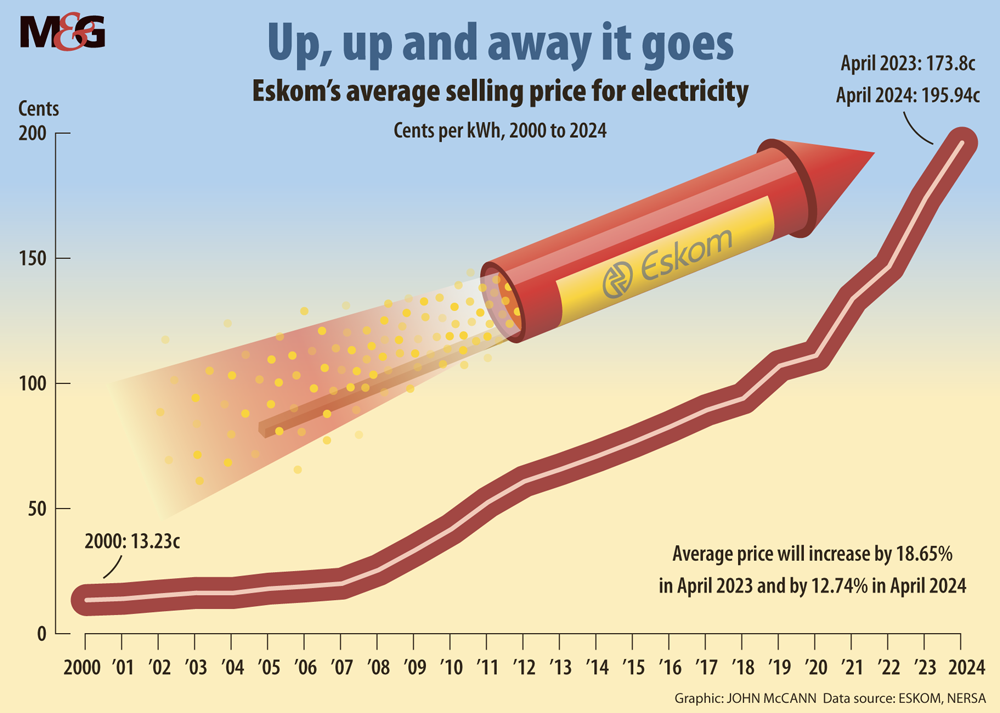
It is a costly, long-neglect exercise that energy experts argue can only be solved through structural reforms in which Eskom has been released from responsibility for transmission, leaving it to be run by a separate company that is not tethered to utility debt.
But Eberhard suggested this week that unbundling has been delayed by Public Enterprises Minister Pravin Gordhan’s ideological aversion to relinquishing state control for its structures.
Only Ramaphosa can overcome this obstacle in the cabinet – and consider the wisdom of leaving Mantashe in charge of energy when, as promised, Eskom returns to the portfolio.